




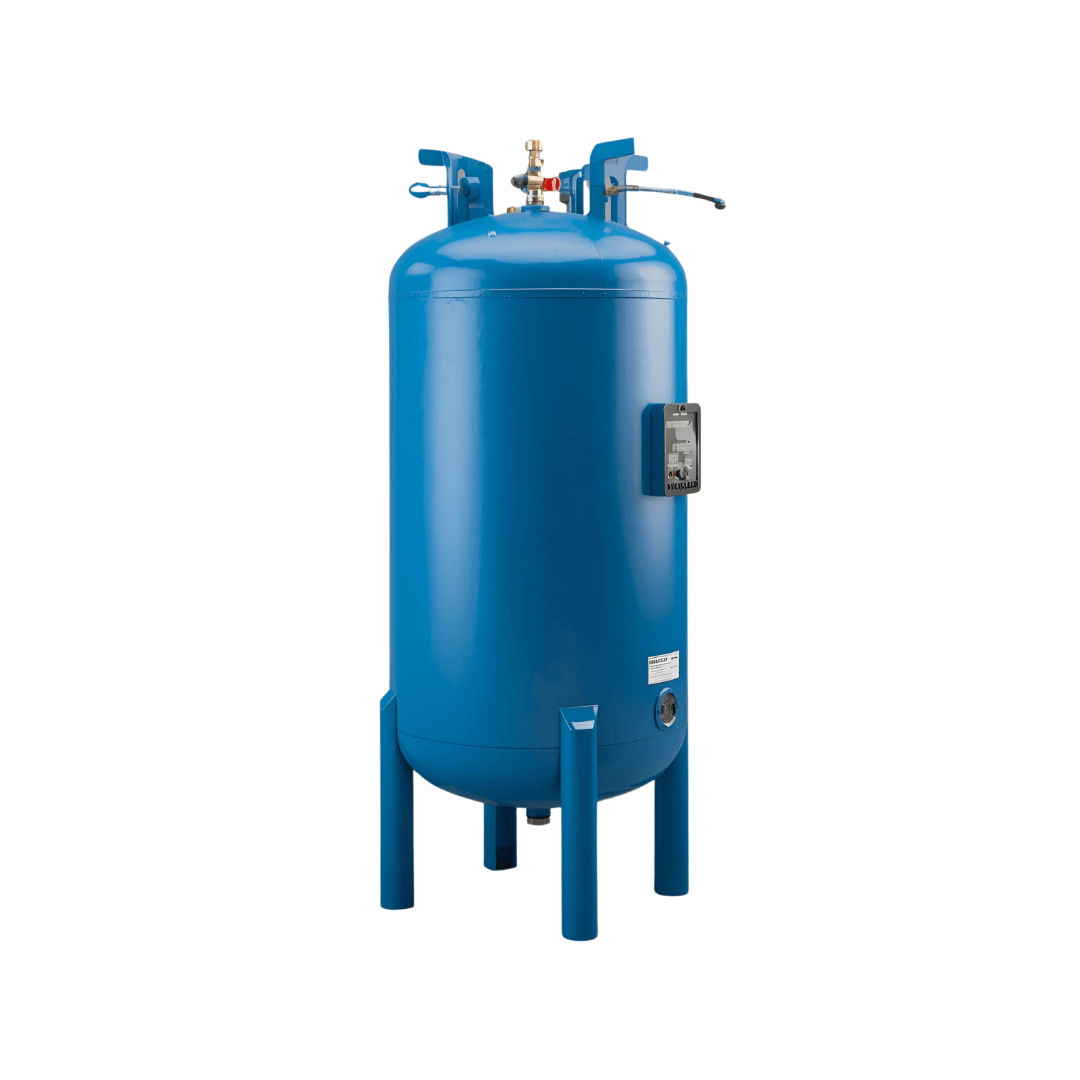
Reliable Air Receiver Solutions for Compressed Air Systems
Compressed air is an essential utility in manufacturing plants, engineering workshops, automotive facilities, textile mills, pharmaceutical units, food-processing plants, chemical industries, and many other industrial operations. A reliable compressed air system needs more than a good compressor. Proper storage and pressure management are equally important, and that is where an air receiver plays a critical role.
An air receiver is a pressure-rated tank that holds stored compressed air.. It acts as a cushion between the compressor and downstream equipment. It helps smooth pressure changes, handle short-term demand spikes, reduce frequent compressor starts and stops, and keep a steady air supply.
Choosing the right air receiver manufacturer in India is important. The vessel operates under pressure. Engineers must design it.
Fabricators must build it. Inspectors must inspect it. Testers must test it for its intended service conditions. It must also meet all applicable requirements.
Anpam Engineering manufactures industrial air receiver tanks for a broad range of compressed air applications. Our engineering approach considers the required capacity, operating pressure, temperature, material, connection arrangement, installation space, and project specifications before manufacturing begins.
Whether you need a small receiver for a factory or a custom high-capacity compressed air vessel, we can help. Our team can develop a solution that fits your operating requirements.
Air Receiver Manufacturer in India
As an experienced air receiver manufacturer in India, Anpam Engineering provides engineered compressed air storage vessels for industrial applications.
An air receiver does more than just hold compressed air. It acts as a stabilizing buffer in the air system, helping the compressor respond better when demand levels change.
When selecting a receiver, you should evaluate factors such as compressor capacity, air consumption, pressure range, operating conditions, system configuration, and future expansion.
Our engineering considerations can include:
- Compressor flow rate
- Air consumption
- Operating pressure
- Design pressure
- Working temperature
- Required storage volume
- Peak air demand
- Compressor duty cycle
- Installation location
- Vessel orientation
- Material selection
- Corrosion allowance
- Nozzle arrangement
- Support configuration
- Applicable design requirements
This application-based approach helps ensure the receiver fits the compressed air system. It is not chosen only by nominal volume.
What Is an Air Receiver?
An air receiver is a pressure-rated vessel built to hold compressed air inside a compressed air system.
The receiver stores compressed air under pressure. You can use this air when demand downstream briefly exceeds the compressor’s output. It also helps smooth sudden pressure fluctuations and reduces frequent compressor cycling, depending on the compressor’s control strategy.
In a typical system, the flow path may look like:
Air Compressor → Air Receiver Tank → Dryer/Filters → Distribution Network → End Equipment
The exact arrangement depends on the plant’s compressed air system.
An air receiver can also support moisture management. As compressed air cools inside the vessel, some condensate may form. It can then be removed through an appropriate drainage arrangement.
However, an air receiver is only one part of the compressed air system. Dryer performance, filtration, pipe sizing, pressure settings, leakage, and end-use demand all influence overall system efficiency.
Air Receiver Tank for Industrial Applications
Industrial plants commonly use an air receiver tank when they need compressed air continuously or occasionally.
Common applications include:
- Pneumatic machinery
- CNC machines
- Automated production lines
- Pneumatic tools
- Packaging equipment
- Instrument air systems
- Spray-painting systems
- Process automation
- Textile machinery
- Manufacturing equipment
- Cleaning systems
- Industrial utility systems
The size and configuration of the vessel depend on the application’s air demand and pressure requirements.
For example, equipment with short spikes in air use may need enough stored air. A continuously controlled compressor system may need a different receiver size.
Compressed Air Receiver for Stable System Performance
A compressed air receiver acts as a buffer between the compressor and the point of use.
This can provide several practical benefits.
Pressure Stabilization
Stored compressed air can help smooth temporary fluctuations in system demand and support more stable downstream pressure.
Peak Demand Support
When several pneumatic machines operate simultaneously, demand can temporarily increase. Stored air can supplement compressor output during these periods.
Reduced Compressor Cycling
A receiver can reduce frequent compressor starts and stops, depending on the compressor control philosophy.
Better Compressor Utilization
Adequate air storage can help the compressor operate more effectively under changing demand conditions.
Improved Condensate Management
Cooling in the receiver can help separate moisture, if the vessel has good drainage and the system is well maintained.
Types of Air Receiver Tanks
Different industrial installations require different receiver configurations.
Vertical Air Receiver
Vertical receivers are ideal when floor area is tight. They offer significant storage capacity while taking up a comparatively small footprint.
They are commonly used in manufacturing plants, workshops, utility areas, and process facilities.
Horizontal Air Receiver
Horizontal configurations work well when you restrict the overall construction height or when the design calls for a horizontal vessel.
Consider the support arrangement and foundation as part of the overall installation design.
High-Pressure Air Receiver
High-pressure applications require careful mechanical design, suitable materials, appropriate welding procedures, and inspection according to the applicable requirements.
Stainless Steel Air Receiver
Stainless steel may be used when corrosion resistance or certain process conditions make it better than carbon steel.
Custom Air Receiver Vessel
Designers can customize a vessel to fit unusual dimensions, meet special pressure requirements, accommodate particular connection arrangements, work within restricted installation spaces, or satisfy project-specific specifications.
How to Choose the Right Air Receiver Tank Size
Selecting the appropriate receiver capacity is an important part of compressed air system design.
The required size depends on more than compressor horsepower. A proper evaluation should consider:
Compressor Capacity
The compressor’s free air delivery or flow rate provides a starting point for determining storage requirements.
Air Consumption
The actual demand profile of the plant is important. Facilities with significant fluctuations in consumption may require more storage capacity than systems with relatively steady demand.
Operating Pressure
The system’s working pressure influences how you can use the stored compressed air during demand fluctuations.
Peak Demand
Account for brief, short-term spikes in air usage when you size the needed buffer capacity.
Compressor Control Method
A fixed-speed compressor and a variable-speed compressor may have different receiver requirements.
Future Expansion
If you plan additional pneumatic equipment, you may find it practical to consider future demand during the initial system design.
No one receiver size is universally right for every setup. The final size should reflect real operating conditions and, when required, a thorough engineering evaluation should confirm it.
Materials Used for Air Receiver Manufacturing
Material selection influences the vessel’s durability, corrosion resistance, and suitability for the operating environment.
Common materials include:
- Carbon Steel
- Stainless Steel 304
- Stainless Steel 316
- Alloy Steel
- Other approved pressure-vessel materials where required
Carbon Steel
Carbon steel is widely used for conventional compressed air storage applications where the service environment permits.
Stainless Steel
Stainless steel may be selected where improved corrosion resistance or specific cleanliness requirements are important.
Special Materials
Certain applications may require alternative material grades because of temperature, corrosion, process conditions, or customer specifications.
Material selection should always be based on the actual design and service requirements rather than on price alone.
Air Receiver Design and Safety Considerations
Because an air receiver stores compressed gas, vessel integrity is a fundamental safety consideration.
The design may need to address:
- Design pressure
- Operating pressure
- Design temperature
- Material strength
- Corrosion allowance
- Welding
- Nozzle loads
- Support loads
- Pressure relief
- Inspection access
- Drainage
- Foundation requirements
The vessel should be manufactured according to the applicable pressure-vessel design basis and project requirements.
For industrial installations, customers should also consider the full system around the vessel. This includes pressure-relief devices, isolation valves, gauges, drains, piping, foundations, and protective measures.
ASME Air Receiver Manufacturing
Depending on the project, air receivers may be designed and manufactured using recognized pressure-vessel standards.
ASME Section VIII is a widely used pressure-vessel code covering requirements for pressure-vessel design and construction. The specific division and certification requirements depend on the project and design basis.
Anpam Engineering provides pressure-vessel manufacturing capabilities, including ASME U-Stamp pressure equipment within its stated scope. During the technical review, confirm the applicable code edition, certification scope, inspection requirements, and documentation for the specific air receiver project.
This is important because code rules, third-party checks, and legal requirements can vary by vessel and installation.
Manufacturing Process for Air Receivers
A reliable air receiver requires controlled fabrication from material procurement through final inspection.
Engineering Design
The project begins with a review of pressure, capacity, temperature, materials, dimensions, nozzles, supports, and applicable design requirements.
Material Procurement
Suitable pressure-vessel materials are procured with the required documentation and traceability.
Plate Cutting and Forming
Plate sections are cut and formed to create the required shell and head geometry.
Welding
Qualified welding procedures and appropriately qualified personnel are used according to the project requirements.
Non-Destructive Examination
Depending on the design and inspection plan, NDT may include visual examination, radiographic testing, ultrasonic testing, magnetic particle testing, or dye penetrant testing.
Pressure Testing
The completed vessel is pressure-tested according to the applicable code and project requirements.
Surface Preparation
Surface preparation and coating systems may be selected according to the installation environment.
Final Inspection
The vessel is checked for dimensions, connections, workmanship, documentation, and other specified requirements before dispatch.
Quality Assurance for Air Receiver Tanks
A professional air receiver tank supplier in India should show how they control and document product quality.
Depending on the project, documentation may include:
- Material test certificates
- Material traceability records
- Welding procedure documentation
- Welder qualification records
- NDT reports
- Dimensional inspection reports
- Pressure-test reports
- Heat-treatment records where applicable
- Final inspection documents
- Nameplate information
- Manufacturing data book or project dossier where specified
The exact documentation package depends on the applicable code, customer specifications, inspection agency, and project requirements.
Applications of Air Receivers in India
Industrial compressed air systems are used across India. Air receivers are an important part of many of these systems.
Automotive Industry
Air receivers support pneumatic tools, assembly equipment, automation, painting, and manufacturing operations.
Textile Industry
Compressed air is used in spinning, weaving, processing, instrumentation, and automation.
Pharmaceutical Industry
Industrial compressed air systems support manufacturing, automation, packaging, and utilities.
Food Processing
Compressed air can be used for packaging, pneumatic equipment, process control, and automation.
Chemical Industry
Air receivers support instrument air and plant air systems used in process facilities.
Engineering and Manufacturing
CNC machinery, pneumatic tools, automation systems, and assembly equipment depend on stable compressed air supply.
Power Plants
Air receivers can support instrument air, service air, and other plant utility systems.
Cement and Heavy Industry
Large compressed air systems are used for automation, cleaning, control systems, and pneumatic handling equipment.
Air Receiver Tank for Different Industrial Requirements
No universal air receiver configuration is suitable for every application.
A receiver for a small engineering workshop may have substantially different requirements from a large process plant. Some applications prioritize compact installation, while others require large storage volume, higher pressure, specialized materials, or multiple vessel arrangements.
An application-specific design helps address:
- Required air storage
- Pressure range
- Peak demand
- Space limitations
- Material compatibility
- Maintenance access
- Future capacity
- Connection requirements
This is why working with an experienced manufacturer can be more valuable. It can be better than choosing a tank based only on its catalog capacity.
Why Choose Anpam Engineering?
Anpam Engineering manufactures pressure vessels and industrial equipment for demanding applications.
Customers looking for an air receiver tank supplier in India can benefit from an engineering-led approach. It considers the full operating requirement.
Customized Engineering
Receiver capacity, dimensions, pressure rating, materials, nozzles, and supports can be developed according to project requirements.
Pressure-Vessel Manufacturing
The manufacturing process is based on controlled fabrication, inspection, testing, and documentation.
Application-Based Solutions
Our engineering team considers compressor characteristics, air demand, pressure requirements, installation conditions, and customer specifications.
Quality-Focused Production
Material verification, welding controls, inspection, NDT where specified, and pressure testing form part of a controlled manufacturing process.
Industrial Project Support
We support customers across manufacturing, engineering, process, chemical, pharmaceutical, food, power, textile, and other industries.
Benefits of Choosing a Properly Engineered Air Receiver
A suitable air receiver can contribute to more reliable compressed air system operation by providing:
Stable pressure: Stored air can help manage temporary variations in demand.
Reduced compressor cycling: Adequate storage can reduce unnecessary starts and stops in suitable compressor-control arrangements.
Peak demand support: Stored air can supplement compressor output during short demand spikes.
Improved system reliability: A buffer between compressor output and downstream demand can help maintain more consistent operation.
Better moisture separation: Appropriate vessel drainage can support condensate removal from the compressed air system.
Long-term service potential: Proper material selection, design, fabrication, inspection, and maintenance contribute to reliable vessel performance.
Frequently Asked Questions
What is an air receiver?
An air receiver is a pressure vessel that stores compressed air. It also acts as a buffer between the compressor and downstream equipment.
What is the difference between an air receiver and an air receiver tank?
In industrial terminology, both terms generally refer to the same type of compressed-air storage pressure vessel. The preferred term depends on the context and industry.
How do I select the right air receiver tank capacity?
Capacity depends on compressor flow, air consumption, operating pressure, demand fluctuations, compressor control method, and future requirements. An engineering assessment is recommended for critical industrial systems.
Do air receivers require pressure testing?
Yes. Pressure testing is an important part of pressure vessel inspection. It should follow the applicable design code and project requirements.
Can you manufacture customized air receiver tanks?
Yes. Air receiver vessels can be customized for capacity, pressure, dimensions, materials, nozzles, supports, and other project-specific requirements.
Are air receivers used in power plants?
Yes. Air receivers can be used in plant air and instrument air systems, subject to the requirements of the specific facility.
Do you supply air receivers throughout India?
Yes. Anpam Engineering supports industrial customers across India, subject to project scope and delivery requirements.
Choose a Reliable Air Receiver Manufacturer in India
An air receiver looks simple, but its design and manufacture affect system reliability and pressure safety. Select the right vessel according to actual compressor capacity, air demand, operating pressure, temperature, installation conditions, material requirements, and applicable design standards.Anpam Engineering manufactures air receiver tanks and customized pressure vessels for industrial applications across India. From material selection and mechanical design to fabrication, inspection, pressure testing, and project documentation, each stage can be aligned with the applicable project requirements.
Whether you need a standard compressed air receiver for a manufacturing facility or a customized high-pressure vessel for a larger industrial system, the right approach starts with understanding the application.
Contact Anpam Engineering with your compressor capacity, required storage volume, design pressure, operating conditions, dimensions, and project specifications to discuss a suitable air receiver tank solution.