




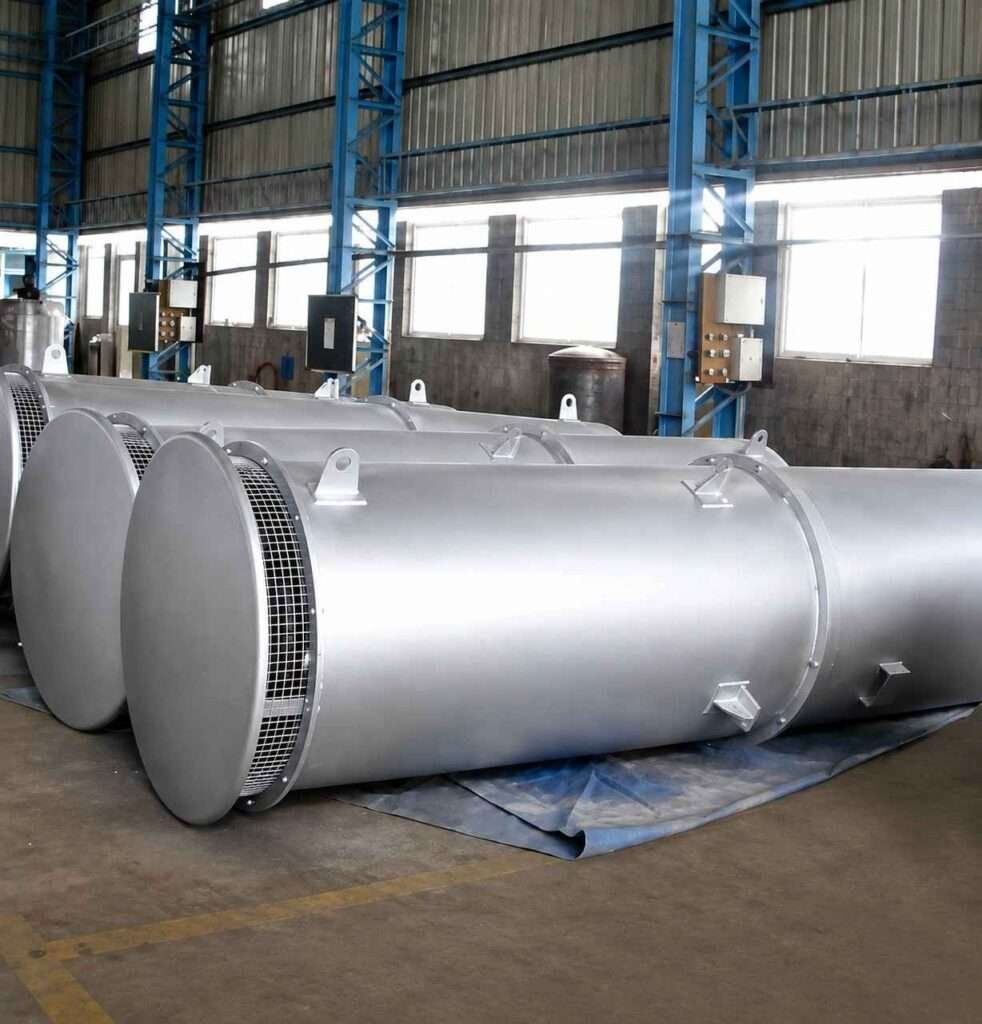
High-Performance Steam Blowing Silencers for Industrial Noise Control
Steam blowing is an essential commissioning and cleaning operation used in power plants, boiler systems, process plants, and steam generation facilities. During steam blowing, high-pressure steam is discharged at high velocity through temporary or permanent piping arrangements to remove contaminants, debris, scale, and foreign particles from steam lines before equipment is placed into service.
Although steam blowing is necessary for system cleanliness and commissioning, it can generate extremely high noise levels. The sudden release of high-pressure steam can cause a loud noise. As the steam spreads out, the sound can grow louder. This noise may affect workers, nearby equipment, and surrounding areas.
A properly engineered steam blowing silencer controls this noise and still allows the steam blowing operation to run effectively. Design the silencer for the steam pressure, temperature, and flow rate. It must also meet the discharge conditions, required noise reduction, and allowed pressure drop.
Anpam Engineering makes industrial steam blowing silencers for power plants, boiler systems, and process industries. It also serves refineries, petrochemical plants, and other sites needing noise control for high-pressure steam discharge.
Our engineering approach combines acoustic performance, mechanical strength, flow characteristics, material selection, and installation needs. This helps us develop reliable noise-control solutions for steam blowing.
Steam Blowing Silencer Manufacturer in India
As an experienced steam blowing silencer manufacturer in India, Anpam Engineering provides engineered silencers for high-pressure and high-temperature steam discharge applications.
Steam blowing conditions can vary significantly between projects. A silencer designed for one steam system may not suit another. Pressure, temperature, flow rate, steam quality, discharge velocity, and noise reduction needs can vary a lot.
For this reason, we design our steam blowing silencers around project-specific operating parameters.
Important design inputs may include:
- Steam flow rate
- Steam pressure
- Steam temperature
- Maximum blowing pressure
- Steam mass flow
- Blowdown duration
- Required noise reduction
- Allowable pressure drop
- Inlet pipe size
- Outlet configuration
- Installation location
- Ambient conditions
- Material requirements
This application-specific approach helps ensure that the silencer performs effectively during demanding steam blowing operations.
What Is a Steam Blowing Silencer?
A steam blowing silencer is a special acoustic device. It reduces loud noise when high-pressure steam is released. This happens during steam line cleaning and commissioning.
During steam blowing, pressurized steam expands rapidly as it moves from the steam system toward the discharge point. This rapid expansion produces turbulence, pressure fluctuations, and high-velocity flow, resulting in significant aerodynamic noise.
Install the silencer in the steam discharge arrangement to reduce this noise before the steam reaches the atmosphere.
Depending on the design, the silencer may use several stages of expansion and flow control. It may also use diffusion, perforated parts, and acoustic attenuation to reduce steam discharge noise.
The objective is to reduce noise effectively. It must not create too much back pressure. It must not restrict steam flow needed for the blowing operation.
Why Is a Silencer Required for Steam Blowing?
Steam blowing can produce sound levels significantly higher than those encountered during normal steam system operation. The combination of high pressure, high temperature, and high flow velocity creates a particularly challenging acoustic environment.
Using a suitable silencer for steam blowing can provide several important benefits.
Reduced Noise Exposure
The primary purpose is to reduce the noise generated during steam discharge and help create a safer working environment.
Improved Worker Safety
Lowering excessive noise around the blowing area can reduce workplace noise risks. Use safety procedures and hearing protection too.
Better Environmental Noise Control
Steam blowing may generate significant noise outside the immediate plant area. Acoustic treatment can help reduce the impact on surrounding locations.
Controlled Steam Discharge
A properly engineered silencer helps manage the discharge flow while providing the required acoustic attenuation.
Improved Commissioning Conditions
Noise-controlled steam blowing makes it easier for plant personnel to monitor commissioning activities and communicate around controlled areas.
How Does a Steam Blowing Silencer Work?
The working principle of a steam blowing silencer controls steam flow speed, expansion, turbulence, and noise energy.
High-pressure steam enters the silencer through the inlet connection. Inside the silencer, engineered internal passages distribute and expand the flow. The pressure and velocity changes reduce the intensity of the acoustic energy generated by the discharge.
Depending on the silencer configuration, the internal design may incorporate:
- Expansion chambers
- Diffuser sections
- Perforated flow elements
- Multi-stage pressure reduction
- Flow distribution passages
- Acoustic attenuation sections
- Reinforced internal components
The design is optimized to balance noise attenuation, steam flow, pressure drop, thermal expansion, and mechanical strength.
Because steam blowing uses harsh conditions, engineers must design the internal parts and shell to handle stress.
Applications of Steam Blowing Silencers
Steam blowing silencers are commonly used during commissioning, cleaning, and maintenance activities in several industrial sectors.
Power Plants
Thermal power plants require steam blowing to clean new or modified steam pipelines before commissioning. Steam blowing silencers help control the high noise generated during these activities.
Boiler Plants
Boiler steam systems may require blowing operations to remove contaminants and construction debris from steam lines.
Process Industries
Chemical, petrochemical, fertilizer, and other process plants use steam extensively. You may need steam blowing during plant commissioning or major piping modifications.
Refineries and Petrochemical Plants
High-pressure steam networks in refineries and petrochemical facilities can require controlled steam discharge during commissioning and maintenance.
Cogeneration Plants
Industrial cogeneration systems may require steam blowing during the installation and commissioning of steam distribution systems.
Manufacturing Facilities
Large manufacturing plants with boiler and steam systems may also need steam blowing equipment. This is common during new installations and system upgrades.
Customized Steam Blowing Silencer Solutions
No single universal silencer configuration fits every steam blowing application. The correct design depends on the steam conditions and project requirements.
As a steam blowing silencer manufacturer in India, Anpam Engineering can develop customized solutions based on parameters such as:
Steam Pressure
The design pressure determines the mechanical requirements of the silencer and its pressure-containing components.
Steam Temperature
High-temperature steam requires suitable materials and consideration of thermal expansion and thermal stresses.
Flow Rate
The mass flow rate influences the internal flow area, diffuser configuration, and acoustic performance.
Noise Target
The required noise attenuation must be established based on the project specification and measurement conditions.
Pressure Drop
The silencer should provide the required acoustic reduction while maintaining acceptable pressure loss.
Installation Arrangement
Silencer orientation, support structure, piping configuration, available space, and access requirements must be considered before fabrication.
Materials Used for Steam Blowing Silencers
Material selection is critical because steam blowing involves high temperatures, pressure, and thermal cycling.
Depending on the operating conditions, steam blowing silencers can be manufactured using suitable grades of:
- Carbon Steel
- Stainless Steel
- Alloy Steel
- High-Temperature Materials
- Specialized Material Grades
The appropriate material is selected based on design temperature, pressure, steam conditions, corrosion considerations, thermal cycling, and customer specifications.
Internal parts may need different materials than the outer shell because of high-speed steam and heat exposure.
Steam Blowing Silencer Design Considerations
Effective silencer performance starts with accurate engineering data.
Evaluate several parameters before designing a steam blowing silencer.
1. Steam Flow Rate
The maximum expected steam mass flow is required to determine the internal flow arrangement.
2. Inlet Pressure
The pressure at the silencer inlet directly influences the expansion characteristics and acoustic energy.
3. Outlet Conditions
The discharge environment and atmospheric conditions can affect the final flow and acoustic behavior.
4. Steam Temperature
Temperature affects density, velocity, thermal expansion, and material selection.
5. Required Sound Level
Clearly define the target noise level. Include the location and conditions for the noise measurement.
6. Allowable Pressure Drop
Excessive pressure drop can disrupt steam blowing, so consider acoustic performance and flow resistance together.
7. Thermal Expansion
The silencer and connected piping can experience substantial temperature changes during operation. Suitable mechanical design and support arrangements are therefore important.
Quality Manufacturing and Inspection
A steam blowing silencer must withstand demanding thermal and mechanical conditions. Manufacturing quality is therefore just as important as the initial acoustic design.
At Anpam Engineering, manufacturing and quality-control activities can include:
- Raw material verification
- Material traceability
- Dimensional inspection
- Welding inspection
- Non-destructive testing where specified
- Internal component inspection
- Nozzle and flange verification
- Visual inspection
- Final dimensional checks
- Documentation as required by the project
The inspection and testing requirements are determined according to the design, customer specifications, applicable codes, and project quality plan.
Engineering Standards and Project Compliance
Steam blowing silencers are usually part of a larger steam system. Engineers should design them to meet the project requirements.
Depending on the application, the design and fabrication process may consider relevant pressure equipment, piping, welding, material, and customer-specific requirements.
For projects involving high-pressure steam, engineering teams should evaluate:
- Design pressure
- Design temperature
- Material specifications
- Welding procedures
- Thermal stresses
- Structural supports
- Pressure and leak considerations
- Applicable piping requirements
- Inspection and documentation requirements
This systematic approach helps ensure that the silencer is suitable for integration into the overall steam system.
Benefits of Choosing a Professionally Engineered Steam Blowing Silencer
Investing in a properly designed silencer for steam blowing provides several operational benefits.
Effective Noise Attenuation
A purpose-built silencer can significantly reduce the aerodynamic noise associated with high-pressure steam discharge.
Reliable High-Temperature Performance
Appropriate material selection and mechanical design allow the silencer to withstand demanding steam conditions.
Reduced Environmental Impact
Lower discharge noise can help reduce the acoustic impact of commissioning operations beyond the immediate blowing area.
Improved Operational Control
A properly engineered discharge arrangement helps operators conduct steam blowing activities in a more controlled manner.
Long-Term Equipment Reliability
Robust fabrication and appropriate materials help the silencer withstand repeated thermal cycles and demanding operating conditions.
Why Choose Anpam Engineering?
Choosing the right steam blowing silencer manufacturer in India requires consideration of both engineering expertise and manufacturing capability.
Anpam Engineering provides industrial silencer solutions developed around the operating requirements of each project.
Application-Specific Engineering
Our designs are developed based on actual steam pressure, temperature, flow, acoustic requirements, and installation conditions.
Customized Fabrication
Silencer dimensions, connections, materials, supports, and other features can be customized according to project requirements.
Quality-Focused Manufacturing
Controlled fabrication and inspection procedures help maintain structural integrity and consistent product quality.
Industrial Experience
Our equipment is suitable for power, process, chemical, petrochemical, manufacturing, and other industrial applications.
Technical Support
We work with customers to understand their operating conditions and develop appropriate steam noise-control solutions.
Steam Blowing Silencer Applications
Our engineered solutions can be considered for:
- Main steam line blowing
- Boiler steam line cleaning
- Superheated steam blowing
- Steam pipeline commissioning
- Power plant commissioning
- Process steam system commissioning
- Cogeneration plant steam blowing
- Steam system modification projects
- Industrial boiler commissioning
- High-pressure steam discharge
Always select the final silencer configuration according to the actual steam conditions and project requirements.
Frequently Asked Questions
What is a steam blowing silencer?
A steam blowing silencer is an acoustic device. It reduces loud noise when high-pressure steam is released. This happens during steam line cleaning and commissioning.
Why is steam blowing so noisy?
High-pressure steam expands fast when discharged, creating high-speed flow, turbulence, pressure changes, and loud aerodynamic noise.
What is a silencer for steam blowing used for?
A steam blow silencer reduces noise during steam discharge. It also allows the required steam flow for effective pipeline cleaning.
How is a steam blowing silencer selected?
Selection depends on steam pressure and temperature. It also depends on mass flow rate and discharge conditions. Consider the required noise reduction and allowable pressure drop. Pipe size, installation arrangement, and material requirements also matter.
Can you customize steam blowing silencers?
Yes. Steam blowing silencers can be engineered according to specific steam conditions, acoustic targets, dimensions, connection arrangements, materials, and project specifications.
Where are steam blowing silencers used?
They are commonly used in power plants, boiler plants, refineries, petrochemical facilities, process industries, cogeneration plants, and large industrial steam systems.
Do steam blowing silencers require high-temperature materials?
Material selection depends on the design temperature, pressure, steam conditions, thermal cycling, and project requirements. You may consider suitable carbon steel, stainless steel, alloy steel, or specialized materials.
Choose a Reliable Steam Blowing Silencer Manufacturer in India
Steam blowing is an important commissioning task. High-pressure steam discharge is deafening. It needs careful engineering and noise control. A well-designed steam blowing silencer reduces noise while keeping the flow needed for effective steam line cleaning.
Anpam Engineering manufactures customized steam blowing silencers for power plants, boiler systems, process plants, refineries, petrochemical facilities, and industrial steam networks. Our engineering approach considers steam pressure, temperature, flow rate, acoustic requirements, pressure drop, materials, and installation conditions to develop a suitable solution.
Whether you require a high-temperature steam blowing silencer for a power plant or a customized silencer for steam blowing in an industrial commissioning project, our team can support the project from technical evaluation through manufacturing.
If you need an experienced steam blowing silencer manufacturer in India, contact Anpam Engineering. Share your steam flow, pressure, temperature, pipe size, and required noise level. Our engineering team can evaluate the application and recommend an appropriate silencer configuration.