




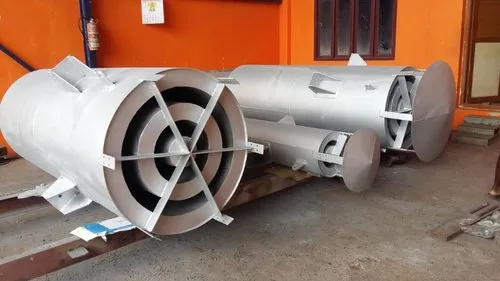
Custom Industrial Silencers for Exhaust, Intake, Blower, Fan & Process Noise Control
Industrial equipment can make a lot of noise. It can come from exhaust gases and air intakes. It may also originate from fans, blowers, compressors, as well as turbines. Pressure-release systems and process ventilation can add noise too.
The right industrial silencers can reduce noise. They still maintain the equipment’s airflow, pressure, temperature, and operating requirements.
We manufacture and supply custom industrial silencers for industrial applications, with solutions available for customers and projects serving the USA market. We can engineer our silencers around each application’s specific equipment, operating conditions, acoustic requirements, connection dimensions, materials, and installation limitations.
Whether you need an industrial exhaust silencer, blower silencer, intake silencer, or fan silencer, we can help. We also provide compressor silencers, vent silencers, and tailored noise-control solutions. Our team uses your technical requirements to develop a suitable configuration.
Looking for industrial silencers for a USA project? Contact our team to discuss your application and request a quotation.
What Are Industrial Silencers?
Industrial silencers are acoustic devices. They reduce unwanted noise from industrial equipment and from moving or released air and gases.
They are often installed in exhaust, intake, discharge, ventilation, duct, and process systems to control noise.
Depending on the application, an industrial silencer may use absorptive, reactive, or combined acoustic principles. Engineers select the internal construction, acoustic media, flow passages, and dimensions according to the required noise attenuation and operating conditions.
Do not select a silencer based only on pipe diameter. Important factors include:
- Air or gas flow rate
- Operating pressure
- Operating temperature
- Gas composition
- Required noise reduction
- Frequency characteristics of the noise
- Allowable pressure drop
- Equipment type
- Connection size
- Installation orientation
- Available space
- Material and corrosion requirements
For this reason, well-designed custom industrial silencers can work better than standard products. This is true when an application has unusual operating conditions or limited space.
Industrial Silencers for USA Applications
Industrial facilities in the USA use a wide variety of equipment that can create significant acoustic emissions. The appropriate silencer depends on the source of the noise and the process in which the equipment operates.
We can supply silencer solutions for applications including:
- Industrial engines and generators
- Air compressors
- Centrifugal and rotary blowers
- Industrial fans
- Gas turbines
- Steam systems
- Process vents
- Compressed-air systems
- Vacuum systems
- HVAC and ventilation equipment
- Manufacturing machinery
- Power-generation equipment
- Process plants
Our approach is application-focused. Instead of recommending a silencer based only on equipment size, evaluate the design using real operating conditions. Use the acoustic requirements that the customer provides.
Types of Industrial Silencers
Industrial Exhaust Silencers
Exhaust systems in engines, generators, turbines, and industrial machinery can be extremely loud. Heated gases vent out into the air.
Industrial exhaust silencers are designed to reduce this noise while managing exhaust flow and pressure drop.
The design should consider exhaust temperature, flow rate, gas composition, backpressure, connection size, mounting arrangement, and required acoustic performance.
Exhaust silencers may be supplied for stationary engines, generator sets, industrial equipment, and power-generation systems. They are also used in other applications where exhaust noise must be controlled.
Industrial Intake Silencers
Air intake systems can generate aerodynamic noise as large volumes of air enter engines, compressors, blowers, and other equipment.
Industrial intake silencers help reduce this noise while allowing the required airflow to reach the equipment.
Intake silencer design may include consideration of filtration, pressure drop, environmental exposure, acoustic frequency, and available installation space.
Blower Silencers
Industrial blowers can generate both broadband and tonal noise at their inlet and discharge sides.
Engineers can design blower silencers for rotary blowers, centrifugal blowers, positive displacement blowers, and other air-moving equipment.
Depending on the application, an engineered blower noise-control system may include inlet silencers, discharge silencers, acoustic enclosures, flexible connections, or related components.
Fan Silencers
Large industrial fans can transmit aerodynamic noise through ducts and openings.
Industrial fan silencers can be installed at the fan inlet or discharge. They help reduce transmitted noise while maintaining required airflow.
They are suitable for ventilation systems, process air systems, industrial HVAC installations, exhaust systems, and other air-handling applications.
Compressor Silencers
Compressors can create substantial noise through intake and discharge airflow, pulsation, mechanical operation, and associated piping.
Engineers can design compressor silencers according to compressor type, operating pressure, flow characteristics, temperature, and acoustic requirements.
For reciprocating compressor applications, pulsation and pressure characteristics may require particular attention during the engineering stage.
Vent and Blowdown Silencers
Rapid discharge of high-pressure air, steam, or process gases can create extremely high noise levels.
Vent and blowdown silencers are used when gases must be released, while reducing noise. These systems can be used in process plants, power-generation facilities, compressed-gas systems, and other industrial environments.
Because pressure, temperature, flow speed, and gas properties can change a lot, choose a vent silencer using real process data.
Steam Silencers
Steam discharge can generate high-frequency aerodynamic noise, particularly during pressure reduction or atmospheric release.
Industrial steam silencers can be designed for steam venting and pressure-relief systems. They also work in other applications where steam discharge noise needs control.
Evaluate the operating pressure, temperature, flow rate, pipe size, and discharge conditions before selecting the silencer configuration.
Custom Industrial Silencers
Not every industrial application can be solved with an off-the-shelf silencer.
A custom industrial silencer may be required when the project involves:
- Limited installation space
- Unusual inlet or outlet dimensions
- High operating temperature
- High pressure
- Special material requirements
- Corrosive gases
- Specific acoustic targets
- Large-volume airflow
- Special mounting arrangements
- Existing equipment replacement
- Integration with existing ductwork or piping
Custom manufacturing allows the silencer configuration to be developed around the actual application instead of forcing the equipment to fit a standard design.
Our engineering team can review available equipment and process information to determine the appropriate configuration, dimensions, materials, and connection arrangement.
How to Select the Right Industrial Silencer
Selecting an industrial silencer starts with understanding the complete operating environment.
1. Identify the Noise Source
First determine where the primary noise originates.
Is it an engine exhaust, blower inlet, compressor discharge, fan outlet, process vent, steam release, or another source?
The noise characteristics will influence the type of silencer required.
2. Provide Flow Information
Airflow or gas flow rate is one of the most important parameters for silencer selection.
Providing minimum, normal, and maximum flow conditions where available can help engineers evaluate the silencer design across the expected operating range.
3. Specify Pressure and Temperature
Operating pressure and temperature affect the mechanical construction, materials, acoustic performance, and pressure-drop characteristics of the silencer.
High-temperature exhaust and high-pressure process gases require designs appropriate for those conditions.
4. Define the Acoustic Requirement
The desired sound reduction should be established along with the location where the noise requirement applies.
If available, provide existing sound measurements, frequency information, octave-band data, or project noise criteria.
5. Consider Pressure Drop
A silencer naturally introduces some resistance to airflow or gas flow.
The design therefore needs to balance acoustic attenuation against allowable pressure drop to avoid unnecessarily affecting equipment performance.
6. Check Installation Requirements
Available space, orientation, support structure, connection type, access, weather exposure, and maintenance requirements should all be considered before finalizing the design.
Industrial Silencer Materials
Material selection depends on the operating environment and application.
Depending on the project, construction may incorporate materials such as:
- Carbon steel
- Stainless steel
- Galvanized steel
- Aluminum
- Acoustic insulation materials
- High-temperature materials
- Protective coatings
The correct material depends on factors such as temperature, humidity, corrosive exposure, process gas composition, outdoor installation, and expected service conditions.
For demanding industrial environments, evaluate material selection together with the mechanical and acoustic requirements rather than treating it as a separate consideration.
Industrial Noise Control for Different Industries
Power Generation
Power plants and generator installations can contain multiple major noise sources, including engines, turbines, fans, compressors, and exhaust systems.
Engineers can incorporate industrial silencers into intake, exhaust, ventilation, and process systems to help manage equipment noise.
Manufacturing
Manufacturing plants may use compressors, blowers, fans, pneumatic systems, process exhausts, and other equipment. This equipment can add to workplace and environmental noise.
Application-specific silencers can help address individual noise sources without unnecessarily modifying the complete process system.
Oil and Gas
Oil and gas facilities can involve high-pressure gases, compressors, turbines, vents, and blowdown systems.
Silencer design for these environments requires careful evaluation of pressure, temperature, gas properties, flow rate, materials, and acoustic requirements.
Chemical and Process Plants
Chemical and process facilities may operate continuously with high-temperature or corrosive gases.
Therefore, you can select silencer construction and materials according to the process conditions and expected operating environment.
Wastewater Treatment
Blowers, fans, ventilation equipment, and process systems can create continuous noise at wastewater treatment facilities.
You can use industrial blower and ventilation silencers as part of a broader facility noise-control strategy.
HVAC and Industrial Ventilation
Large ventilation fans and air-handling systems can transfer noise through ducts.
You can integrate duct silencers and fan silencers into ventilation systems to help reduce airborne and aerodynamic noise transmission.
Why Choose a Custom Industrial Silencer Supplier?
Industrial noise control requires more than simply matching a silencer to a pipe size.
The silencer should work with the complete system and satisfy the application’s acoustic, mechanical, thermal, and flow requirements.
When evaluating an industrial silencer supplier, consider whether the supplier can provide:
- Application-specific engineering
- Custom dimensions
- Appropriate material selection
- Technical drawings
- Connection customization
- Acoustic design support
- Pressure-drop considerations
- Manufacturing support
- Export documentation
- Project-specific technical communication
For international customers, clear technical documentation and communication are particularly important during equipment selection, manufacturing, inspection, packaging, and shipment.
Supplying Industrial Silencers for USA Projects
We manufacture industrial silencers in India and supply solutions for industrial applications serving customers and projects in international markets, including the USA.
For USA projects, customers can provide equipment specifications, drawings, photographs, process information, or existing silencer details for evaluation.
Depending on the project, useful information may include:
- Equipment manufacturer and model
- Flow rate
- Pressure
- Temperature
- Gas or air composition
- Pipe or duct dimensions
- Connection details
- Required noise level or attenuation
- Installation location
- Material requirements
- Available space
- Existing equipment drawings
Providing accurate technical information at the quotation stage helps reduce uncertainty during design and manufacturing.
Request a Quote for Industrial Silencers
Looking for industrial silencers for a USA industrial project?
Send your application details to our team for technical evaluation and quotation.
Whether you need a standard setup, a replacement silencer, or a custom noise-control solution, we can help. We will review your needs. We will then choose the right design approach.
Request a Quote for Industrial Silencers
To help us evaluate your requirement, please share:
- Equipment details
- Flow rate
- Operating pressure
- Operating temperature
- Inlet and outlet dimensions
- Noise requirement
- Material requirements
- Installation drawings or photographs
- Quantity required
- Delivery location
Our team can then review the application and discuss the appropriate industrial silencer configuration.
Frequently Asked Questions
What are industrial silencers used for?
Industrial silencers reduce noise from industrial equipment and from moving or released air and gases. Typical applications include exhaust systems, blowers, compressors, fans, turbines, vents, steam systems, and industrial ventilation.
Can you manufacture custom industrial silencers?
Yes. Custom industrial silencers can be designed according to application-specific flow, pressure, temperature, acoustic, material, connection, and installation requirements.
Do you supply industrial silencers to the USA?
We manufacture industrial silencers in India. We can support industrial projects for customers in the USA. This depends on the project’s technical, commercial, and shipping requirements.
What information do you need to provide to receive a quotation for an industrial silencer?
Useful information includes the equipment type, flow rate, pressure, and temperature. It also includes gas or air composition, connection size, and required noise reduction. Include material requirements, installation details, and any available drawings.
Can you use industrial silencers for blowers and compressors?
Yes. Industrial silencers can be designed for blower and compressor inlet and discharge applications. The appropriate configuration depends on the equipment type, flow conditions, pressure, pulsation characteristics, and acoustic requirements.
Get the Right Industrial Silencer for Your Application
Choosing the right industrial silencer requires balancing acoustic performance with airflow, pressure drop, temperature, materials, installation constraints, and equipment requirements.
From industrial exhaust and intake silencers to custom noise-control systems, we design for your specific application. We build silencers for blowers, fans, compressors, vents, and steam systems. This approach provides practical solutions. It works well in demanding industrial environments.
If your company is sourcing industrial silencers for the USA market, send us your technical requirements, drawings, or equipment details.