




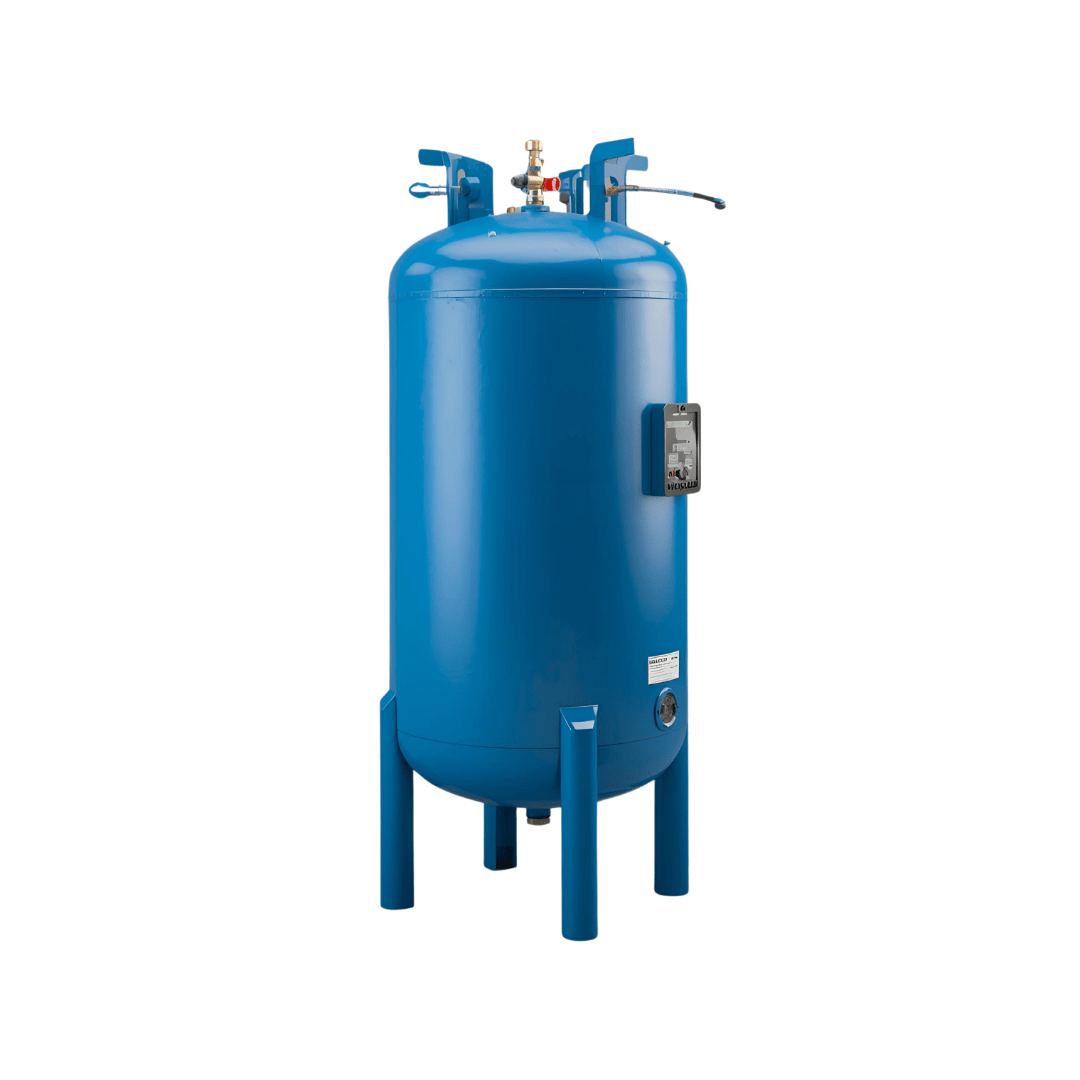
Air Receiver Solutions for Compressed Air Systems
The compressed air is the key fed utility in the manufacturing plants, engineering workshops, auto parts factories, textile industries, pharmaceuticals factories, food processing factories, chemical industries etc for a range of industrial applications. More than a good compressor is required in a good compressed air system. An air receiver also plays a key role in the storage and pressure management solutions, and appropriate storage and pressure control is vital.
Air receiver a pressure-rated tank that stores compressed air for use in the internal air system of an industrial compressed air system. It helps to reduce stress from the compressor to downstream equipment. It can help mitigate difference of pressure, control maximum pressure demand, minimises compressor cycling and provides consistent air delivery.
It is significant to select the right air receiver tank manufacturer in India as the vessel is a pressure vessel and it has to be designed, fabricated, checked and tested to meet the applicable pressure-vessel standards and the service condition.
Anpam Engineering is here to supply to the market of industrial air receiver tanks of various sizes and capacities used in wide industrial compressed air applications. Before the manufacturing process of compressor parts, we carefully analyze the required capacity, operating pressure, operating temperature, material, connection method, installation site, project specifications, etc, to realize our engineering solution.
If you require either a small receiver for a factory application or a high capacity compressed air vessel, we can supply that. We can create a solution to meet your operational needs.
Air Receiver Manufacturer in India
As an experienced air receiver manufacturer in India, Anpam Engineering provides engineered compressed air storage vessels for industrial applications.
An air receiver is more than a storage tank for compressed air. It provides a stabilization buffer in the air system, which improves the performance of the compressor whenever conditions in the system change.
The receiving equipment selection should consider the compressor capacity, air consumption, pressure range, operating conditions, system configuration, future expansion and so on.
Our engineering considerations can include:
- Compressor flow rate
- Air consumption
- Operating pressure
- Design pressure
- Working temperature
- Required storage volume
- Peak air demand
- Compressor duty cycle
- Installation location
- Vessel orientation
- Material selection
- Corrosion allowance
- Nozzle arrangement
- Support configuration
- Applicable design requirements
An application based approach will ensure an appropriate fit for the receiver when using compressed air. It is not selected solely based on its size.
What Is an Air Receiver?
In a compressed air system, an air receiver is a pressure-rated vessel designed to store compressed air.
Compressed air is stored in the receiver at a high pressure. This air can be used when demand spikes downstream for a short period of time. Additionally, it also helps to eliminate abrupt pressure changes and the compressor cycling if the compressor’s control strategy is set to control frequency.
The flow path can be as follows in a typical system:
Air Compressor → Air Receiver Tank → Dryer/Filters → Distribution Network → End Equipment
This arrangement will vary depending on the type of compressed air system employed by the plant.
It is also possible to help moisture control with an air receiver. Condensate can form when the compressed air cools down with in the vessel itself. It can then be drawn out via an appropriate drainage system.
An air receiver is only one component of the Compressed Air System, however. Overall system efficiency is affected by various aspects of dryer performance, filtration, pipe sizing, pressure setting, leakage and end-use demand.
Air Receiver Tank for Industrial Applications
An air receiver tank is usually used by the industrial plants that require compressed air on a continuous or intermittent basis.
Common applications include:
- Pneumatic machinery
- CNC machines
- Automated production lines
- Pneumatic tools
- Packaging equipment
- Instrument air systems
- Spray-painting systems
- Process automation
- Textile machinery
- Manufacturing equipment
- Cleaning systems
- Industrial utility systems
The dimension of these and the type of configuration is based on the air demand and air pressure of the application or client.
For instance, equipment that has intermittent high-pitched air consumption may require sufficient reserve airs. If a compressor system operates continuously controlled, it may require a receiver of another size.
Compressed Air Receiver for Stable System Performance
A compressed air receiver acts as a buffer between the compressor and the point of use.
This may be useful for a number of practical purposes.
Pressure Stabilization
Compressed air stored in a reservoir can provide a more gradual change in system demand and help to maintain a more constant pressure downstream.
Peak Demand Support
If multiple pneumatic machines are running at the same time, short bursts of higher demand can occur. During those times the compressor’s output can be supplemented by stored air.
Reduced Compressor Cycling
Depending on the compressor control philosophy a receiving party may be able to decrease the number of compressor starts and stops that occur.
Improved Compressor Operation
For the compressor to have a high effectiveness in operating with varying of loads, sufficient air storage is needed.
Improved Condensate Management
If the system is well maintained with good drainage in the receiver and the vessel is well cooled, then moisture can be separated.
Types of Air Receiver Tanks
The receiver configurations vary from installation to installation in different industries.
Vertical Air Receiver
Vertical receivers work best when the space available is limited for floor. They have their own valuable storage space and comparatively low footprint.
They are often used in the manufacturing plants, workshops, utility areas and process facilities.
Horizontal Air Receiver
Horizontal configurations are effective when the design requires that the vessel be horizontal, or if the height of the building is other than vertical is limited.
Take into account the support configuration and/or foundation when working on the design of the installation.
High-Pressure Air Receiver
For high-pressure applications, mechanical design, a choice of suitable materials, appropriate welding procedures, and inspection of the application in line with the applicable requirements requires careful consideration.
Stainless Steel Air Receiver
When some process condition or corrosion resistance is needed, stainless steel can be considered, and sometimes is more desirable than carbon steel.
Custom Air Receiver Vessel
The designer can add the modifications inside the vessel that suit an unusual size, unique pressure requirements, connection specifications, limited installation space or special project requirements.
How to Choose the Right Air Receiver Tank Size
Selecting the appropriate receiver capacity is an important part of compressed air system design.
The required size depends on more than compressor horsepower. A proper evaluation should consider:
Compressor Capacity
The compressor’s free air delivery or flow rate provides a starting point for determining storage requirements.
Air Consumption
The actual demand profile of the plant is important. Facilities with significant fluctuations in consumption may require more storage capacity than systems with relatively steady demand.
Operating Pressure
The system’s working pressure influences how you can use the stored compressed air during demand fluctuations.
Peak Demand
Account for brief, short-term spikes in air usage when you size the needed buffer capacity.
Compressor Control Method
A fixed-speed compressor and a variable-speed compressor may have different receiver requirements.
Future Expansion
If you plan additional pneumatic equipment, you may find it practical to consider future demand during the initial system design.
No one receiver size is universally right for every setup. The final size should reflect real operating conditions and, when required, a thorough engineering evaluation should confirm it.
Materials Used for Air Receiver Manufacturing
Material selection influences the vessel’s durability, corrosion resistance, and suitability for the operating environment.
Common materials include:
- Carbon Steel
- Stainless Steel 304
- Stainless Steel 316
- Alloy Steel
- Other approved pressure-vessel materials where required
Carbon Steel
Carbon steel is widely used for conventional compressed air storage applications where the service environment permits.
Stainless Steel
Stainless steel may be selected where improved corrosion resistance or specific cleanliness requirements are important.
Special Materials
Certain applications may require alternative material grades because of temperature, corrosion, process conditions, or customer specifications.
Material selection should always be based on the actual design and service requirements rather than on price alone.
Air Receiver Design and Safety Considerations
Because an air receiver stores compressed gas, vessel integrity is a fundamental safety consideration.
The design may need to address:
- Design pressure
- Operating pressure
- Design temperature
- Material strength
- Corrosion allowance
- Welding
- Nozzle loads
- Support loads
- Pressure relief
- Inspection access
- Drainage
- Foundation requirements
The vessel should be manufactured according to the applicable pressure-vessel design basis and project requirements.
For industrial installations, customers should also consider the full system around the vessel. This includes pressure-relief devices, isolation valves, gauges, drains, piping, foundations, and protective measures.
ASME Air Receiver Manufacturing
Depending on the project, air receivers may be designed and manufactured using recognized pressure-vessel standards.
ASME Section VIII is a widely used pressure-vessel code covering requirements for pressure-vessel design and construction. The specific division and certification requirements depend on the project and design basis.
Anpam Engineering provides pressure-vessel manufacturing capabilities, including ASME U-Stamp pressure equipment within its stated scope. During the technical review, confirm the applicable code edition, certification scope, inspection requirements, and documentation for the specific air receiver project.
This is important because code rules, third-party checks, and legal requirements can vary by vessel and installation.
Manufacturing Process for Air Receivers
A reliable air receiver requires controlled fabrication from material procurement through final inspection.
Engineering Design
The project begins with a review of pressure, capacity, temperature, materials, dimensions, nozzles, supports, and applicable design requirements.
Material Procurement
Suitable pressure-vessel materials are procured with the required documentation and traceability.
Plate Cutting and Forming
Plate sections are cut and formed to create the required shell and head geometry.
Welding
Qualified welding procedures and appropriately qualified personnel are used according to the project requirements.
Non-Destructive Examination
Depending on the design and inspection plan, NDT may include visual examination, radiographic testing, ultrasonic testing, magnetic particle testing, or dye penetrant testing.
Pressure Testing
The completed vessel is pressure-tested according to the applicable code and project requirements.
Surface Preparation
Surface preparation and coating systems may be selected according to the installation environment.
Final Inspection
The vessel is checked for dimensions, connections, workmanship, documentation, and other specified requirements before dispatch.
Quality Assurance for Air Receiver Tanks
A professional air receiver tank supplier in India should show how they control and document product quality.
Depending on the project, documentation may include:
- Material test certificates
- Material traceability records
- Welding procedure documentation
- Welder qualification records
- NDT reports
- Dimensional inspection reports
- Pressure-test reports
- Heat-treatment records where applicable
- Final inspection documents
- Nameplate information
- Manufacturing data book or project dossier where specified
The exact documentation package depends on the applicable code, customer specifications, inspection agency, and project requirements.
Applications of Air Receivers in India
Industrial compressed air systems are used across India. Air receivers are an important part of many of these systems.
Automotive Industry
Air receivers support pneumatic tools, assembly equipment, automation, painting, and manufacturing operations.
Textile Industry
Compressed air is used in spinning, weaving, processing, instrumentation, and automation.
Pharmaceutical Industry
Industrial compressed air systems support manufacturing, automation, packaging, and utilities.
Food Processing
Compressed air can be used for packaging, pneumatic equipment, process control, and automation.
Chemical Industry
Air receivers support instrument air and plant air systems used in process facilities.
Engineering and Manufacturing
CNC machinery, pneumatic tools, automation systems, and assembly equipment depend on stable compressed air supply.
Power Plants
Air receivers can support instrument air, service air, and other plant utility systems.
Cement and Heavy Industry
Large compressed air systems are used for automation, cleaning, control systems, and pneumatic handling equipment.
Air Receiver Tank for Different Industrial Requirements
No universal air receiver configuration is suitable for every application.
A receiver for a small engineering workshop may have substantially different requirements from a large process plant. Some applications prioritize compact installation, while others require large storage volume, higher pressure, specialized materials, or multiple vessel arrangements.
An application-specific design helps address:
- Required air storage
- Pressure range
- Peak demand
- Space limitations
- Material compatibility
- Maintenance access
- Future capacity
- Connection requirements
This is why working with an experienced manufacturer can be more valuable. It can be better than choosing a tank based only on its catalog capacity.
Why Choose Anpam Engineering?
Anpam Engineering manufactures pressure vessels and industrial equipment for demanding applications.
Customers looking for an air receiver tank supplier in India can benefit from an engineering-led approach. It considers the full operating requirement.
Customized Engineering
Receiver capacity, dimensions, pressure rating, materials, nozzles, and supports can be developed according to project requirements.
Pressure-Vessel Manufacturing
The manufacturing process is based on controlled fabrication, inspection, testing, and documentation.
Application-Based Solutions
Our engineering team considers compressor characteristics, air demand, pressure requirements, installation conditions, and customer specifications.
Quality-Focused Production
Material verification, welding controls, inspection, NDT where specified, and pressure testing form part of a controlled manufacturing process.
Industrial Project Support
We support customers across manufacturing, engineering, process, chemical, pharmaceutical, food, power, textile, and other industries.
Benefits of Choosing a Properly Engineered Air Receiver
A suitable air receiver can contribute to more reliable compressed air system operation by providing:
Stable pressure: Stored air can help manage temporary variations in demand.
Reduced compressor cycling: Adequate storage can reduce unnecessary starts and stops in suitable compressor-control arrangements.
Peak demand support: Stored air can supplement compressor output during short demand spikes.
Improved system reliability: A buffer between compressor output and downstream demand can help maintain more consistent operation.
Better moisture separation: Appropriate vessel drainage can support condensate removal from the compressed air system.
Long-term service potential: Proper material selection, design, fabrication, inspection, and maintenance contribute to reliable vessel performance.
Frequently Asked Questions
What is an air receiver?
An air receiver is a pressure vessel that stores compressed air. It also acts as a buffer between the compressor and downstream equipment.
What is the difference between an air receiver and an air receiver tank?
In industrial terminology, both terms generally refer to the same type of compressed-air storage pressure vessel. The preferred term depends on the context and industry.
How do I select the right air receiver tank capacity?
Capacity depends on compressor flow, air consumption, operating pressure, demand fluctuations, compressor control method, and future requirements. An engineering assessment is recommended for critical industrial systems.
Do air receivers require pressure testing?
Yes. Pressure testing is an important part of pressure vessel inspection. It should follow the applicable design code and project requirements.
Can you manufacture customized air receiver tanks?
Yes. Air receiver vessels can be customized for capacity, pressure, dimensions, materials, nozzles, supports, and other project-specific requirements.
Are air receivers used in power plants?
Yes. Air receivers can be used in plant air and instrument air systems, subject to the requirements of the specific facility.
Do you supply air receivers throughout India?
Yes. Anpam Engineering supports industrial customers across India, subject to project scope and delivery requirements.
Choose a Reliable Air Receiver Manufacturer in India
An air receiver may appear to be a simple storage vessel, but its design and manufacturing quality play an important role in compressed air system reliability and pressure safety. Selecting the right vessel requires consideration of compressor capacity, air demand, operating pressure, temperature, installation conditions, material requirements and applicable design standards.
Anpam Engineering manufactures industrial air receiver tanks and customized pressure vessels for a wide range of industrial applications across India. From engineering and material selection to fabrication, inspection, pressure testing and project documentation, our manufacturing approach focuses on meeting the applicable project specifications and quality requirements.
Whether you require a compressed air receiver for a manufacturing facility or a customized high-pressure vessel for a large industrial project, Anpam Engineering can help you evaluate a suitable solution.
Contact Anpam Engineering with your compressor capacity, required storage volume, design pressure, operating conditions, dimensions and project specifications to discuss your air receiver tank requirements.