




Reliable Warm Up Vent Silencer Solutions for Industrial Steam Systems
During the startup of a boiler, turbine, or industrial steam system, steam conditions can change quickly. Pressure and temperature rise until they reach operating levels. Operators may need to release steam through dedicated warm-up or vent lines during startup and low-load conditions. Because the discharge can occur at high pressure and velocity, it can generate intense aerodynamic noise.
A well-designed warm up vent silencer helps reduce this noise and lets the steam system work as intended. The silencer must be designed for the actual pressure and temperature of the application. It must also handle mass flow, thermal cycling, and acoustic needs.
Anpam Engineering manufactures customized warm up vent silencers for boilers, turbines, power plants, cogeneration systems, and industrial steam networks. Our engineering approach considers the complete operating envelope rather than selecting a silencer based only on pipe size.
Depending on the application, the design can address steam flow and pressure drop. It can also address noise reduction and high-temperature service. It can cover material selection, connection layout, support needs, and installation conditions.
Warm Up Vent Silencer Manufacturer in India
As an experienced warm up vent silencer manufacturer in India, Anpam Engineering provides steam noise-control solutions. These solutions help discharge steam safely and reduce noise in industrial applications.
Warm-up vent systems are commonly used during:
- Boiler startup
- Steam turbine startup
- Steam-line warm-up
- Plant commissioning
- Low-load operation
- Steam-system maintenance
- Pressure stabilization
- Process-system startup
During these operating conditions, steam flow can vary considerably. Therefore, the silencer needs to accommodate the expected startup range rather than only normal operating conditions.
Important design parameters can include:
- Steam pressure
- Steam temperature
- Steam mass flow
- Minimum and maximum flow
- Pipe diameter
- Upstream pressure
- Downstream pressure
- Required noise attenuation
- Allowable pressure drop
- Steam quality
- Operating duration
- Installation orientation
- Material requirements
- Thermal expansion
This application-specific approach helps create a practical balance between acoustic performance and steam-flow requirements.
What Is a Warm Up Vent Silencer?
A warm–up vent silencer is an acoustic device in a steam warm-up or venting system. It reduces noise when high-pressure steam discharges.
During startup, heat steam lines slowly to reduce thermal stress and bring equipment to operating conditions. In some systems, operators must vent steam during this process.
Directly releasing high-pressure steam into the atmosphere can produce substantial aerodynamic noise. A vent silencer provides a controlled flow path. It reduces the noise from the discharge before it reaches the surrounding area.
A simplified arrangement may be:
Boiler / Steam System → Warm-Up Valve → Vent Line → Warm Up Vent Silencer → Atmospheric Discharge
The exact configuration depends on the plant’s piping arrangement, pressure-control philosophy, steam conditions, and project requirements.
Why Is a Warm Up Vent Silencer Required?
Steam discharge noise can become a significant issue around boilers, turbines, process plants, and utility systems.
Without suitable acoustic treatment, high-velocity steam may produce:
- High aerodynamic noise
- Strong turbulence
- Pressure fluctuations
- Noise transmission through connected piping
- Disturbance around operating areas
A warm up vent silencer treats the noise at the discharge path and can help create a more controlled acoustic environment.
Do not consider the silencer a substitute for a complete plant noise-control program. Overall noise may also come from turbines, pumps, fans, valves, compressors, piping vibration, and other equipment.
However, where steam venting is a significant source, treating the vent directly can be an effective engineering measure.
How Does a Warm Up Vent Silencer Work?
The working principle controls steam expansion, flow velocity, and acoustic energy.
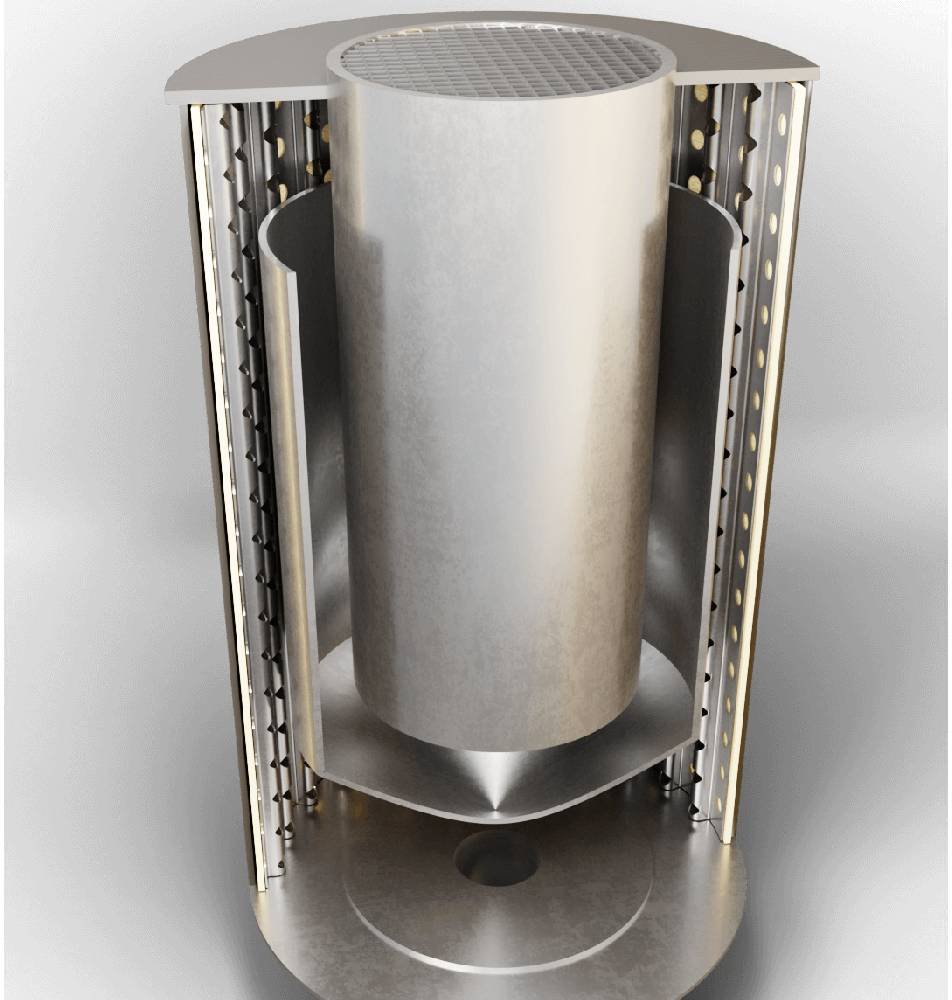
High-pressure steam enters the silencer through the inlet connection. Inside the unit, the flow passes through engineered passages designed to distribute and attenuate the discharge.
Depending on the application, the internal arrangement may incorporate:
- Expansion chambers
- Diffuser sections
- Perforated components
- Multi-stage pressure reduction
- Flow-distribution elements
- Acoustic attenuation sections
A simplified flow path is:
High-Pressure Steam → Controlled Expansion → Flow Distribution → Acoustic Attenuation → Discharge
The silencer must be designed to reduce noise as required. It must not cause excessive pressure loss or restrict steam flow for startup.
Turbine Warm-Up Vent Silencer
A Turbine Warm-Up Vent Silencer is designed for steam systems associated with turbine startup and warm-up operations.
Steam turbines need controlled startup steps because fast temperature changes can cause thermal stress. During startup, the system may admit, bypass, or vent steam as it moves toward operating conditions.
The warm-up vent arrangement can therefore experience changing:
- Steam pressure
- Steam temperature
- Flow rate
- Flow velocity
- Operating duration
A turbine-specific silencer should account for these conditions.
The engineering assessment may include turbine startup requirements, upstream valve characteristics, steam conditions, vent-line dimensions, allowable pressure loss, and target noise levels.
Boiler Warm-Up Vent Silencer
Boilers can require warm-up and venting arrangements during startup before the steam system reaches stable operating conditions.
A Boiler Warm-Up Vent Silencer helps reduce noise during steam discharge from the boiler or steam system.
Potential applications include:
- Utility boilers
- Industrial boilers
- Captive power plants
- Cogeneration systems
- Process steam plants
- Thermal power plants
The design should account for the boiler’s steam generation characteristics, startup sequence, pressure development, temperature range, and venting requirements.
The maximum anticipated startup flow is particularly important because it can differ significantly from the normal operating flow.
Warm Up Vent Silencer vs. Startup Vent Silencer
The terms warm–up vent silencer and startup vent silencer are sometimes used for similar steam venting uses. However, the exact function can vary between plant designs.
A startup vent is used during boiler or steam-system startup. A warm-up vent is used for controlled heating and preparing steam lines or equipment.
The correct silencer should be selected based on the actual piping layout and operating sequence.
Parameters like steam pressure, temperature, mass flow, valve operation, venting time, and acoustic targets should guide the engineering basis.
Design Considerations for Warm Up Vent Silencers
A well-designed silencer begins with reliable process information.
Steam Pressure
Pressure difference strongly influences steam velocity and the acoustic energy generated during discharge.
Steam Temperature
Temperature affects steam properties, thermal expansion, material selection, and mechanical integrity.
Steam Flow Rate
Normal, minimum, and maximum startup flow should be considered when determining the internal flow area.
Allowable Pressure Drop
The silencer should not create excessive pressure loss that interferes with the intended venting operation.
Noise Target
The required noise level should be established at a clearly defined measurement location.
Steam Quality
Steam quality can influence flow behavior and internal component selection.
Thermal Cycling
Startup and shutdown cycles can cause repeated expansion and contraction. The mechanical design should account for expected thermal movement.
Installation Arrangement
Orientation, available space, supports, drain provisions, access, and existing pipe routing should be considered before finalizing the design.
Acoustic Design of Warm Up Vent Silencers
Steam noise can include many frequencies. A silencer’s acoustic performance depends on the actual discharge conditions.
A proper engineering review may consider:
- Existing sound pressure level
- Sound power information
- Frequency spectrum
- Required attenuation
- Measurement distance
- Background noise
- Steam flow conditions
- Installation environment
The silencer should then be configured to provide suitable attenuation across the relevant frequency range.
A generic claim like “reduces noise by a fixed number of decibels” should not apply to every steam application. Actual performance depends on the process conditions, silencer construction, installation, and measurement method.
Pressure Drop and Flow Performance
One of the most important considerations in warm up vent silencer design is pressure drop.
The silencer creates resistance to steam flow. Excessive resistance can influence the venting characteristics and may prevent the system from operating according to its design intent.
The design therefore aims to balance:
Noise Reduction + Steam Flow Capacity + Acceptable Pressure Drop + Mechanical Integrity
The maximum flow condition should be evaluated during design because it can determine the required internal flow area.
For larger systems, aerodynamic modeling or detailed engineering calculations may be appropriate depending on the project requirements.
Materials Used for Warm Up Vent Silencers
Steam service can involve elevated temperature and repeated thermal cycling, making material selection an important part of the design.
Depending on operating conditions, materials may include:
- Carbon Steel
- Stainless Steel 304
- Stainless Steel 316
- Alloy Steel
- High-Temperature Materials
- Application-Specific Material Grades
The material selection should consider:
- Design temperature
- Operating temperature
- Pressure
- Steam conditions
- Thermal cycling
- Corrosion environment
- Internal velocity
- Customer specifications
Internal parts may need different material grades than the outer shell. They face direct exposure to hot, fast-moving steam.
Types of Warm Up Vent Silencers
Vertical Warm Up Vent Silencer
A vertical configuration can be used where the plant layout allows an upward discharge arrangement. Such designs may incorporate suitable supports and drainage provisions.
Horizontal Warm Up Vent Silencer
You may consider a horizontal configuration when the steam piping requires horizontal discharge or when limited vertical space restricts the layout.
High-Pressure Warm Up Vent Silencer
High-pressure applications may require multi-stage expansion and carefully engineered internal components to achieve the required acoustic performance.
Turbine Warm-Up Vent Silencer
Designed specifically around turbine startup and warm-up conditions.
Customized Warm Up Vent Silencer
Custom configurations can be developed for unusual pipe sizes, pressure and temperature conditions, restricted installation spaces, or project-specific acoustic requirements.
Applications of Warm Up Vent Silencers
Warm-up vent silencers can be used in a wide range of industrial steam systems.
Thermal Power Plants
Boilers and steam turbines can require controlled venting during startup and warm-up operations.
Captive Power Plants
Industrial facilities with captive generation systems may use warm-up vents during boiler and turbine startup.
Cogeneration Plants
Combined heat and power installations can require engineered steam vent noise-control systems.
Chemical Plants
Process steam systems may require venting during commissioning, startup, and maintenance.
Petrochemical Plants
Steam networks within petrochemical facilities can involve high-pressure venting and strict process requirements.
Sugar Plants
Boilers and steam turbines in sugar mills may require startup and warm-up venting.
Textile Plants
Industrial steam systems supporting textile processing can require acoustic treatment during startup.
Paper and Pulp Plants
Large boiler and process-steam systems can benefit from controlled steam discharge arrangements.
Manufacturing and Quality Assurance
The reliability of a warm-up vent silencer depends on both engineering design and fabrication quality.
At Anpam Engineering, manufacturing activities can include:
- Raw material verification
- Material traceability
- Plate cutting and forming
- Precision welding
- Dimensional inspection
- Weld inspection
- Internal component inspection
- Flange and nozzle verification
- Non-destructive testing where specified
- Final visual inspection
- Project documentation
The inspection and quality requirements can be established according to customer specifications, applicable design requirements, and the project’s inspection plan.
Why Choose Anpam Engineering?
Choosing an experienced warm up vent silencer manufacturer in India is important. It helps ensure reliable performance in demanding steam conditions.
Application-Specific Engineering
We consider the actual pressure, temperature, flow rate, acoustic target, and installation requirements.
Customized Design
Dimensions, connections, materials, supports, and internal configurations can be developed according to project specifications.
Industrial Manufacturing
Our solutions are suitable for power plants, boiler systems, process industries, chemical plants, sugar plants, textile facilities, and other steam-intensive operations.
Focus on Flow and Noise
The objective is to achieve effective acoustic attenuation while maintaining the required steam-flow characteristics.
Quality-Controlled Fabrication
Controlled fabrication and inspection procedures support consistent product quality and reliable service.
Benefits of a Properly Engineered Warm Up Vent Silencer
A suitable warm up vent silencer can provide:
- Reduced steam discharge noise
- Improved acoustic conditions around boiler and turbine areas
- Better control during startup operations
- Suitable flow capacity
- Controlled pressure drop
- High-temperature service capability
- Customized installation arrangements
- Long-term industrial service potential
Actual acoustic performance depends on the steam conditions, silencer design, installation arrangement, and measurement methodology.
What information do you need to make a selection?
For an accurate technical evaluation, provide:
- Steam pressure
- Steam temperature
- Maximum steam flow
- Normal startup flow
- Vent-line size
- Upstream valve information
- Required noise level
- Noise measurement location
- Allowable pressure drop
- Installation orientation
- Available space
- Material requirements
- Existing piping drawings
- Operating sequence
- Project specifications
Providing this information allows the silencer to be designed around the actual application rather than a generic operating condition.
Frequently Asked Questions
What is a warm up vent silencer?
A warm-up vent silencer is an acoustic device. It reduces noise when steam is discharged during warm-up or startup. It is used for boilers, turbines, steam lines, and industrial steam systems.
What is a Turbine Warm-Up Vent Silencer?
Engineers design a Turbine Warm-Up Vent Silencer for steam venting during turbine startup and warm-up operations. Its design considers turbine steam conditions, flow, pressure, temperature, allowable pressure drop, and acoustic requirements.
Is a warm-up vent silencer the same as a startup vent silencer?
They can serve similar purposes, but the terminology depends on the plant’s steam-system design. The actual operating function and process conditions should determine the silencer design.
Why does steam venting produce high noise?
High-pressure steam expands rapidly when discharged toward a lower-pressure environment. The resulting high velocity, turbulence, and pressure fluctuations generate significant aerodynamic noise.
Can warm-up vent silencers handle high-temperature steam?
Yes. They can be designed for high-temperature service using suitable materials and internal parts based on actual operating conditions.
How is a warm-up vent silencer selected?
The selection should consider steam pressure, temperature, mass flow, pipe size, valve conditions, required noise attenuation, allowable pressure drop, installation arrangement, and operating sequence.
Can you customize the silencer?
Yes. Dimensions, connections, materials, internal components, supports, and configuration can be customized for the project requirements.
Choose a Reliable Warm Up Vent Silencer Manufacturer in India
Warm-up and startup operations are important stages in bringing boilers, turbines, and steam systems into service. However, the high-pressure steam released during these operations can create substantial noise.
A well-designed warm up vent silencer helps reduce this noise. It also keeps the steam flow needed by the system.
Anpam Engineering manufactures customized warm-up and steam vent silencers for industrial and power-generation applications. Our engineering approach considers steam pressure, temperature, mass flow, acoustic requirements, pressure drop, thermal cycling, material selection, and installation conditions.
Whether you need a Turbine Warm-Up Vent Silencer, a boiler warm-up vent silencer, or a custom solution, we can help. Our team can review the operating conditions and develop a suitable configuration for your industrial steam system.