




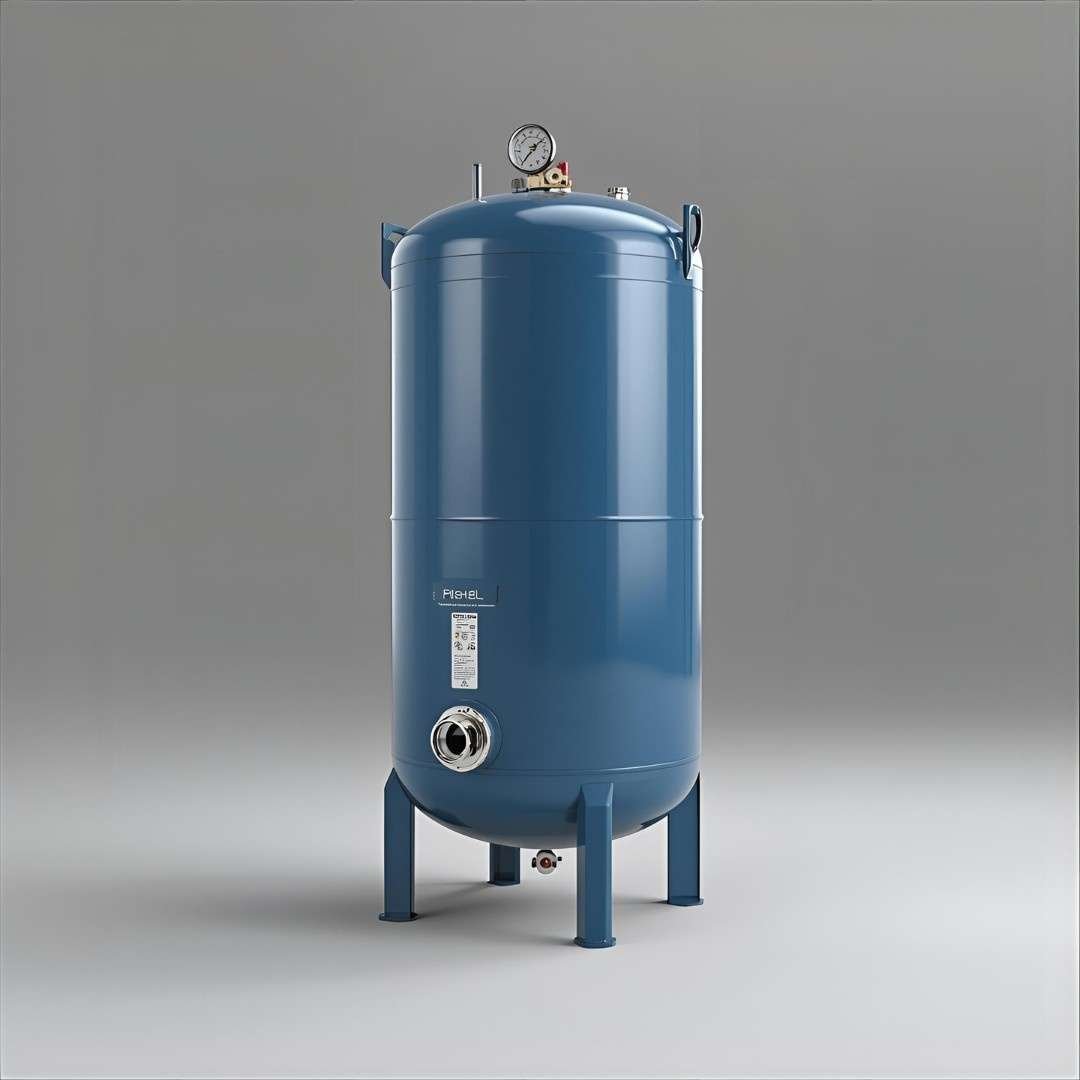
Reliable Air Receiver Tank Manufacturer in Pune for Industrial Compressed Air Systems
Compressed air is an essential utility for many industrial operations, including manufacturing, automotive, engineering, pharmaceutical, textile, food processing, chemical, and process industries.
A properly designed air receiver tank helps store compressed air, stabilize system pressure, reduce compressor cycling, and provide additional capacity during periods of peak demand.
Selecting the right air receiver tank manufacturer in Pune is crucial. It helps ensure safe, efficient, and reliable compressed air system operation. Tank quality, design pressure rating, material selection, fabrication standards, inspection and test methods, and regulatory compliance all affect performance, durability, and lifespan.
Anpam Engineering designs and manufactures industrial air receiver tanks for customers in Pune, Maharashtra, and across India. Our engineering-led approach focuses on understanding the operating conditions of each application before developing the appropriate vessel configuration, capacity, material, and pressure rating.
From standard compressed air storage requirements to customized high-pressure applications, we manufacture air receiver tanks intended for demanding industrial environments.
Leading Air Receiver Tank Manufacturer in Pune
As an experienced air receiver tank manufacturer in Pune, Anpam Engineering provides reliable compressed air storage solutions for many industrial applications.
An air receiver tank acts as a buffer between the compressor and downstream equipment. Instead of making the compressor respond at once to every change in air use, the receiver stores compressed air. It releases the air when needed. This can help maintain more stable pressure and reduce unnecessary compressor cycling.
Our manufacturing capabilities include:
- Vertical air receiver tanks
- Horizontal air receiver tanks
- Industrial compressed air receivers
- High-pressure air receiver tanks
- Carbon steel air receivers
- Stainless steel air receiver tanks
- ASME pressure-rated air receivers
- Custom-designed air receiver vessels
- Process and utility air storage vessels
Each project can be engineered according to required capacity, operating pressure, design temperature, material specification, nozzle arrangement, installation conditions, and applicable project standards.
Custom-Engineered Air Receiver Tanks for Pune Industries
Compressed air systems differ significantly from one facility to another. A small engineering workshop may need a compact receiver. A large automotive factory may need several high-capacity receivers. These receivers connect to a central compressor system.
As a dependable air receiver manufacturer in Pune, we focus on real operating needs, not just standard tank sizes.
Our design considerations can include:
- Compressor capacity
- Compressed air consumption
- Operating pressure
- Design pressure
- Working temperature
- Required storage capacity
- Peak air demand
- Compressor duty cycle
- Installation space
- Material compatibility
- Corrosion allowance
- Nozzle configuration
- Drain arrangement
- Future production expansion
This application-specific approach helps customers select a receiver tank that provides useful storage capacity without unnecessarily increasing equipment size and cost.
Why Is an Air Receiver Tank Important?
An air receiver tank performs several important functions within a compressed air system.
Maintaining Stable Air Pressure
Demand from pneumatic equipment can change rapidly. An adequately sized receiver provides stored compressed air during temporary increases in demand, helping reduce pressure fluctuations.
Reducing Compressor Cycling
Without sufficient air storage, compressors may start and stop frequently as system demand changes. A receiver can act as a buffer, reducing unnecessary cycling and mechanical stress.
Supporting Peak Demand
Certain applications consume large quantities of air for short periods. Stored compressed air can supplement compressor output during these demand peaks.
Improving System Efficiency
Properly designed air storage can help compressors operate within a more efficient operating range and reduce unnecessary load fluctuations.
Moisture Management
As compressed air cools inside a receiver, some moisture can condense. Proper drainage arrangements are therefore important for maintaining compressed air system performance.
Types of Air Receiver Tanks We Manufacture
Vertical Air Receiver Tanks
Vertical receivers are suitable for facilities where floor space is limited. Their compact footprint allows substantial storage capacity while using less horizontal floor area.
Manufacturing plants, workshops, process facilities, and utility areas commonly use them.
Horizontal Air Receiver Tanks
Horizontal air receivers are useful where building height is restricted or where the installation layout favors horizontal equipment.
You can design them with suitable supports, connections, drains, and inspection arrangements according to project requirements.
High-Pressure Air Receiver Tanks
High-pressure applications require careful mechanical design, material selection, welding procedures, and inspection. We engineer our high-pressure vessels according to the specified operating and design conditions.
Stainless Steel Air Receiver Tanks
Stainless steel receivers are used when corrosion resistance, cleanliness, or process needs make stainless steel better than carbon steel.
Custom Air Receiver Vessels
For specialized industrial applications, we can develop customized designs based on capacity, pressure, material, dimensions, connection requirements, and installation constraints.
Industries We Serve in Pune and Maharashtra
Pune has a diverse industrial ecosystem that includes automotive manufacturing, engineering, pharmaceuticals, food processing, chemicals, electronics, and general manufacturing. These industries rely extensively on compressed air for automation, instrumentation, production machinery, and utility applications.
Automotive Industry
Compressed air is used for assembly, painting, pneumatic tools, cleaning, automation, and various manufacturing processes. Proper air storage helps maintain a reliable supply to production equipment.
Engineering and Manufacturing
Machine shops, fabrication facilities, CNC operations, and automated production lines frequently use compressed air. Air receivers provide a buffer between compressor output and changing equipment demand.
Pharmaceutical Industry
Pharmaceutical facilities require carefully controlled utility systems. Depending on the application, you may need to select appropriate materials and apply hygienic design considerations.
Food Processing
Compressed air is used for packaging, automation, instrumentation, and processing equipment. Evaluate material selection and air quality requirements according to the specific application.
Chemical Industry
Chemical plants may require pressure vessels manufactured from materials selected for resistance to the process environment and operating conditions.
Textile Industry
Pneumatic equipment, automation systems, and production machinery rely on stable compressed air supplies. Properly sized air receivers can support reliable operation.
Power and Utility Systems
Instrument air, plant air, and other utilities that need compressed air storage use air receivers for storage.
Air Receiver Tank Capacity and Sizing
Selecting the correct capacity is one of the most important aspects of compressed air receiver design.
You can’t determine the required receiver tank volume simply by picking a standard, off-the-shelf size. You need to consider compressor output, operating pressure range, air demand, control strategy, and the receiver’s intended purpose.
For example, a receiver used mainly to reduce compressor cycling may need a different size. A receiver meant to handle short peak demand may need another size.
Before selecting an air receiver tank in Pune, customers should evaluate:
- Compressor flow rate
- Maximum and minimum system pressure
- Air consumption pattern
- Peak demand
- Required pressure stability
- Compressor control method
- Available installation space
- Future capacity requirements
For critical industrial systems, a qualified engineering team should verify receiver sizing.
Materials Used for Air Receiver Tank Manufacturing
Material selection has a direct impact on equipment durability and suitability for the operating environment.
Common materials include:
Carbon Steel: Widely used for conventional compressed air storage applications because of its strength and cost effectiveness.
Stainless Steel 304: Suitable where improved corrosion resistance is required.
Stainless Steel 316: Often selected for more demanding environments where enhanced corrosion resistance is beneficial.
Alloy and Special Materials: Selected when specific mechanical, temperature, or corrosion requirements call for alternative material grades.
Material selection should take into account operating pressure, temperature, humidity, environmental exposure, corrosion potential, and applicable project specifications.
Quality Assurance and Testing
A pressure-rated air receiver requires controlled fabrication and inspection throughout the manufacturing process.
At Anpam Engineering, quality control can include material verification, dimensional inspection, welding inspection, non-destructive testing, and pressure testing according to project requirements.
Typical inspection and testing activities may include:
- Visual inspection
- Dimensional inspection
- Weld inspection
- Radiographic testing
- Ultrasonic testing
- Dye penetrant testing
- Hydrostatic testing
- Material traceability
- Final inspection
The exact inspection plan depends on the vessel design, applicable code, customer specifications, and project requirements.
ASME-Compliant Air Receiver Tank Manufacturing
Safety is a fundamental consideration when manufacturing compressed air storage vessels.
Depending on the project, manufacturers can design and build air receiver tanks to meet pressure vessel standards. These standards may include ASME Section VIII, Division 1.
Where required, we can also incorporate documentation and inspection requirements into the manufacturing process.
For industrial buyers, it is important to review more than the tank’s nominal capacity. Also check its design pressure, material certification, and welding quality. Review inspection records, testing documentation, and any required certification.
Why Choose Anpam Engineering?
Selecting reliable air receiver tank suppliers in Pune is important. The receiver is part of a pressurized industrial system.
Anpam Engineering focuses on engineering quality and application-specific manufacturing rather than treating every receiver as a standard fabricated tank.
Engineering-Based Design
Our team evaluates application requirements before finalizing the vessel configuration.
Customized Manufacturing
Dimensions, pressure ratings, materials, connections, supports, and other requirements can be customized according to project specifications.
Quality-Controlled Fabrication
Controlled fabrication and inspection procedures help maintain structural integrity and dimensional accuracy.
Industry-Focused Solutions
We understand the requirements of manufacturing, process, automotive, chemical, pharmaceutical, food, and other industrial applications.
Project Support
From initial technical discussions through manufacturing and delivery, our team works with customers to coordinate project requirements.
Applications of Air Receiver Tanks
Our air receiver tanks can be used for:
- Compressed air storage
- Plant air systems
- Instrument air systems
- Pneumatic machinery
- CNC manufacturing
- Automated production lines
- Pneumatic tools
- Packaging equipment
- Automotive manufacturing
- Textile machinery
- Pharmaceutical facilities
- Food processing equipment
- Chemical processing
- Industrial utility systems
The appropriate receiver configuration depends on the specific application and operating conditions.
Frequently Asked Questions
What is an air receiver tank?
An air receiver tank is a pressure vessel used to store compressed air. It helps stabilize pressure, support peak demand, reduce compressor cycling, and improve the performance of a compressed air system.
How do I select the right air receiver tank capacity?
Capacity depends on compressor output, air consumption, operating pressure, demand fluctuations, compressor control method, and the intended purpose of the receiver. A detailed engineering assessment is recommended for industrial applications.
Do you manufacture customized air receiver tanks?
Yes. Air receivers can be customized according to required volume, pressure rating, material, dimensions, nozzle arrangement, supports, and project specifications.
What materials can we use?
Carbon steel and stainless steel are widely used. Alternative materials may also be selected when the process or project specifications require them.
Are your air receiver tanks suitable for industrial applications?
Yes. We engineer our air receiver vessels for applications across manufacturing, automotive, chemical, pharmaceutical, food processing, textile, power, and other industrial sectors.
Do you supply air receiver tanks outside Pune?
Yes. We manufacture and supply air receiver tanks for customers across Maharashtra and throughout India.
Choose a Reliable Air Receiver Tank Manufacturer in Pune
A properly engineered air receiver tank can make a significant difference to the stability, efficiency, and reliability of an industrial compressed air system. Select the right vessel based on actual air demand, compressor characteristics, operating pressure, material requirements, installation conditions, and applicable design standards.
Anpam Engineering provides customized industrial air receiver solutions designed around these requirements. From vertical and horizontal receivers to high-pressure and stainless steel vessels, our manufacturing capabilities support a broad range of industrial applications.
If you need an experienced air receiver tank manufacturer in Pune, our team can help. We will review your technical needs and develop a suitable compressed air storage solution.
Contact Anpam Engineering to discuss your required capacity, pressure rating, material specification, and application.
Related Industrial Solutions
You can also explore our related equipment and engineering solutions:
- Pressure Vessels
- Heat Exchangers
- Air Receiver Tanks
- Industrial Silencers
- Storage Tanks
- Process Equipment