

 blog
blog
Industrial Silencers for Steam, Air and Gas: A Complete…
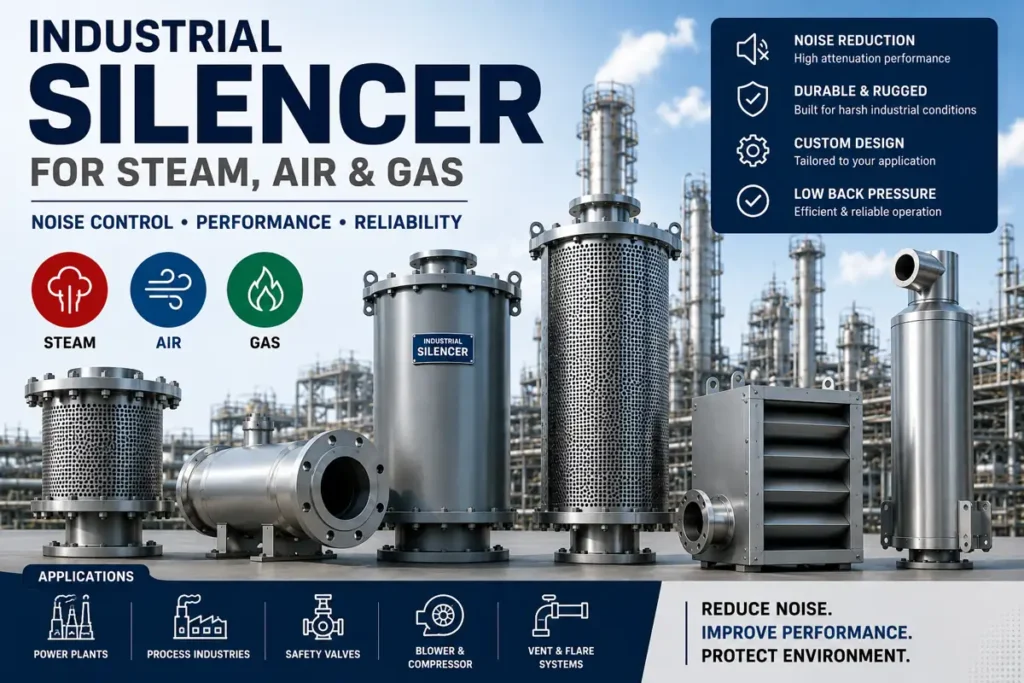
Industrial Silencers for Steam, Air and Gas: A Complete Guide
Noise pollution is a problem in factories. Many people do not think it is an issue.. In places like power plants, refineries, sugar, cement and chemical plants loud noise is a normal part of work. Things like steam releases, compressed air systems and gas venting can make a lot of noise. This noise is not just annoying it can also hurt peoples hearing.
Factories are trying to be safer and better for the environment. Managing noise is a part of that. Loud noise can make it hard to work make it hard to talk to each other and make workers less productive. Over time it can also cause hearing problems. If factories do not follow noise rules they can get. Have other problems.
Industrial Silencers are very important for factories today.
Industrial Silencers help reduce noise from things, like steam, air and gas. They help factories be safer and follow noise rules. They do this without slowing down production.
Whether it is a power plant, a factory or a processing plant the right silencer can make a difference. It can make the workplace safer and quieter.
In this guide we will look at Industrial Silencers. We will see how they work, the kinds, where they are used their benefits and what to think about when choosing one for your factory.
What Are Industrial Silencers?
Industrial Silencers are devices that help reduce noise from steam, air and gases moving through industrial systems.They are engineered to make the noise softer. Industrial Silencers are used where steam, air and gases are released or vented. These devices help make industrial systems quieter. Industrial Silencers are designed to reduce noise.
They are commonly installed on:
- Steam vent lines
- Safety relief valves
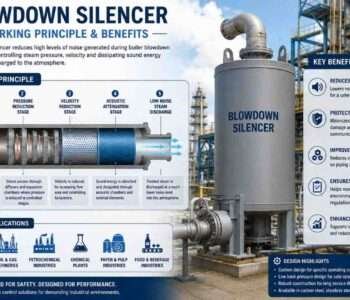
- Blowdown systems
- Compressor intakes and exhausts
- Gas turbines
- Process vents
- Pressure reducing stations
- Exhaust systems
An industrial silencer is really important because it helps to make loud noises quieter. It does this by taking the sound waves and turning them into sounds that are not so loud. This makes the industrial silencer very useful for keeping people safe and for being kind to the environment. An industrial silencer is a tool for reducing the sound levels of machines and equipment making the air cleaner and the area around it more pleasant. The main goal of a silencer is to make sure that the sound, from machines is not too loud and does not hurt anyone or the environment.
Why Noise Control Matters in Industry
Industrial noise can get really loud over 120 dB. This happens a lot during emergency venting. When theres a high-pressure discharge. Noise like this can hurt people working nearby. Also those living in the surrounding communities. Industrial noise is an issue and noise, from industrial activities can be very damaging.
Effective noise control provides advantages:
Improved Worker Safety
Prolonged exposure to loud noise can cause hearing loss. Industrial silencers help make workplaces safer.
Regulatory Compliance
Many countries have noise rules for industries. Installing silencers helps facilities meet environmental and workplace standards.
Enhanced Equipment Performance
Excessive vibration and acoustic energy can affect equipment reliability. Noise reduction systems help improve operational stability.
Better Community Relations
Industrial plants located near residential areas must minimize environmental noise to avoid complaints and legal complications.
Understanding Noise Generation in Steam, Air, and Gas Systems
Before selecting a silencer, it is important to understand how noise is generated.
Turbulence
When high-pressure fluid passes through restrictions, turbulence occurs. This creates broadband noise across various frequencies.
Pressure Reduction
Rapid pressure drops generate intense acoustic energy. Relief valves and vent systems are common examples.
High-Velocity Flow
The faster a fluid moves, the greater the noise produced. Supersonic discharge conditions can create extremely high sound levels.
Mechanical Vibration
Pipes, valves, and equipment can amplify sound through structural vibration. Each of these factors influences the design requirements of Industrial Silencers.
Types of Industrial Silencers
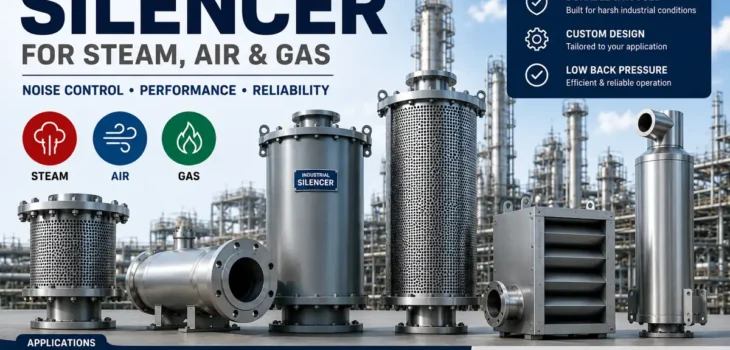
Industrial silencers are generally classified according to the medium they handle.
1. STEAM SILENCER
A STEAM SILENCER is specifically designed to reduce noise generated by high-pressure steam venting and discharge operations.
Steam systems often produce some of the highest industrial noise levels due to:
- High temperatures
- Rapid pressure reduction
- High flow velocities
- Flashing and turbulence
How a Steam Silencer Works
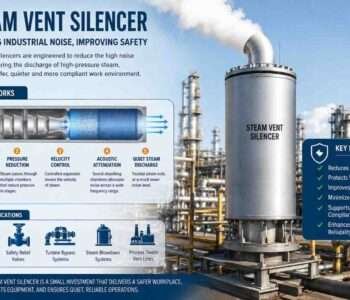
A steam silencer typically combines multiple stages of pressure reduction with acoustic absorption to minimize noise generated during steam discharge effectively.
As the steam passes through diffuser elements, the flow is divided into smaller streams. This helps reduce steam velocity and dissipate acoustic energy, lowering noise levels before the steam exits the silencer.
Common Applications
- Boiler startup venting
- Steam turbine bypass systems
- Safety valve discharge
- Steam blowdown systems
- Power generation facilities
- Petrochemical plants
Benefits of Steam Silencers
- Significant noise attenuation
- Protection of nearby equipment
- Improved worker safety
- Compliance with environmental regulations
- Reliable operation under high-temperature conditions
Steam silencers are designed to withstand extreme thermal stresses while delivering exceptional acoustic performance.
2. AIR SILENCER
An AIR SILENCER is used to control noise generated by compressed air systems and pneumatic equipment.
Compressed air is widely used throughout industrial operations. However, air exhaust and venting can generate high-frequency noise that often exceeds acceptable limits.
How an Air Silencer Works
An air silencer typically combines reactive and absorptive acoustic elements to effectively reduce noise generated by compressed air exhaust and venting systems.
The compressed air flows through specially engineered chambers designed to reduce sound pressure levels by:
- Slowing airflow velocity
- Dissipating turbulence
- Absorbing acoustic energy
- Redirecting sound waves
Typical Applications
- Air compressors
- Pneumatic tools
- Air blow-off systems
- Vacuum pumps
- Instrument air systems
- Industrial ventilation equipment
Advantages of Air Silencers
- Reduced workplace noise
- Improved operator comfort
- Increased equipment efficiency
- Lower maintenance requirements
- Enhanced safety compliance
In manufacturing environments, air silencers are often among the most cost-effective noise reduction solutions available.
3. GAS SILENCER
A GAS SILENCER is designed to attenuate noise generated by gas flow systems operating under varying pressure and temperature conditions.
Gas discharge applications can produce substantial acoustic energy, particularly in process industries where high-pressure gases are vented or exhausted.
Operating Principle
A GAS SILENCER controls noise through a combination of:
- Flow diffusion
- Expansion chambers
- Acoustic absorption materials
- Multi-stage pressure reduction
The design minimizes turbulence and reduces sound propagation before the gas is released into the atmosphere.
Common Applications
- Natural gas facilities
- Refineries
- Chemical processing plants
- Gas turbine exhaust systems
- Process vent systems
- LNG facilities
Key Benefits
- High noise reduction capability
- Durable construction
- Resistance to corrosion and harsh environments
- Reliable operation under demanding conditions
- Environmental compliance
Because gas properties vary significantly between applications, gas silencers are often custom-engineered for specific operating conditions.
Key Components of Industrial Silencers
Although designs vary, most Industrial Silencers contain several common components.
Inlet Section
The inlet receives the high-pressure fluid and directs it into the noise reduction system.
Diffuser Assembly
Diffusers distribute the flow through multiple passages, reducing velocity and turbulence.
Acoustic Absorption Section
This area contains sound-absorbing materials that convert acoustic energy into heat.
Expansion Chamber
Expansion chambers provide additional volume for pressure equalization and sound attenuation.
Outlet Section
The outlet releases the treated fluid while maintaining low noise levels. These components work together to achieve effective noise control across a wide frequency spectrum.
Factors to Consider When Selecting Industrial Silencers
Choosing the right industrial silencer requires careful engineering analysis.
Operating Pressure
Higher pressures generally produce greater noise levels and require more robust silencer designs.
Flow Rate
The volume of steam, air, or gas passing through the system significantly influences silencer sizing.
Temperature
Steam and hot gas applications demand materials capable of withstanding elevated temperatures.
Noise Reduction Requirements
Desired outlet noise levels determine the complexity and size of the silencer.
Space Constraints
Available installation space may affect the choice between vertical and horizontal configurations.
Material Selection
Common materials include:
- Carbon steel
- Stainless steel
- Alloy steel
- Specialized corrosion-resistant alloys
Selecting suitable materials ensures long service life and dependable performance.
Industries That Use Industrial Silencers
The demand for Industrial Silencers spans a broad range of industries.
Power Generation
Steam venting and turbine operations require high-performance noise control systems.
Oil and Gas
Refineries and gas processing facilities rely heavily on steam, air, and gas silencers.
Chemical Processing
Process vents and pressure relief systems generate substantial noise that must be controlled.
Manufacturing
Compressed air systems frequently require AIR SILENCER installations.
Petrochemical Plants
Emergency venting systems often utilize specialized STEAM SILENCER and GAS SILENCER solutions.
Pharmaceutical Facilities
Controlled acoustic environments support safer and more efficient production operations.
Maintenance of Industrial Silencers
Regular maintenance is essential for ensuring optimal silencer performance.
Routine Inspection
Inspect for:
- Corrosion
- Structural damage
- Loose connections
- Material degradation
Cleaning
Accumulated contaminants can reduce efficiency and increase pressure drop.
Acoustic Material Assessment
Sound-absorbing media should be evaluated periodically for wear or deterioration.
Performance Monitoring
Routine noise measurements help verify that the silencer continues to meet operational requirements. Preventive maintenance can significantly extend equipment lifespan while maintaining acoustic performance.
Future Trends in Industrial Noise Control
Industrial noise management continues to evolve with advancements in engineering and materials technology.
Emerging trends include:
- Computational acoustic modeling
- Advanced sound-absorbing materials
- High-efficiency diffuser designs
- Smart monitoring systems
- Lightweight corrosion-resistant alloys
- Enhanced environmental compliance solutions
These innovations are helping industries achieve superior noise reduction while optimizing operational efficiency.
Conclusion
Noise control is a critical aspect of modern industrial operations. Whether managing high-pressure steam venting, compressed air discharge, or gas exhaust systems, properly designed industrial silencers provide an effective solution for reducing sound levels, improving workplace safety, and ensuring regulatory compliance.
A well-engineered steam silencer can withstand extreme thermal and pressure conditions, while an air silencer delivers efficient noise reduction for pneumatic systems. Similarly, a gas silencer provides reliable acoustic performance in demanding gas processing and exhaust applications.
By evaluating operating conditions, noise characteristics, and system requirements, industries can select the most suitable silencer solution for long-term performance, environmental responsibility, and operational efficiency. As industrial facilities continue to prioritize safety, sustainability, and productivity, industrial silencers will remain an essential component of modern process infrastructure.