

 Uncategorized
Blowdown Silencer: Working Principle, Types and Industrial Applications
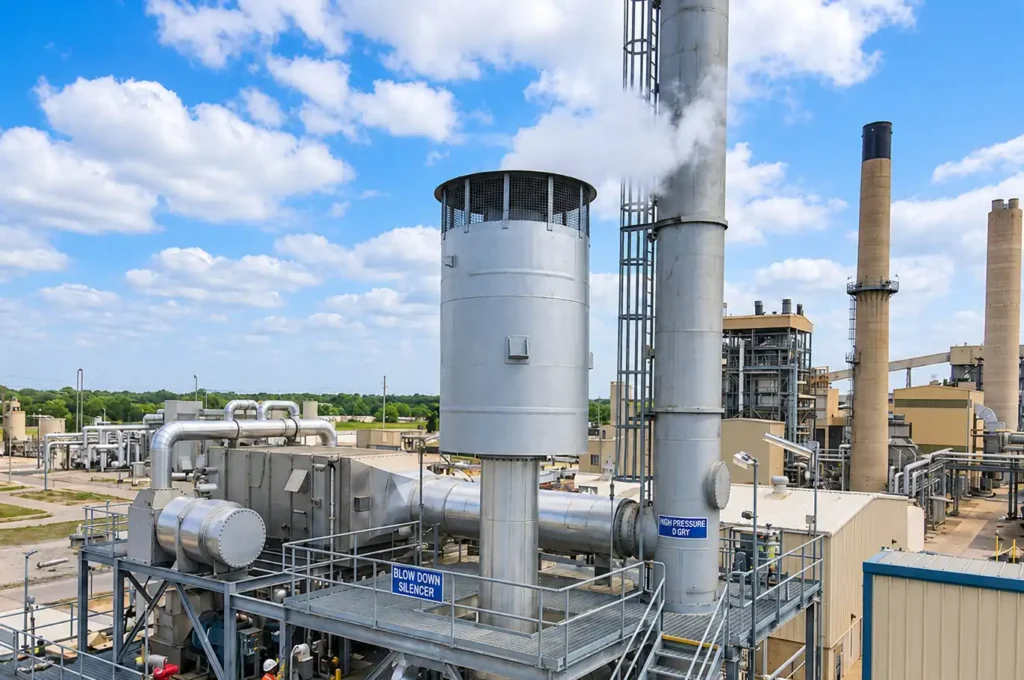
Industrial plants often release high-pressure steam, gas, or process fluids during startup, shutdown, maintenance, and pressure-relief operations. These controlled discharge activities are essential for safe plant operation, but they can generate extremely high noise levels. A blowdown silencer reduces noise during these discharge events.
It also lets the system release fluid through a properly engineered flow path.
Blowdown silencers are common in power plants, oil and gas sites, petrochemical units, and refineries.
Other process industries also use them in pressure relief and depressurisation systems. Selecting the right silencer requires an understanding of the discharge conditions, operating pressure, flow characteristics and required acoustic performance.
What Is a Blowdown Silencer?
A blowdown silencer is an industrial noise-control device. It reduces sound when pressurised steam, gas, or other process media escapes. This release can enter the atmosphere or a vent system.
During blowdown, fluid moves from a high-pressure system to a lower-pressure environment. This sudden expansion and high-velocity flow can produce intense aerodynamic noise.
Depending on the medium and operating conditions, additional noise may result from turbulence, pressure reduction and flow interaction within the discharge system.
They install a blowdown silencer in the discharge line to control this noise. Designers select its construction and internal arrangement according to the process medium, pressure, temperature, mass flow rate, installation conditions, and applicable project requirements.
How Does a Blowdown Silencer Work?
The working principle of a blowdown silencer is to control high-velocity fluid flow. It also reduces acoustic energy during discharge.
When pressurised steam or gas enters the silencer, the design spreads the flow through selected passages. It also guides it through perforated parts or expansion sections. This helps manage the discharge velocity and reduces the intensity of the noise transmitted to the surrounding environment.
Depending on the application, the silencer may use a combination of acoustic absorption, expansion and flow-distribution techniques.
1. Flow Expansion
The incoming high-pressure fluid passes through an engineered internal arrangement that provides controlled expansion. This helps manage the rapid pressure transition and the resulting aerodynamic noise.
2. Flow Distribution
Internal components distribute the fluid through multiple passages or discharge areas. Proper flow distribution can help avoid concentrated high-velocity jets and excessive local turbulence.
3. Acoustic Attenuation
Acoustic treatment may be incorporated to absorb or reduce sound energy across the required frequency range. The selected arrangement depends on the process medium, temperature and operating conditions.
4. Controlled Discharge
After passing through the internal sections, the fluid exits through the silencer outlet. The design must provide the required noise reduction without creating unacceptable backpressure or interfering with the intended discharge function.
The actual performance depends on the complete system design and verified operating conditions.
Types of Blowdown Silencers
Blowdown silencers are not one-size-fits-all products. Their configuration depends on the process application and the characteristics of the discharged medium.
Steam Blowdown Silencer
Engineers use steam blowdown silencers when they must vent high-pressure steam. This happens during boiler operation, servicing, commissioning, or other planned releases. Engineers design them to withstand the required steam pressure, temperature, flow rate, and outlet discharge conditions.
Gas Blowdown Silencer
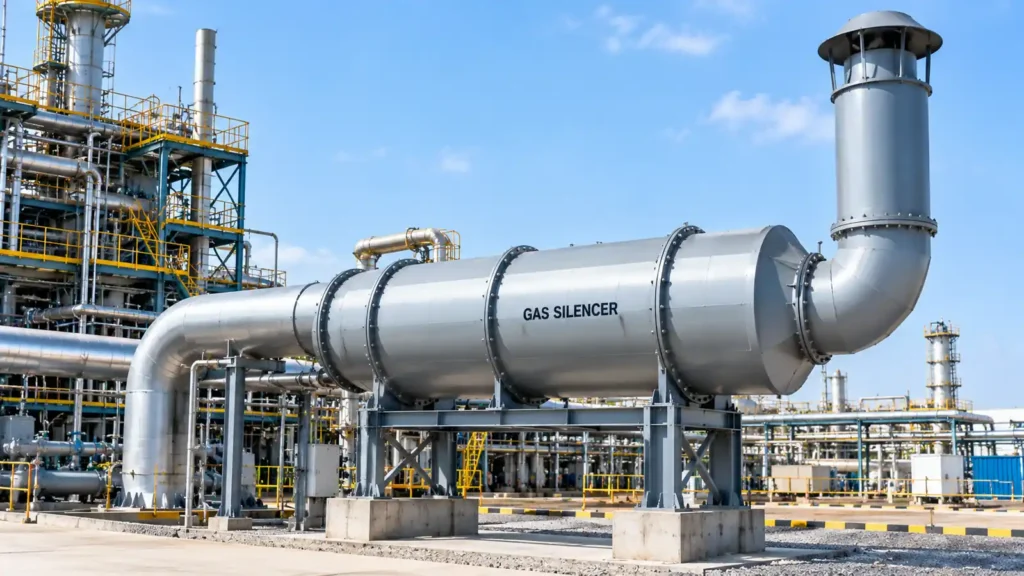
Gas blowdown silencers are used in systems where compressed or process gas must be depressurised or discharged. Their design considers gas composition, operating pressure, temperature, flow rate and expansion behaviour.
Pressure Relief Blowdown Silencer
Applications involving pressure-relief discharge arrangements consider these silencers. The design must be compatible with the associated relief system and its required discharge capacity.
Process Vent and Blowdown Silencer
Process plants may require silencers for intermittent venting and depressurisation operations. We configure these units according to the process medium, operating cycle, and installation requirements.
Important Design Considerations
A blowdown silencer must be engineered around the actual process conditions. The following parameters are important during equipment selection and design.
Discharge Medium: The medium may be steam, natural gas, compressed air or another process gas. Its properties influence the internal configuration and material selection.
Operating Pressure and Temperature: Inlet pressure and temperature determine the mechanical and thermal requirements of the equipment.
Mass Flow Rate: The expected discharge flow rate is key for sizing the inlet. It also helps size internal flow passages and the outlet setup.
Noise Reduction Requirement: Specify the required noise level along with the measurement location, operating condition, and applicable project criteria.
Allowable Pressure Drop and Backpressure: The silencer must meet the discharge system’s allowed pressure drop and backpressure limits. This is particularly important for pressure-relief applications.
Material Selection: Material selection depends on the process medium, temperature, pressure, corrosion conditions and project specifications.
Installation and Structural Requirements: Engineers should consider orientation, support arrangement, foundation, connected piping loads, drainage, and maintenance access during engineering.
Industrial Applications of Blowdown Silencers
Blowdown silencers are used across industries where high-pressure fluids are released as part of normal operation, safety systems or maintenance procedures.
Power Plants
Power generation facilities may require steam blowdown silencers for boiler systems, steam headers and associated discharge arrangements.
Oil and Gas Industry
Oil and gas facilities use gas blowdown and depressurisation systems to manage process conditions during shutdown, maintenance and operational activities.
Petrochemical and Refinery Plants
Refineries and petrochemical plants may require silencers for process gas venting and controlled pressure-release operations.
Chemical and Process Industries
Chemical manufacturing facilities use specialised venting and blowdown arrangements depending on the process medium and equipment operating conditions.
Industrial Manufacturing Facilities
Certain manufacturing plants use compressed air and gas discharge systems. They need noise control near equipment and work areas.
Blowdown Silencer vs. Conventional Vent Silencer
Although both devices serve industrial noise control, their application requirements can differ.
A designer may tailor a conventional vent silencer for a particular continuous or intermittent venting duty. People generally associate a blowdown silencer with a defined pressure-release or depressurisation event, where the discharge conditions may change significantly over time.
The distinction matters. You must choose the silencer based on the real flow profile, pressure conditions, discharge duration, and system needs. Do not choose it based only on the equipment name.
How to Select the Right Blowdown Silencer Manufacturer
Choosing a manufacturer involves more than comparing equipment dimensions or quoted prices. Buyers should evaluate the manufacturer’s ability to understand the process conditions and develop a suitable engineering solution.
Consider the following points:
- Experience with steam and gas discharge noise-control applications.
- Capability to review process data, technical specifications and piping drawings.
- Understanding of pressure, temperature, flow rate and allowable backpressure.
- Suitable material selection and fabrication capability.
- Quality-control procedures, inspection documentation and applicable code requirements.
- Ability to provide project-specific technical and commercial documentation.
Providing complete operating information at the enquiry stage helps the manufacturer evaluate the application more accurately.
Information Required for a Blowdown Silencer Enquiry
For preliminary engineering and technical evaluation, buyers should provide the available details, including:
- Process medium and composition, where applicable.
- Operating and design pressure.
- Operating and design temperature.
- Normal and maximum discharge flow rate.
- Required noise criterion and measurement distance.
- Allowable pressure drop or backpressure.
- Inlet and outlet connection details.
- Installation orientation and available space.
- Applicable project specifications and inspection requirements.
If some values are not yet available, you can mark them as pending confirmation during the enquiry stage.
Blowdown Silencer Solutions by Anpam Engineering
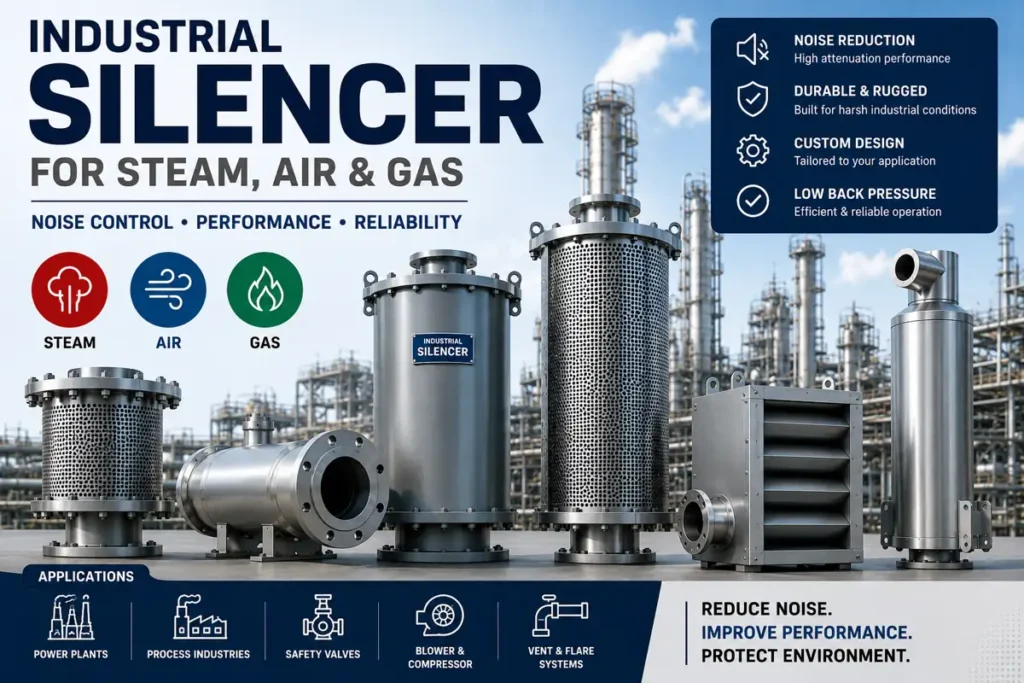
Anpam Engineering manufactures industrial noise-control equipment for steam, air and gas applications. Blowdown silencer requirements are evaluated based on the process medium, discharge conditions, operating parameters, noise criteria and project specifications.
For each application, the equipment configuration should be developed around the actual engineering requirements rather than relying on a standard arrangement for every installation.
Whether the requirement involves a steam discharge system or a process gas blowdown application, providing the available technical details helps establish the appropriate design basis.
To discuss a project requirement, contact Anpam Engineering and share the process datasheet, technical specification or available equipment details for review.
Conclusion
A blowdown silencer plays an important role in managing noise generated during high-pressure steam and gas discharge operations. Its performance depends on correct application assessment, flow management, acoustic design, material selection and compatibility with the discharge system.
For industrial facilities, selecting a suitable blowdown silencer requires careful consideration of operating conditions and project-specific requirements. Working with an experienced manufacturer helps ensure the proposed equipment meets real process and installation needs.