

 Uncategorized
Gas Silencer: Working Principle, Types and Industrial Applications
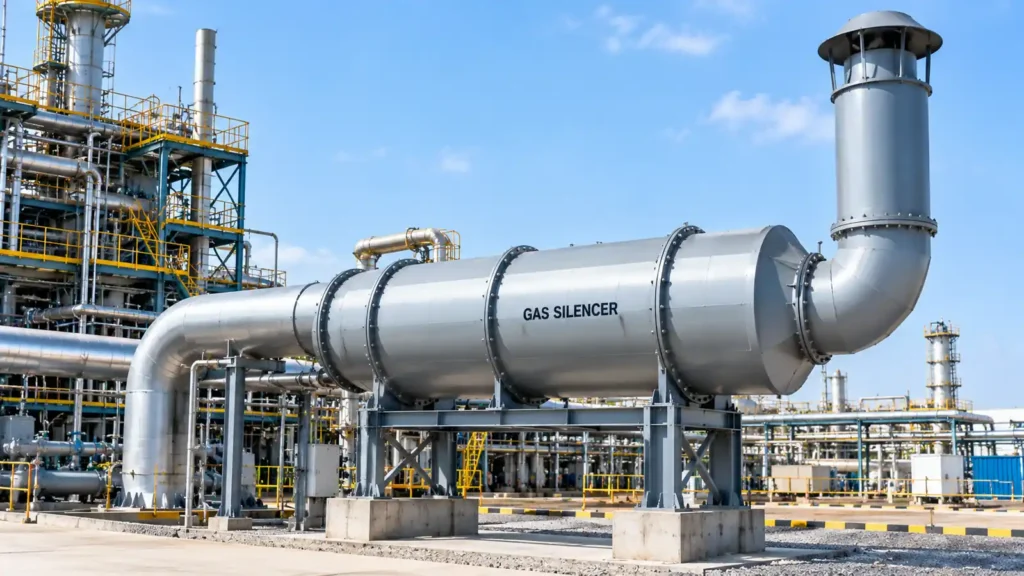
Gas is used across several industrial operations, including power generation, oil and gas processing, chemical manufacturing, petrochemical production and other process industries. During these operations, pipelines, vents, exhaust systems, and pressure-control equipment may release or discharge gas. Depending on the operating conditions, this flow can generate considerable noise.
A gas silencer is an industrial noise-control device designed to reduce sound generated by flowing or discharging gas. It helps control noise during gas venting, exhaust discharge, and other industrial processes. It also lets gas pass through the system under set operating conditions.
Selecting the right silencer needs you to understand gas properties, pressure, temperature, flow rate, noise levels, and installation needs. This article explains how gas silencers work, their common types, important design considerations and applications across different industries.
What Is a Gas Silencer?
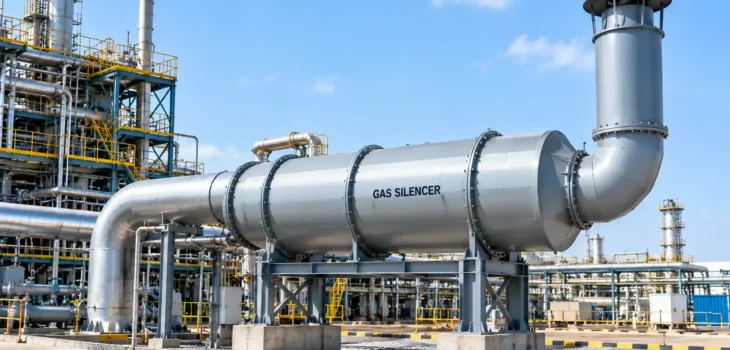
A gas silencer is a specially designed sound-control device. Install it in an industrial gas flow or discharge system to reduce noise. People commonly use it where compressed, pressurised, or high-velocity gas creates excessive sound during release or movement.
Depending on the application, gas silencers may be installed in vent lines and exhaust systems. They may also be used in compressor installations, process gas outlets, and pressure-relief discharge arrangements.
The design varies according to the type of gas, flow characteristics, operating conditions and required noise attenuation. A silencer for continuous gas discharge may need a different design than one for intermittent high-pressure venting.
The main goal is to reach the needed noise reduction without causing too much pressure drop or affecting how the gas system works.
How Does a Gas Silencer Work?
Industrial gas silencers work by reducing sound energy as gas passes through specially designed internal acoustic components.
When gas flows fast or expands from high pressure to low pressure, it can create aerodynamic noise. The intensity and frequency depend on gas pressure, temperature, flow rate, outlet geometry, and operating conditions.
A properly designed silencer uses acoustic attenuation techniques to reduce the sound transmitted from the discharge point.
Common approaches include:
1. Absorptive noise reduction
Absorptive silencers use suitable sound-absorbing materials within protected acoustic sections. These materials help dissipate sound energy, particularly across selected frequency ranges.
2. Reactive noise reduction
Reactive designs use specially arranged chambers, expansion sections or acoustic passages to influence sound-wave propagation. Engineers select these arrangements according to the application’s acoustic and flow requirements.
3. Combined acoustic design
Some industrial applications require a combination of absorptive and reactive methods. The final configuration depends on the required noise attenuation, gas properties, operating pressure and allowable pressure drop.
Engineers must develop the internal design carefully to balance acoustic performance with safe and efficient gas flow.
Types of Industrial Gas Silencers
Different gas-handling applications require different silencer configurations. Some commonly used types include:
1. Gas Vent Silencer
A gas vent silencer is used to reduce noise generated when gas is discharged through a vent line. You can install it in process facilities, industrial plants, and gas-handling systems.
The design depends on the gas composition, discharge pressure, flow rate, temperature and expected operating duration.
2. Blowdown Silencer
Blowdown silencers are designed for applications involving the controlled release of pressurised gas from equipment or process systems.
These applications may involve high gas velocities and changing flow conditions during discharge. Therefore, the silencer must be designed using the specified blowdown parameters, not just standard operating flow conditions.
3. Compressor Gas Silencer
Compressors are widely used in oil and gas facilities, chemical plants and industrial processing operations. Their associated suction, discharge and vent systems can generate noise because of gas movement and pressure variations.
Gas silencers can be added to suitable compressor systems to help control noise. They also maintain the required operating performance.
4. Process Gas Silencer
Process gas silencers are used in industrial systems. They reduce noise when gas is moved, discharged, or released during manufacturing or processing.
Their design depends on the process gas characteristics, operating conditions, plant layout and acoustic requirements.
5. Gas Exhaust Silencer
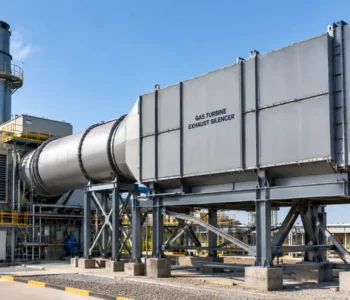
Gas exhaust silencers are installed in selected industrial exhaust systems to reduce noise produced by gas discharge. Engineers and designers commonly consider them in applications involving engines, turbines, and other gas-handling equipment.
The acoustic configuration must be suitable for the exhaust temperature, flow characteristics and installation environment.
Important Design Considerations for Gas Silencers
Gas silencer design involves several engineering parameters. Understanding these factors is essential for selecting a suitable configuration.
Gas Composition and Properties
The type of gas directly influences material selection and equipment design. Evaluate factors such as chemical composition, corrosive characteristics, moisture content, and operating conditions before finalising the design.
Operating Pressure and Temperature
The silencer must be suitable for the specified pressure and temperature conditions. Pay particular attention to high-pressure discharge, temperature variations, and transient operating conditions.
Gas Flow Rate
Gas flow rate is one of the most important inputs in silencer sizing. Incorrect sizing can result in excessive flow resistance or inadequate acoustic performance.
Noise Reduction Requirements
The required noise attenuation should be established based on project specifications and the surrounding environment. Acoustic evaluation should consider relevant frequency ranges and the measurement conditions.
Pressure Drop
A gas silencer should provide the required acoustic performance while maintaining acceptable pressure-drop characteristics. This is especially important in systems where flow performance and downstream operating conditions are critical.
Material Selection
Material selection depends on gas composition, pressure, temperature, corrosion exposure and operating environment. Engineers should consider suitable materials and fabrication procedures as part of the engineering design.
Structural and Installation Requirements
The silencer should be designed for the relevant mechanical loads, vibration, thermal expansion and support conditions. Also consider available installation space, piping connections, and maintenance access.
Industrial Applications of Gas Silencers
Gas silencers are used across several sectors where noise is generated by gas movement, exhaust discharge or pressure release.
Oil and Gas Industry: Used in select gas venting, compressor, and process discharge applications. It helps control industrial noise.
Power Generation: Applied in gas turbine exhaust systems, auxiliary equipment and other gas-handling installations.
Petrochemical Industry: Used in process gas systems and discharge arrangements within petrochemical facilities.
Chemical Processing: Helps manage noise associated with gas movement and release in industrial process operations.
Manufacturing and Heavy Engineering: Used in suitable compressed gas, exhaust and industrial ventilation applications.
Always select the exact silencer type and configuration according to the application and operating data.
Gas Silencer vs. Standard Industrial Silencer
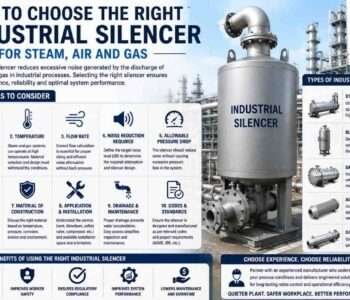
The term industrial silencer covers a broad range of noise-control equipment used for steam, air and gas applications. Designers tailor a gas silencer specifically to the properties and operating conditions of a gas-handling system.
For example, gas venting may involve rapid expansion, high discharge velocity or changes in pressure. These conditions can create different acoustic and flow requirements compared with low-pressure ventilation or conventional air discharge.
Therefore, you should design a suitable gas silencer for the actual gas composition. Consider the pressure, temperature, and flow rate. Also consider the required noise reduction.
How to Select the Right Gas Silencer Manufacturer
Selecting an experienced industrial silencer manufacturer is important for achieving the required acoustic and operational performance.
Before selecting a manufacturer, consider the following:
- Experience in industrial gas and process noise-control applications.
- Engineering capability for application-specific silencer design.
- Understanding of operating pressure, temperature and flow conditions.
- Appropriate material selection and fabrication capabilities.
- Quality-control procedures and inspection documentation.
- Ability to meet project specifications and installation requirements.
Providing accurate technical information during the enquiry stage helps the manufacturer evaluate the application and recommend a suitable design.
Why Choose Anpam Engineering for Industrial Silencers?
Anpam Engineering manufactures industrial silencers for steam, air and gas applications, serving different industrial requirements.
The company focuses on application-specific engineering and fabrication based on project operating conditions and technical specifications. You can evaluate each silencer requirement by considering gas flow, operating pressure, temperature, acoustic targets, material requirements, and installation arrangements.
Whether the requirement involves a gas vent silencer, blowdown silencer, process gas silencer or another industrial noise-control application, the design should be matched to the actual operating conditions.
For industrial silencer enquiries, customers can share their technical specifications, equipment details and project requirements with Anpam Engineering for further evaluation.
Conclusion
Gas silencers are important components in industrial noise-control systems. They help reduce noise generated by gas venting, exhaust discharge, compressor systems and process operations.
The right solution depends on several factors. These include gas composition, operating pressure, temperature, flow rate, acoustic performance, and allowable pressure drop. Careful engineering and suitable material selection are essential for achieving reliable performance.
Anpam Engineering provides industrial silencer manufacturing solutions for steam, air and gas applications. Contact the team to discuss your gas silencer requirements and project specifications.