

 blog
blog
How to Choose the Right Air Receiver Tank Size
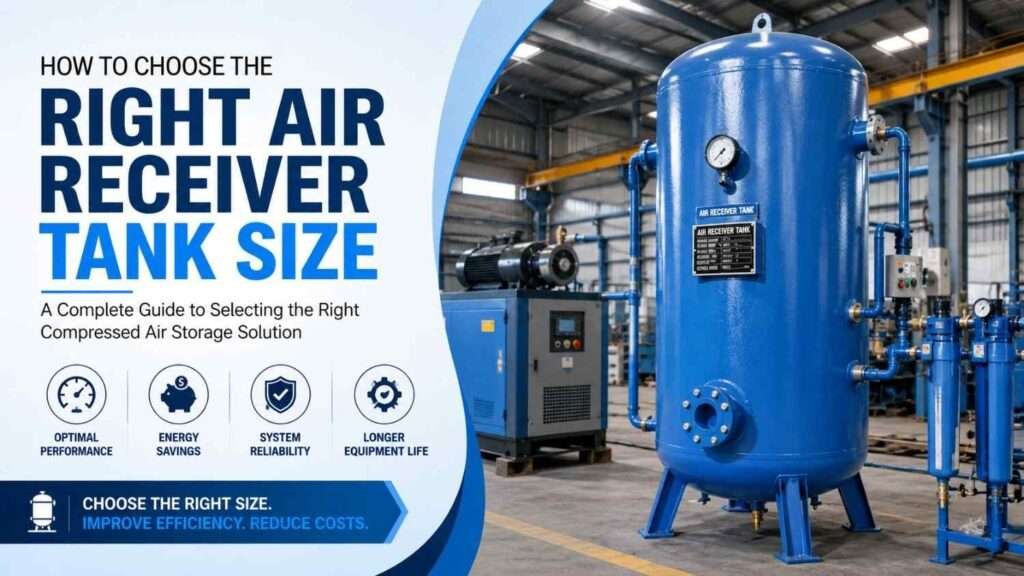
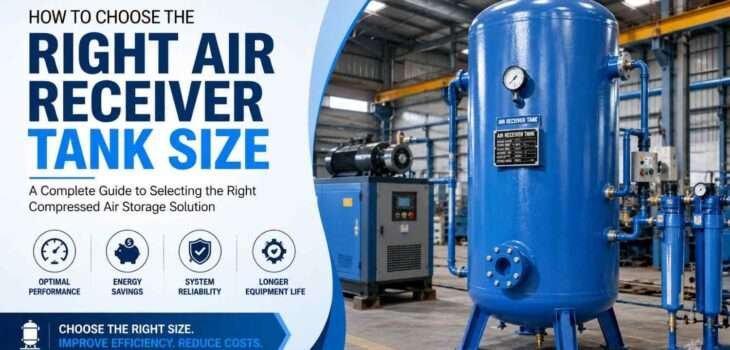
Choose the right air receiver tank size is essential for maintaining a stable and efficient compressed air system. An undersized tank can cause frequent compressor cycling and pressure fluctuations, while an oversized tank may increase installation costs without providing additional operational benefits. By understanding your air demand, compressor capacity, and application requirements, you can choose an air receiver tank that delivers reliable performance and long-term energy savings.
What Is an Air Receiver Tank?
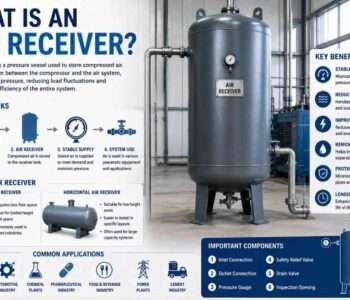
An air receiver tank is a pressure vessel designed to store compressed air before it is distributed throughout a compressed air system. It acts as a buffer between the air compressor and the end-use equipment, helping maintain consistent pressure, reduce compressor cycling, and improve overall system efficiency.
Air receiver tanks are widely used in manufacturing plants, textile industries, automotive workshops, pharmaceutical facilities, food processing units, power plants, and engineering industries.
Why Air Receiver Tank Size Matters
Choosing the correct tank size directly impacts the efficiency and reliability of your compressed air system.
A properly sized air receiver tank helps:
- Maintain stable system pressure
- Reduce compressor start-stop cycles
- Lower energy consumption
- Improve compressor lifespan
- Separate moisture from compressed air
- Handle sudden increases in air demand
- Reduce maintenance costs
An incorrectly sized tank can lead to increased wear on compressors, pressure drops, and unnecessary energy expenses.
Factors to Consider When Choosing an Air Receiver Tank Size
1. Compressor Capacity
The compressor’s airflow output, usually measured in CFM (Cubic Feet per Minute) or m³/min, is one of the most important factors.
Larger compressors generally require larger receiver tanks to maintain adequate air storage and reduce compressor cycling.
For example:
| Compressor Capacity | Recommended Tank Size |
|---|---|
| 10 CFM | 150–250 Litres |
| 20 CFM | 300–500 Litres |
| 50 CFM | 750–1,000 Litres |
| 100 CFM | 1,500–2,000 Litres |
| 200 CFM | 3,000 Litres or more |
Note: Actual sizing depends on system pressure, duty cycle, and air demand.
2. Air Consumption
Determine how much compressed air your equipment uses during normal operation.
If your production line experiences frequent peak air demand, a larger air receiver tank can store additional compressed air and prevent pressure drops.
3. Operating Pressure
Higher operating pressures often allow greater air storage in the same tank volume. Your air receiver tank should always be designed for the maximum operating pressure of your compressed air system, with an appropriate safety margin.
4. Compressor Type
Different compressors have different operating characteristics.
For example:
- Rotary screw compressors typically require moderate receiver capacity.
- Reciprocating compressors generally benefit from larger tanks to reduce frequent cycling.
- Variable speed compressors may require smaller receiver tanks because they adjust output based on demand.
5. Demand Fluctuations
If your production equipment consumes compressed air intermittently, a larger receiver tank helps maintain stable pressure during peak demand periods.
Industries with pneumatic tools, packaging lines, or robotic automation often benefit from additional storage capacity.
6. Future Expansion
If your facility plans to add more production equipment in the future, selecting a slightly larger air receiver tank can reduce future upgrade costs.
General Air Receiver Tank Sizing Rule
A commonly used guideline is:
Receiver Tank Volume = 6 to 10 Gallons per CFM (approximately 0.8 to 1.3 litres per litre/second of airflow, depending on the application).
This rule serves as a starting point. A detailed engineering calculation should consider:
- Compressor capacity
- Maximum pressure
- Minimum acceptable pressure
- Air demand profile
- Duty cycle
- System layout
For critical industrial applications, professional sizing is always recommended.
Vertical vs. Horizontal Air Receiver Tanks
Vertical Air Receiver Tanks
- Floor space is limited
- Higher storage capacity is needed in a compact footprint
- Improved moisture separation is desired
Horizontal Air Receiver Tanks
- Ceiling height is limited
- Equipment must be mounted on the tank
- Maintenance access is a priority
The choice depends on available installation space and system design.
Material Selection
Selecting the right material improves reliability and service life.
Common options include:
- Carbon Steel – Suitable for most industrial compressed air systems
- Stainless Steel 304 – Excellent corrosion resistance
- Stainless Steel 316 – Ideal for food, pharmaceutical, and chemical industries
- Special Alloy Materials – Used for demanding applications
Material selection should consider air quality, humidity, operating environment, and industry requirements.
Safety Considerations
Air receiver tanks are pressure vessels and must be designed and manufactured according to recognized standards.
When purchasing an air receiver tank, ensure it includes:
- Pressure Relief Valve
- Pressure Gauge
- Drain Valve
- Inspection Opening (where applicable)
- Certified Material Traceability
- Hydrostatic Testing
- Quality Documentation
Choosing a tank manufactured to standards such as ASME Section VIII helps ensure safety and long-term reliability.
Common Mistakes to Avoid
Avoid these common sizing and selection errors:
- Choosing the smallest tank based only on price
- Ignoring future production expansion
- Overlooking compressor cycling frequency
- Selecting incorrect pressure ratings
- Using incompatible materials for the application
- Failing to account for peak air demand
- Neglecting routine maintenance and condensate drainage
These mistakes can reduce efficiency, increase energy costs, and shorten equipment life.
Why Work with an Experienced Manufacturer?
An experienced manufacturer can help you select the right tank size by evaluating your:
- Compressor capacity
- Air consumption
- Operating pressure
- Installation space
- Industry requirements
- Future expansion plans
Custom-engineered air receiver tanks ensure optimal performance, improved energy efficiency, and compliance with applicable design standards.
Conclusion
Choosing the right air receiver tank size is critical for achieving reliable compressed air storage, reducing energy consumption, and extending compressor life. The ideal tank size depends on compressor capacity, air demand, operating pressure, system configuration, and future production requirements.
Partnering with a trusted manufacturer ensures you receive a properly engineered solution that supports safe, efficient, and uninterrupted industrial operations.