

 blog
blog
Better understand the Blow Down Silencer Principles
Better Understanding the Working Principle of a Blowdown Silencer
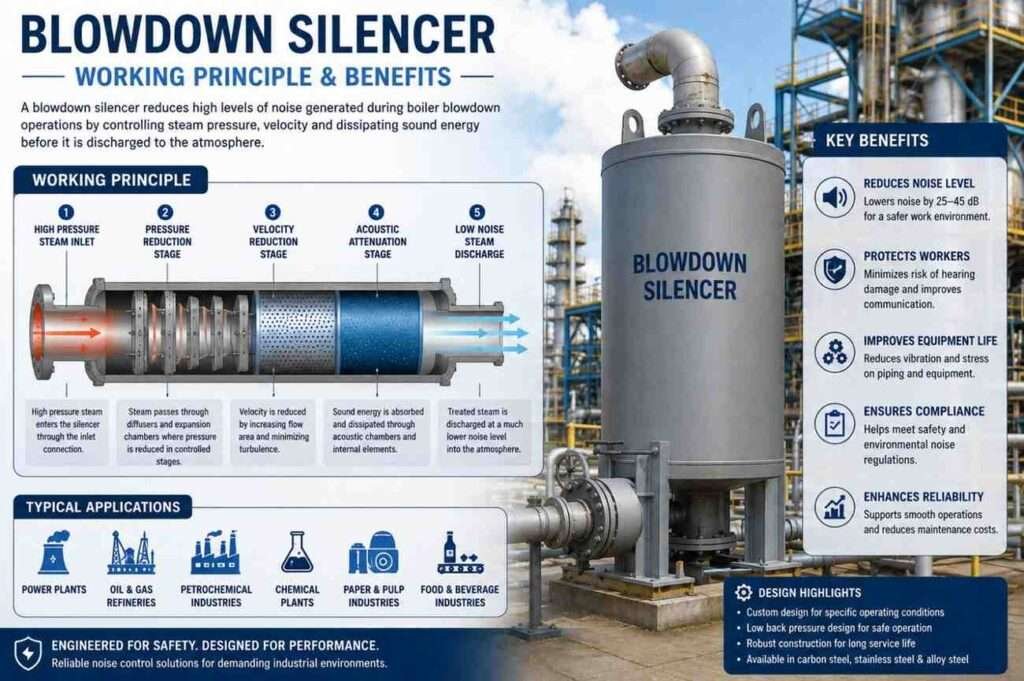
Industrial sites that run high-pressure boilers, steam systems, power plants, refineries, and process equipment often perform blowdown. These operations keep systems efficient and safe.
During blowdown, the system quickly releases high-pressure steam into the air. This can create deafening noise levels that may exceed 140 dB. Without proper noise control, this discharge can create hazardous working conditions, damage hearing, and increase environmental noise pollution.
A blowdown silencer is designed to control this loud noise while letting steam discharge safely and efficiently. It lowers sound energy without adding too much back pressure. This helps boiler and pressure relief systems work as designed.
As industries place greater emphasis on occupational safety, environmental compliance, and operational reliability, blowdown silencers have become a critical component in modern steam systems. Whether installed in power plants, oil and gas facilities, chemical processing units, or manufacturing plants, they help create a safer and quieter working environment.
In this guide, you will learn how a blowdown silencer works, its main parts, and why it matters for industrial noise control.
What Is a Blowdown Silencer?
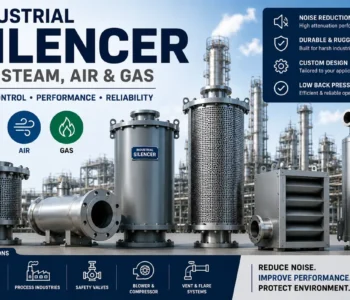
A blowdown silencer is an industrial noise control device. It is installed on boiler blowdown lines or high-pressure steam discharge systems. It reduces noise during blowdown operations.
Boiler blowdown is a necessary maintenance process that removes impurities, dissolved solids, and sludge from the boiler. During this process, high-pressure steam and hot water are discharged rapidly through blowdown piping. The sudden release of pressure produces intense aerodynamic noise that can be hazardous if left uncontrolled.
A blowdown silencer is designed to:
- Reduce discharge noise
- Protect workers from excessive sound exposure
- Minimize vibration
- Maintain safe steam flow
- Prevent excessive back pressure
- Improve overall plant safety
Engineers carefully design modern blowdown silencers using sound and fluid flow principles. They reduce noise effectively and work reliably in tough industrial conditions.
Why Does Blowdown Produce So Much Noise?
To understand how a blowdown silencer works, it is important to first understand why boiler blowdown is so noisy.
Inside a boiler, steam exists under extremely high pressure and temperature. When the blowdown valve opens, this pressurized steam expands almost instantly as it enters atmospheric conditions.
This rapid expansion causes:
- Extremely high steam velocity
- Strong turbulence
- Shock wave formation
- Pressure fluctuations
- Conversion of pressure energy into acoustic energy
The result is an intense jet of noise that can travel long distances across an industrial facility.
Typical noise levels include:
| Blowdown Operation | Approximate Noise Level |
|---|---|
| Boiler Blowdown | 140 to 160 dB |
| Steam Venting | 120 to 150 dB |
| Safety Valve Discharge | 130 to 155 dB |
| Turbine Steam Release | Up to 160 dB |
For reference:
- Typical conversation: 60 dB
- Heavy traffic: 85 dB
- Rock concert: 110 dB
- Jet engine at close range: 140 dB
Noise above 85 dB for long periods can damage hearing. Sudden exposure to extreme noise levels can cause immediate harm.
Why Is Controlling Blowdown Noise Important?
Industrial noise affects much more than comfort. Excessive blowdown noise can have serious consequences for personnel, equipment, and plant operations.
Protecting Worker Health
Continuous exposure to high-decibel noise can result in:
- Permanent hearing loss
- Tinnitus (ringing in the ears)
- Fatigue
- Reduced concentration
- Increased workplace stress
By reducing noise at the source, a blowdown silencer helps create a safer working environment.
Improving Plant Safety
In noisy industrial environments, workers may struggle to hear:
- Emergency alarms
- Radio communications
- Equipment warning signals
- Instructions from supervisors
Effective noise reduction improves communication and helps personnel respond more quickly during critical situations.
Protecting Equipment
High-energy steam discharge generates vibration that can affect nearby piping, supports, and instrumentation.
A properly designed blowdown silencer helps reduce:
- Pipe vibration
- Structural stress
- Mechanical fatigue
- Equipment wear
This contributes to longer equipment life and reduced maintenance costs.
Supporting Environmental Compliance
Many industrial facilities must comply with workplace and environmental noise regulations.
Installing blowdown silencers helps organizations:
- Reduce environmental noise emissions
- Improve community relations
- Meet occupational safety requirements
- Demonstrate responsible industrial practices
Understanding the Working Principle of a Blowdown Silencer
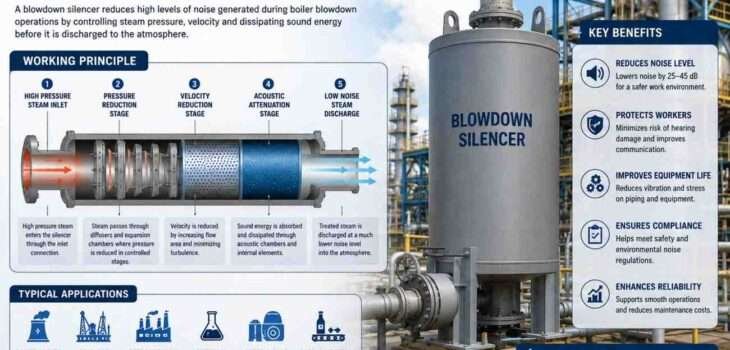
The main function of a blowdown silencer is to reduce loud noise. High-pressure steam released during boiler blowdown causes this noise. Rather than blocking the flow of steam, the silencer manages the pressure, velocity, and turbulence that generate excessive noise.
Although designs vary depending on the application, most blowdown silencers operate through a series of carefully engineered stages.
Step 1: High-Pressure Steam Enters the Silencer
The blowdown process begins when high-pressure steam and water enter the silencer through the inlet connection.
At this stage:
- Steam pressure is extremely high.
- Steam velocity is rapidly increasing.
- Noise generation begins immediately.
The inlet section is designed to handle severe operating conditions. It directs steam into the internal pressure reduction components.
Step 2: Controlled Pressure Reduction
Inside the silencer, steam passes through specially designed diffusers or pressure-reducing elements.
Instead of allowing all the pressure to release instantly, the silencer divides the expansion into multiple stages.
This staged pressure reduction:
- Lowers pressure gradually
- Reduces energy release
- Minimizes shock waves
- Prevents excessive turbulence
By controlling how pressure is released, the silencer significantly decreases the amount of sound generated.
Step 3: Velocity Reduction
High steam velocity is one of the main sources of aerodynamic noise.
The internal design of a blowdown silencer spreads steam through many passages. This increases flow area and reduces exit velocity.
Lower velocity results in:
- Less turbulence
- Reduced jet noise
- Improved flow stability
- Lower vibration
This stage is essential for achieving effective acoustic performance without restricting steam discharge.
Step 4: Acoustic Attenuation
After pressure and velocity have been reduced, the steam enters acoustic sections designed to absorb and dissipate sound energy.
Depending on the silencer design, these sections may use:
- Perforated liners
- Expansion chambers
- Reactive acoustic elements
- Absorptive materials suitable for high-temperature service
These features help reduce both high-frequency and low-frequency noise before the steam exits the silencer.
Step 5: Low-Noise Steam Discharge
Finally, the treated steam is discharged into the atmosphere at a much lower noise level.
A properly designed blowdown silencer can usually cut noise by 25–45 dB. It can still keep flow safe and back pressure acceptable.
The result is a quieter, safer, and more reliable boiler blowdown system.
Main Components of a Blowdown Silencer
A premium blowdown silencer has several precision-made parts. These parts work together to reduce noise efficiently.
Pressure Reduction Diffuser
The diffuser distributes incoming steam and reduces pressure in controlled stages, minimizing the energy responsible for noise generation.
Acoustic Chambers
These chambers attenuate sound waves by disrupting and dissipating acoustic energy before the steam is discharged.
Perforated Liners
Perforated sections help regulate steam flow while contributing to overall sound attenuation and reducing turbulence.
Outer Pressure Shell
Engineers designed the heavy-duty outer shell to withstand high pressure, elevated temperatures, and harsh industrial environments.
Drain Connections
Drain ports remove accumulated condensate, helping prevent corrosion and ensuring consistent long-term performance.
Structural Supports
Support brackets and mounting systems add strength and keep equipment stable. This matters most in high-capacity setups where silencers can be large and heavy.
Types of Blowdown Silencers
Manufacturers do not make all blowdown silencers the same. The selected type depends on operating pressure, steam flow rate, allowable back pressure, and the required noise reduction level. Choosing the right design ensures reliable performance while maintaining the safety of the steam system.
Reactive Blowdown Silencers
Reactive silencers reduce noise by reflecting and cancelling sound waves within specially designed expansion chambers.
These silencers are commonly used in:
- Medium-pressure steam systems
- Boiler vent applications
- Process steam discharge systems
Reactive designs are particularly effective at controlling low-frequency noise and are known for their robust construction.
Absorptive Blowdown Silencers
Absorptive silencers use acoustic materials that turn sound energy into small amounts of heat. This reduces noise intensity.
They are well suited for:
- Continuous steam venting
- Moderate-pressure applications
- Industrial utility systems
We select the acoustic media to withstand high temperatures while maintaining long-term performance.
Combination Blowdown Silencers
Most modern industrial blowdown silencers combine both reactive and absorptive technologies.
This hybrid approach provides:
- Broad-frequency noise reduction
- Better overall acoustic performance
- Lower discharge noise levels
- Improved operational efficiency
Combination silencers are widely used in power generation and heavy industrial applications where maximum noise attenuation is required.
Key Benefits of a Blowdown Silencer
Installing a blowdown silencer delivers multiple operational and safety benefits beyond simply reducing noise.
1. Significant Noise Reduction
The primary purpose of a blowdown silencer is to reduce the extremely high sound levels generated during boiler blowdown.
Depending on the operating conditions, a well-designed silencer can reduce noise by about 25 to 45 dB. This can create a safer and more comfortable work environment.
2. Enhanced Worker Safety
Reducing excessive noise helps protect employees from long-term hearing damage and improves communication during routine operations and emergency.
Lower noise levels enable workers to:
- Hear alarms more clearly
- Communicate effectively
- Perform inspections safely
- Respond faster to abnormal operating conditions
3. Improved Equipment Protection
High-pressure steam discharge creates strong vibration forces that can affect nearby equipment.
A blowdown silencer helps reduce:
- Pipe vibration
- Mechanical stress
- Fatigue failures
- Structural loading
4. Regulatory Compliance
Industrial facilities are required to comply with workplace safety regulations and environmental noise standards.
Installing a blowdown silencer supports compliance by reducing sound emissions and improving occupational health conditions.
5. Longer Equipment Life
By minimizing vibration and pressure fluctuations, blowdown silencers help extend the service life of:
- Steam piping
- Boiler accessories
- Pipe supports
- Structural components
- Instrumentation
Reduced mechanical stress often translates into fewer unplanned shutdowns and lower maintenance expenses.
Industrial Applications of Blowdown Silencers
Blowdown silencers are used in a wide range of industries that operate high-pressure steam systems.
Power Plants
Power generation facilities use blowdown silencers extensively on:
- Boiler blowdown systems
- Steam vent lines
- Turbine bypass systems
- Pressure relief valves
- Startup vent systems
These installations help maintain safe operations while reducing noise exposure for plant personnel.
Oil and Gas Industry
Steam plays a critical role in refining and upstream processing operations.
Typical applications include:
- Utility boilers
- Process steam systems
- Pressure relief systems
- Steam vent headers
Noise control improves both worker safety and environmental performance.
Petrochemical Plants
Petrochemical facilities frequently perform high-pressure steam venting during startup, shutdown, and maintenance operations.
Blowdown silencers help control the resulting noise while supporting reliable process operations.
Chemical Processing Plants
Chemical manufacturers rely on steam for heating, reaction control, and sterilization.
Blowdown silencers reduce noise generated during boiler maintenance and process venting while protecting workers in production areas.
Paper and Pulp Industry
Paper mills use steam extensively for drying and processing.
Installing blowdown silencers on boiler systems improves working conditions and helps reduce environmental noise around production facilities.
Food and Beverage Industry
Steam is widely used for sterilization, cleaning, and process heating.
Noise reduction helps create a safer workplace while supporting efficient production operations.
Important Design Considerations
Selecting the correct blowdown silencer requires careful evaluation of several operating parameters.
Operating Pressure
Steam pressure directly influences the amount of acoustic energy generated during blowdown.
Higher pressures generally require more advanced pressure reduction stages and stronger construction materials.
Steam Flow Rate
Accurate flow calculations ensure the silencer is correctly sized.
A silencer that’s too small can cause excessive back pressure, whereas an oversized option may needlessly drive up project costs.
Steam Temperature
High operating temperatures require materials capable of maintaining strength and corrosion resistance over extended service periods.
Common materials include:
- Carbon steel
- Stainless steel
- Chrome-moly alloy steel
- High-temperature alloy steels
Material selection should match both the operating environment and applicable engineering standards.
Allowable Back Pressure
One of the most critical design requirements is maintaining acceptable back pressure.
A properly designed blowdown silencer reduces noise without affecting the safe operation of boilers. It also supports the safe operation of pressure relief valves and steam vent systems.
Required Noise Reduction
Different facilities have different acoustic requirements.
Factors affecting the required noise reduction include:
- Worker exposure limits
- Local environmental regulations
- Plant layout
- Distance to nearby residential or commercial areas
- Customer-specific project specifications
Best Practices for Installation
Proper installation is essential for achieving the expected acoustic performance and ensuring long-term reliability.
Install According to Engineering Drawings
Always adhere to the manufacturer’s installation instructions, covering proper orientation, designated support points, and specific connection requirements.
Ensure Sufficient Structural Support
Large blowdown silencers can weigh several hundred kilograms or more.
Proper support structures prevent excessive loading on connected piping systems.
Allow for Thermal Expansion
Steam systems experience significant expansion during operation.
Expansion joints or flexible supports should be used where needed. They allow thermal movement and reduce stress on the silencer and piping.
Ensure Proper Drainage
Condensate accumulation can reduce performance and increase the risk of internal corrosion.
Adequate drain connections help maintain reliable operation and extend service life.
Perform Commissioning Inspections
Before placing the system into full operation, verify:
- Proper alignment
- Leak-free connections
- Structural stability
- Acceptable vibration levels
- Expected noise reduction performance
A thorough commissioning process helps identify installation issues early and ensures optimal performance.
Maintenance Tips for Long-Term Performance
Although blowdown silencers are designed for demanding industrial environments, routine maintenance helps maximize their lifespan and maintain acoustic performance.
Recommended upkeep practices include:
- Perform routine visual checks for corrosion, erosion, or physical damage.
- Check welds, supports, and mounting hardware for signs of fatigue.
- Ensure drain connections remain free from blockage.
- Monitor vibration levels during operation.
- Listen for unusual increases in discharge noise, which may indicate internal wear.
- Inspect protective coatings and insulation where applicable.
- Schedule detailed inspections during planned plant shutdowns.
Preventive maintenance reduces the likelihood of unexpected failures and supports reliable, long-term operation.
Common Mistakes to Avoid
Avoiding common design and installation errors can significantly improve the performance and longevity of a blowdown silencer.
Some of the most frequent mistakes include:
- Selecting a silencer based only on pipe size instead of actual operating conditions.
- Ignoring maximum steam pressure and temperature during design.
- Failing to consider allowable back pressure.
- Using materials unsuitable for high-temperature service.
- Fitting insufficient structural bracing or supports.
- Overlooking proper condensate drain routing and provisions.
- Missing regular inspections plus scheduled preventive maintenance.
Addressing these factors during design and installation helps ensure safe operation, reduce noise, and improve long-term reliability.
Frequently Asked Questions (FAQs)
1. What is a blowdown silencer?
A blowdown silencer is an industrial noise control device designed to reduce the high sound levels produced when high-pressure steam is discharged during boiler blowdown. It allows steam to vent safely while minimizing noise and maintaining acceptable back pressure.
2. How does a blowdown silencer work?
A blowdown silencer works by reducing steam pressure and velocity in controlled stages before the steam is discharged. Internal diffusers, expansion chambers, and acoustic elements absorb and dissipate sound energy, significantly lowering noise levels without restricting steam flow.
3. Where are blowdown silencers commonly used?
Blowdown silencers are widely used in industries that operate high-pressure steam systems, including:
- Power generation plants
- Oil and gas refineries
- Petrochemical facilities
- Chemical processing plants
- Paper and pulp mills
- Food and beverage industries
- Pharmaceutical manufacturing
- Steel and cement plants
4. How much noise can a blowdown silencer reduce?
The precise reduction varies based on steam pressure, flow rate, and silencer design. In most industrial applications, a properly engineered blowdown silencer can reduce discharge noise by approximately 25–45 dB.
5. Does a blowdown silencer create back pressure?
A professionally designed blowdown silencer is engineered to keep back pressure within acceptable limits. Correct sizing and design ensure safe boiler operation while achieving effective noise reduction.
6. How do I choose the right blowdown silencer?
When selecting a blowdown silencer, consider:
- Operating pressure
- Steam temperature
- Steam flow rate
- Required noise reduction
- Allowable back pressure
- Installation location
- Material selection
- Applicable design codes and standards
Consulting an experienced manufacturer helps ensure the silencer is matched to your operating conditions.
7. How often should a blowdown silencer be inspected?
Routine inspections should be carried out during scheduled plant maintenance. Check for corrosion, erosion, vibration, support integrity, and blocked drain connections to maintain long-term performance.
Conclusion
Boiler blowdown is an essential process that keep steam systems efficient and protects critical equipment. However, it can create some of the highest noise levels in industrial environments. Without good noise control, these operations can expose staff to harmful noise levels. They can also increase equipment stress and make compliance harder.
A blowdown silencer addresses these issues by managing steam pressure, reducing discharge velocity, and attenuating acoustic energy before it releases steam into the atmosphere. The result is a quieter, safer, and more efficient operating environment.
Beyond reducing noise, blowdown silencers contribute to improved worker safety, better communication during plant operations, lower vibration, and enhanced equipment reliability. They also help facilities meet workplace safety requirements and environmental noise standards.
Whether your application involves a power plant, refinery, chemical processing unit, or manufacturing facility, selecting a properly engineered blowdown silencer is an investment in long-term operational performance and plant safety.
Why Choose Anpam Engineering for Blowdown Silencers?
Selecting the right manufacturer is just as important as selecting the right product. At Anpam Engineering, we design and build high-performance blowdown silencers for modern industrial steam systems.
Our strengths include:
- Custom-designed solutions for specific operating conditions
- High-pressure and high-temperature engineering expertise
- Precision manufacturing with strict quality control
- Carbon steel, stainless steel, and alloy steel construction
- Low back-pressure designs for safe operation
- Reliable performance in severe industrial environments
- Solutions for power plants, refineries, petrochemical, chemical, and process industries
Every blowdown silencer is engineered to deliver dependable noise reduction, operational safety, and long service life while meeting project-specific technical requirements.
Key Takeaways
- A blowdown silencer reduces the intense noise generated during boiler blowdown and steam discharge.
- It works by controlling pressure, velocity, and sound energy without restricting safe steam flow.
- Effective noise control improves worker safety, communication, and plant reliability.
- Proper selection depends on operating pressure, steam flow, temperature, allowable back pressure, and required acoustic performance.
- Routine inspection and maintenance help maximize equipment life and maintain consistent performance.
- Investing in a premium blowdown silencer helps enable safer, quieter, and more efficient industrial operations.