

 blog
How Steam Vent Silencers Reduce Industrial Noise and Improve…
High pressure steam systems in industrial facilities including power plants, refineries, petrochemicals plant, fertilizer plant, paper mill and manufacturing of various plants rely on high pressure steam for daily operation. High velocity and large quantities of steam are released during boiler start-up, blowdown, pressure relief, emergency venting, or safety valve discharge. It is a sudden release, which can create a high intensity sound that may easily surpass 120-160 dB resulting in a significant risk to personnel, surrounding equipment, and environment.
A steam vent silencer is a particular kind of silencer used to control this excessive noise while maintaining the ability for safe steam release. It lowers noise levels and doesn’t compromise steam levels, which assists industries in adhering to workplace noise regulations, safeguarding employees and enhancing the overall reliability of the steam system.
Steam vent silencers are not just an optional accessory any longer as industrial plants seek efficiency, environmental compliance, and worker safety.
In this guide, you’ll learn how a steam vent silencer works, why industrial steam vent noise is hazardous, and how installing the right silencer contributes to safer and more efficient plant operations.
What Is a Steam Vent Silencer?
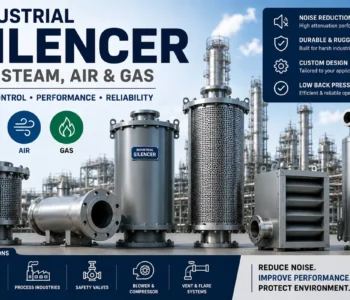
A steam vent silencer is a special type of industrial noise control device used on steam vent lines for noise reduction from high-pressure steam venting to the atmosphere.
Steam vent silencers are designed to withstand the following whilst conventional exhaust silencers cannot:
- High-pressure steam
- High temperatures
- Rapid pressure fluctuations
- Continuous industrial operation
- Harsh operating environments
They are used in the following places:
- Boiler vent systems
- Steam vent stacks
- Safety relief valves
- Pressure relief valves (PRVs)
- Boiler startup vents
- Turbine bypass systems
- Steam blow-off systems
- Install process steam vent lines.
This is rather simple sounding goal – to vent steam safely and to minimize the noise during dump.
Today steam vent silencers are manufactured according to advanced acoustic engineering principles which reduce noise but do not generate undue back pressure. This will keep the steam system operating safely and efficiently without endangering the personnel in the vicinity due to excessive noise.
Why Is Steam Vent Noise So Loud?
For an understanding of the need for a steam vent silencer it is helpful to realise the following, why is steam venting so loud?
Steam is forced into an area of lower pressure, such as a pipeline into the atmosphere. During this expansion:
- The velocity of the flow of steam becomes quite high.
- A turbulent flow forms within the vent.
- Acoustic energy is generated from pressure energy.
- Steam approaches sonic velocity and shock waves develop.
- A high-frequency sound is formed.
This produces an extremely loud jet of steam which can travel long distances.
For many industrial uses, vent noise can be more than:
| Steam Operation | Typical Noise Level |
|---|---|
| Boiler startup | 120–140 dB |
| Safety valve discharge | 130–155 dB |
| Steam blowdown | 140–160 dB |
| Turbine bypass venting | Up to 160 dB |
For comparison:
- Normal conversation: 60 dB
- Busy traffic: 85 dB
- Possible nearby jet engine: 140 dB
Steam vent noise can be a serious hazard to workers even if they are only around for a few seconds.
Why Excessive Industrial Noise Is a Serious Safety Concern
Industrial noise is more than an inconvenience, it is a critical occupational health and safety issue.
Exposure of high noise level can affect the employees and equipment, communication, and overall plant performances.
1. Hearing Damage
The most immediate danger is a permanent loss of hearing.
The sounds generated by steam discharges can be very loud and may damage the sensitive structures within the inner ear. Exposure can result in:
- Noise induced hearing loss (NIHL)
- Ringings in the ears (tinnitus)
- Reduced speech recognition
- Permanent hearing impairment
Noise reduction at source sources is a better way to ensure a safer working environment even if workers are using hearing protection.
How Does a Steam Vent Silencer Work?
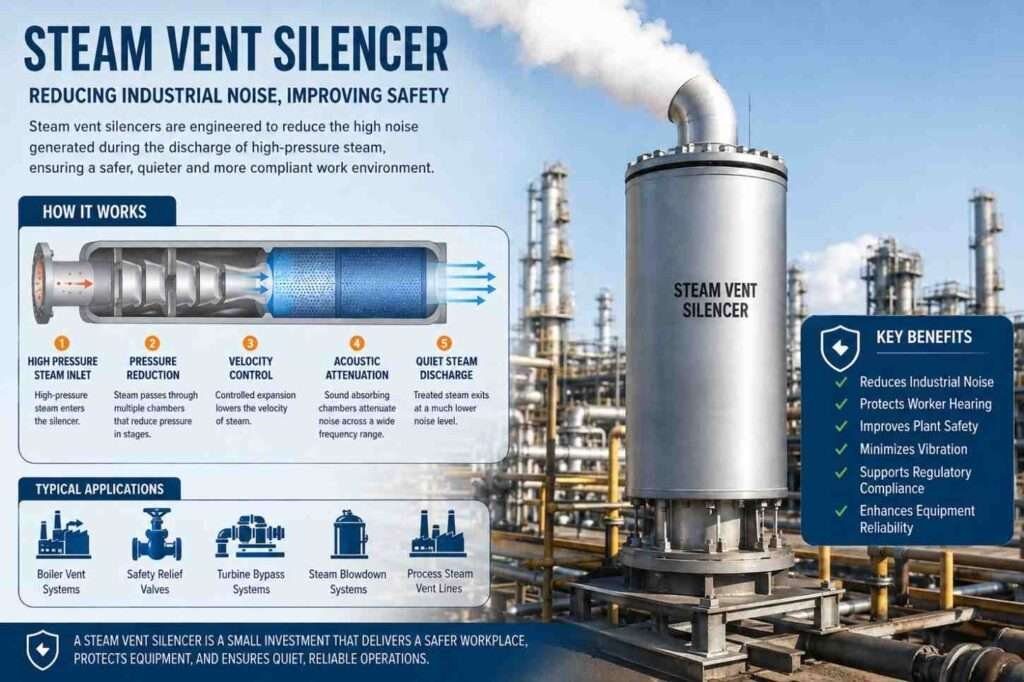
Designs depend on the pressure, temperature, and flow rate, but most steam vent silencers are designed to function with a combination of pressure reduction and acoustic attenuation.
Step 1: Steam enters into the Silencer.
Steam comes out of the vent line into the silencer body at a high velocity.
Inlet section is designed for high temperature and pressure and to meter the input steam evenly.
Step 2: Pressure Reduction
In the silencer, steam iterates through specially designed diffusers and/or multi-stage pressure reduction parts. The pressure is not released all at once in the silencer, but it is done in stages. This controlled expansion will greatly minimize energy used to create noise.
Step 3: Velocity Control
The steam is stopped by several passage ways, where it is slowed.
If the velocity of steam is less, then:
- Less turbulence
- Minimized shock wave formation.
- Lower aerodynamic noise
Step 4: Acoustic Absorption
In addition to sound reduction chambers, many steam vent silencers also feature sound-absorbing chambers that provide additional noise reduction in a broad frequency spectrum.
These chambers are designed to:
- Break up sound waves
- Dissipate acoustic energy
- Reduce high-frequency noise
- Minimize low-frequency rumble
Step 5: Safe Steam Discharge
Last but not least, the noise level of the treated steam coming out of the outlet is greatly reduced, and the flow remains unrestricted. A well-designed steam vent silencer can perform a noise reduction of 25–45 dB when the working conditions and system design are properly considered. This degree of reduction makes an extremely hazardous noise source a much safer operating condition for personnel and communities around it.
To understand the key components of a Steam Vent Silencer.
A steam vent silencer designed to be high-performance will generally be composed of several different components, engineered to deliver effective sound containment and fault-free operation:
- Pressure-reducing diffuser: Splits down steam evenly whilst progressively reducing the pressure.
- Acoustic chambers: Dampen sounds over a range of frequencies.
- Perforated liners: Aid in turbulence control; provides sound control.
- Absorptive and/or reactive element(s): These elements will act to reduce high and low frequency noise, depending on the design of the silencer.
- Extensive exterior protection: Resisting high temperature, multiple pressure cycles and outdoor industrial setting.
- Drain connections: Ensure a consistent operation by preventing condensate build-up and corrosion.
- Support structures: Used to give mechanical stability for vertical or horizontal installation.
The material of the material includes carbon steel, stainless steel, alloy steel etc., which should be selected according to steam pressure, operating temperature, corrosion resistance and the standard applicable to the industry.
Major Benefits of Using a Steam Vent Silencer
A steam vent silencer is the solution for noise reduction and so much more. It helps to reduce workplace risks, ensure machine reliability, yield regulatory adherance and streamline production. These are the essential advantages that industries can rely on.
1. Significant Noise Reduction
The biggest benefit of steam vent silencer is that it is able to decrease the impactful noise all the time of releasing the steam. The reduction of noise levels can be 25 to 45 dB depending on the very parameters, such as the flow rate, the operating pressure, the silencer design etc. Although this is just a simple numbers drop, since the decibel scale is logarithmic, it can seem like a large difference in intensity. The relative reduction of noise levels would reduce the level of noise and result in a more pleasant working environment and a reduced disruption of normal operations.
2. Improved Worker Safety
The safety of workers should be the primary concern in any industrial plant. When the steam vent makes too much noise, it can cause lasting damage to your hearing and may cause communication problems to lead to accidents over the long haul.
A steam vent silencer reduces noise at the source by performing the following:
- Help prevent hearing loss.
- Enhance communication of workers using oral language
- Make sure emergency alarm systems are audible.
- Improve the overall condition for safety in the workplace
- Figure out how to support safer maintenance activities
A quieter plant enables the operator to concentrate on important functions, free from the otherwise distracting noise.
3. Measuring up to Safety and Environmental Standards
Industrial works are expected to be stable within the limits of the environment as well as occupational health and noise. Properly engineered steam vent silencers may enable an organization to show their technology compliance.
Benefits include:
- Exposure to noise in the workplace
- Supporting programs for the control of environmental noise.
- To minimize complaints from adjacent communities;
- Enhancing overall environmental performance
- Supporting business sustainability goals
Noise control has become more of a concern relating to a responsible industrial operation.
4. Enhanced Equipment Reliability
The high velocity steam is discharged into the atmosphere, causing violent turbulence and vibration, which eventually may result in damage to the connected piping, support and nearby equipment.
The function of a well-designed steam vent silencer is to reduce these effects, by managing the characteristics of expansion and discharge of steam. This can be a factor in:
- Reduced pipe vibration
- Lower mechanical stress
- Improved equipment stability
- Long-lasting piping systems.
- Reduced maintenance costs
While silencers are primarily designed to help reduce noise, they are also used to help ensure long-term system reliability within steam systems.
5. Better Plant Productivity
High noise levels can affect a variety of inspections, troubleshooting and routine maintenance. Noise reduction can provide better working conditions, making it easier to pick up signs of abnormal equipment noise and communicate during running, which helps customers to better understand the condition of their equipment. A quieter plant will also provide a better training environment for operators and a routine inspection environment.
Common Industrial Steam Vent Silencers Applications:
High-pressure steam must be safely released in many applications and is done through Steam vent silencers across the various industry segments.
Power Generation Plants
High pressure boilers and steam turbines are crucial to power stations.
The most frequently installs steam vent silencers on:
- Boiler startup vents
- Turbine bypass systems
- Safety relief valves
- Steam dump systems
- Boiler blowdown lines
These systems are subjected to one of the highest steam pressure used for industrial purpose, where effective noise control is imperative.
Oil and Gas Facilities
Steam systems are complex in refineries and upstream processing facilities used for heating, processing, and utility purposes.
Typical applications include:
- Utility steam systems
- Process steam vents
- Emergency relief systems
- Pressure safety valves
- Steam distribution networks
An effective steam vent silencer ensures proper and safe steam operations and reduces ambient noise.
Petrochemical Plants
Hydrocarbon processing at a greenhouse gas emitting petrochemical plant has stringent operating conditions.
Steam vent silencers are designed to stop the noise produced while performing the following actions:
- Plant startups
- Emergency shutdowns
- Pressure relief events
- Utility steam venting
- Process unit maintenance
Chemical Manufacturing
Steam is often employed for process control, sterilisation and heating in chemical plants.
By using steam vent silencers to mitigate the noise associated with steam venting from reactors, boilers and ancillary systems, operation and safety of these systems are improved.
Paper and Pulp Mills
Steam has a wide range of uses in the paper industry – as a drying agent, heat medium and process.
Precincts are typically.Media Machinery Manufacturer and parts for Point 911 Service are installed on:
- Boiler systems
- Steam headers
- Relief valves
- Vent stacks
Noise reduction enhances working conditions in production areas.
Food and Beverage Processing
Clean Steam is used by many food processing plants for sanitising and heating processes.
Steam vent silencers allow for the efficient and hygienic operation of the facilities, as well as the safety of the working environment. The process of choosing the right steam vent silencer!
How to Choose the Right Steam Vent Silencer
There is more to choosing the right steam vent silencer proper than just size matching. The operating conditions for each application can differ which will impact silencer performance.
Steam Pressure
One of most significant design parameter is operating pressure.
The higher pressure entails more advanced pressure reduction stages in a silencer and results in higher noise.
Engineers typically evaluate:
- Maximum operating pressure
- Normal operating pressure
- Relief pressure
- Pressure fluctuations
Steam Temperature
When operating at high temperatures, steam necessitates materials, which will retain the capability of maintaining structural integrity over long periods of time.
They typically use any sort of:
- Carbon steel
- Stainless steel
- Low-alloy steel
- High-temperature alloy steels
The kind of material used will be determined depending on the operating temperature, corrosion potential, and project specifications.
Steam Flow Rate
Size and internal design of the silencer are determined by the amount of steam emittage.
Undersized silencers can make the system back pressured; oversized can add unnecessary costs to the project.
A critical factor in sizing is the accuracy of flow calculations.
Allowable Back Pressure
The most important design factor is that the pressure relief properties are not compromised by the presence of the silencer. The chosen silencer will have to control the back pressure of the system within the specified limits which are decided by the design of the system and engineering standards.
Required Noise Reduction
There are various targets for noise that can be used. Some plants will require only moderate noise reduction and there is a plant near the house that would require much lesser noise from the discharge. Multiple inner acoustic designs per required sound level.
Installation Location
Even the installation space can have an impact on the selection of the silencer.
Considerations include:
- Available installation space
- Vertical or horizontal mounting
- Wind loading
- Structural support
- Maintenance accessibility
- Weather exposure
Installing it right, and planning appropriately makes it easier to maintain and inspect in the future.
Consider the following best practices when installing a steam vent silencer:
Selecting the right silencer is a critical step in your installation but, correct installation is just as critical. No matter how well designed it is, a unit can be poorly performing if installed improperly.
Follow these best practices:
Install the Silencer as per Design Specifications
Follow all manufacturer installation instructions, such as orientation, support specifications and connection instructions.
Ensure sufficient support in the structure.
Steam vent silencers may be bulky and towing weighty, especially within high-capacity applications. Suitable structures reduces stresses that can be imposed on piping systems.
Ensure Correct Alignment
Installation errors can impart irregular stresses, which can lead to leakage or early wear on the equipment.
Allow for Thermal Expansion.
Many of the temperature changes occur during the operation of a steam system. Where possible, expansion joints or flexibility is recommended to allow for thermal movement.
Include Drainage Provisions
When there is inadequate drainage in the silencer, it can collect condensate in the unit. If the drains are not properly connected, they can cause corrosion from inside and acoustic performance problems.
Perform Commissioning Checks
Before placing the system into regular service, verify:
- Mechanical integrity
- Leak-free connections
- Proper support alignment
- Acceptable vibration levels
- Noise reduction quality one can expect.
A comprehensive commissioning process may act as a point to uncover issues before full-scale operations.
Keeping them in good performance for a long time.
Steam vent silencers will need very little up-keep, but regular checkups should be done to assure its effective use during the life of the vent.
The recommended maintenance practices are:
- Hands on prevention of corrosion / external damage routine checks.
- Inspect welded joints and sign mounting equipment for signs of wear and tear.
- Check drain connections to make sure they are clear.
- Operate and ensure compliance with vibration limits.
- Check for strange noises in discharge when listening for unusual internal wear.
- Check complete integrity of insulation (if fitted).
- Regularly check periodically during planned plant shutdowns.
Consistent noise reduction performance and maximising the life of equipment with preventive maintenance.
Common Mistakes to Avoid
Here are some common mistakes to look out for when installing or using a steam vent silencer:
- Selection of an oversized/small pipe diameter silencer.
- Failure to add steam pressure and temperature to design.
- Exceeding the amount of back pressure permitted.
- Failure to make inadequate structural supports.
- Neglecting condensate drainage provisions.
- Failure to conduct regular inspection and maintenance.
- Using inappropriate materials for operating environment.
To avoid these problems yields improved safety and long-term reliability.
Frequently Asked Questions (FAQs)
1. What is a steam vent silencer used for?
The function of a steam vent silencer is to absorb the high level of noise issued when pressurized steam is vented to the atmosphere. It’s typically attached to boilers, turbine bypass piping, pressure relief valves, and steam blowdown piping to facilitate safety, compliance with industrial noise ordinance and to reduce noise exposure in a facility.
2. How much noise can a steam vent silencer reduce?
This noise abatement is dependent on steam pressure, flow rate, operating conditions and the type of silencer, etc. Drawing from the experience of experience, a steam vent silencer designed and engineered correctly can cut noise by 25 – 45 dB in many industrial applications, resulting in a much safer exhaust for workers.
3. Where are steam vent silencers installed?
Steam vent silencers are used across many industries having high pressure steam systems, such as:
- Power plants
- Oil and gas facilities
- Petrochemical plants
- Chemical processing industries
- Paper or pulp mills
- Food processing plants
- Pharmaceutical manufacturing
- Steel and cement industries
The most common locations for them include boiler vent lines, safety valves, start-up vents, turbine bypass lines, and steam dump lines.
4. Does a steam vent silencer affect steam flow?
The main purpose of a steam vent silencer is to control noise when discharging starn, without compromising safety. The selection is dependent on the amount of desired flow and the back pressure they can tolerate to make sure that they can vent as they need to without affecting steam flow.
5. How do I choose the right steam vent silencer?
When choosing the right steam vent silencer, there are a number of factors that need to be taken into account:
- Steam pressure
- Steam temperature
- Flow rate
- Required noise reduction
- Allowable back pressure
- Installation location
- Material compatibility
- Design codes and standards that are applicable
An experienced manufacturer can help ensure that the silencer is the appropriate size for your application.
6. How often should a steam vent silencer be inspected?
Steam vent silencers need comparatively little maintenance but should be part of the regular plant maintenance checks. Continuous monitoring for corrosion, structural stability, vibration and condensate drainage ensure sustained performance and reliability.
Final Thoughts
Industrial noise isn’t merely an operational challenge; it’s also a workplace safety issue that can impact employee well-being, equipment performance, compliance with regulations and general plant efficiency. Particularly since industries have begun to institute stricter safety regulations and more modern engineering methods, noise control of steam discharge has become a necessary component of plant design.
A properly designed steam vent silencer can offer the solution by dampening the noise in these systems without impeding the flow of the steam and ensures the steam is vented properly and efficiently. The perfect silencer, mounted on a boiler startup vent, pressure relief valve, turbine bypass system or steam blowdown line will improve site safety, working conditions, and long term reliability.
In addition to personnel protection, steam vent silencers also help to lower facility noise levels, stress on equipment, and noise exposure limits. The installation of a high-quality silencer will result in an investment that will not only provide protection but will also contribute to effective and sustainable plant use.
When installing a new project, or upgrading an existing steam system, a professionally engineered steam vent silencer designed to your operating conditions will help ensure dependable performance for years to come.
Why Choose Anpam Engineering for Steam Vent Silencers?
As well as selecting a steam vent silencer, one needs to choose appropriate engineering and fabrication capabilities. Anpam Engineering, designs and manufactures high performance, industrial silencers and stacks for challenging applications in power generation, oil & gas, petrochemical, chemical, fertilizer and industrial process applications.
Our capabilities include:
- ASME compliant engineering and manufacturing.
- Specifically designed steam vent silencers for operating requirements.
- High pressure, high temperature is a solution.
- Sturdy of alloy steel, stainless steel and carbon steel.
- Low back-pressure designs for safe system operation
- Precision manufacture, and quality control.
- Support, both domestically and internationally, reliable solutions.
Our engineering staff can help you identify your requirements, whether it’s a boiler start-up vent, turbine/bypass system, line for blow down or safety relief valve, and they’ll help design a system to work for your plant operating conditions.
Key Takeaways
- This noise created by high pressure steam discharge can be substantially lessened by the use of a steam vent silencer.
- Noise levels are reduced to keep workers safer, and protect them from hearing damage.
- Accurate noise control results in better communication and emergency response within an industrial undertaking.
- Steam vent silencers reduce vibrations and ensure equipment is protected from vibration.
- Pressure, temperature, flow rate, allowable back pressure, and required noise reduction are key factors for correct selection.
- Regular inspection and maintenance ensures a long life of use and reliability.
- A well-constructed steam vent silencer is good investment because it provides safer, quieter and efficient industrial operations.