

 Uncategorized
Pressure Vessel Manufacturing Process: From Design to Final Inspection
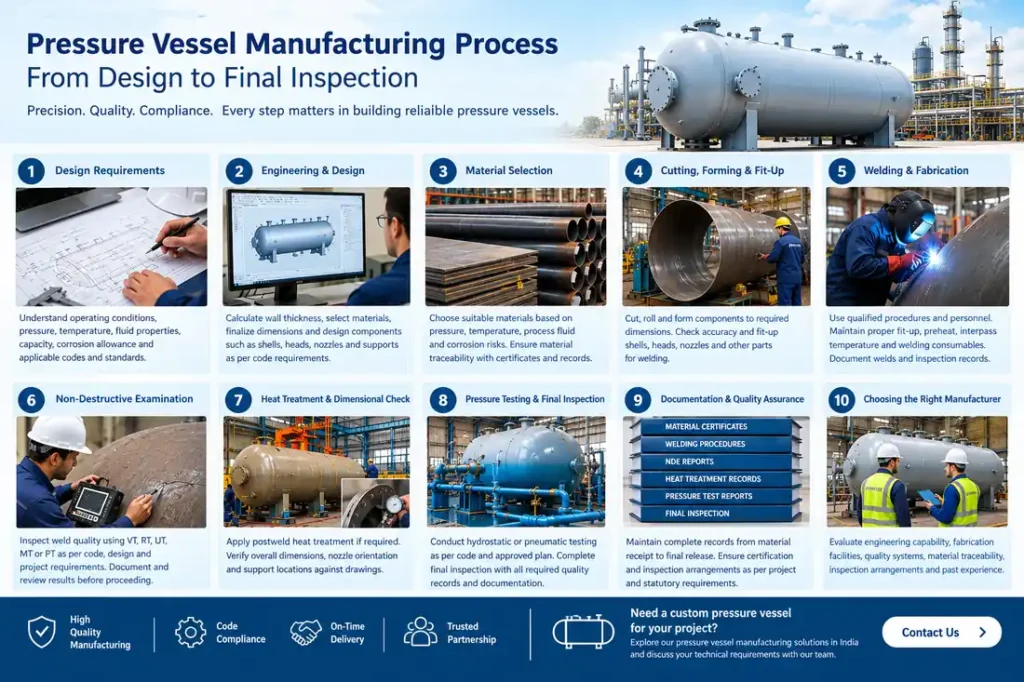
Pressure vessels are essential industrial equipment used to store or process gases and liquids under pressure. Many industries use them, including oil and gas, power generation, chemical processing, pharmaceuticals, and other industrial applications. Manufacturing a pressure vessel requires careful planning, suitable material selection, controlled fabrication and thorough quality inspection.
Understanding the pressure vessel manufacturing process helps industrial buyers evaluate manufacturers, review technical proposals and identify the quality requirements relevant to their projects.
1. Understanding Design Requirements
The manufacturing process begins with understanding the operating conditions and technical requirements of the vessel. These include design pressure, design temperature, fluid properties, vessel capacity, corrosion allowance and installation conditions.
The manufacturer also reviews the customer’s specifications, applicable statutory requirements and inspection requirements. These details establish the design basis and help determine the appropriate construction method.
2. Pressure Vessel Design and Engineering
Pressure vessel design includes calculating wall thickness, choosing suitable materials, and setting the vessel and component dimensions.
Depending on the application, the design may include cylindrical shells, dished heads, nozzles, supports, lifting attachments and other connections. Engineers also consider external loads, corrosion allowance and operating conditions.
For vessels built under the ASME Boiler and Pressure Vessel Code, confirm the code edition and division first. Set the design requirements before you finalize the calculations. Review and approve the design calculations and drawings through the project’s specified engineering process.
3. Material Selection and Traceability
Material selection affects the vessel’s strength, corrosion resistance, weldability and service life. Engineers commonly use carbon steel and stainless steel, while specific operating conditions may require other alloys.
The selection depends on pressure, temperature, process fluid, corrosion risks and applicable code requirements.
Material certificates and identification records help establish traceability between the supplied material and the components used in fabrication. Verify the material grade, thickness, and specification against the approved drawings and bill of materials before production begins.
4. Cutting, Forming and Fit-Up
After material approval, plates and other components are cut to the required dimensions. Workers may roll shell plates into cylindrical sections, while manufacturers use suitable forming processes to make vessel heads.
Inspect the formed components for dimensional accuracy, roundness, and conformity with the approved drawings. During fit-up, workers position and align the shell sections, heads, nozzles, and other components for welding.
Dimensional checks at this stage help reduce fabrication errors and avoid unnecessary rework during later manufacturing activities.
5. Welding and Fabrication
Welding joins the pressure-retaining components and is one of the most important stages of pressure vessel fabrication.
Qualified personnel should perform welding using qualified procedures, as required by the applicable construction code and project specifications. Relevant checks may include joint preparation, fit-up, preheating, interpass temperature and welding consumables.
Weld identification and inspection records help maintain traceability throughout production. Inspectors must evaluate and address any weld defects they identify during inspection according to the approved repair procedure and applicable acceptance criteria.
6. Non-Destructive Examination
Non-destructive examination (NDE or NDT) is used to assess weld quality and identify discontinuities without damaging the component.
Depending on the design, code requirements and inspection plan, examination methods may include:
- Visual examination (VT)
- Radiographic examination (RT)
- Ultrasonic examination (UT)
- Magnetic particle examination (MT)
- Liquid penetrant examination (PT)
Not every vessel requires every method. The examination type, extent and acceptance criteria depend on the applicable construction code, joint category, design conditions and project requirements.
Inspectors document and review the inspection results before the vessel proceeds to the next stage.
7. Heat Treatment and Dimensional Inspection
Some pressure vessels require postweld heat treatment to meet applicable code requirements or project specifications. Whether heat treatment is necessary depends on factors such as material, thickness, welding conditions and service requirements.
Dimensional inspection verifies the vessel’s overall dimensions, nozzle orientation, support locations and other critical features against the approved drawings.
These checks confirm that the vessel suits installation and meets the specified manufacturing requirements.
8. Pressure Testing and Final Inspection
Pressure testing is an important part of verifying the completed vessel. Depending on the code and approved test plan, hydrostatic testing is often used. Pneumatic testing may be allowed in some cases, with proper safety precautions.
The test pressure and procedure must follow the governing code and approved documentation. Qualified personnel should conduct pressure testing using suitable equipment and controlled safety measures.
Final inspection may include a review of dimensional reports, material records, and welding documentation. It may also include NDE reports, heat-treatment charts where applicable, and pressure-test records. We may also review other required quality documents.
Release the completed vessel only after you satisfy the applicable inspection and documentation requirements.
9. Documentation and Quality Assurance
A well-managed manufacturing process includes documented quality checks from material receipt through final release. Depending on the project, the manufacturing record package may include material test certificates, approved drawings, welding procedure records, welder qualifications, NDE reports, heat-treatment records, pressure-test reports and final inspection documentation.
For projects requiring ASME certification or other statutory approvals, confirm the applicable certification and inspection arrangements at the beginning of the project. Certification claims should reflect the manufacturer’s actual authorization and the specific scope of work.
10. Choosing a Pressure Vessel Manufacturer
Industrial buyers should evaluate a manufacturer’s engineering capability, fabrication facilities, quality-control procedures, material traceability, inspection arrangements and experience with similar applications.
Before placing an order, buyers should confirm the design basis and the applicable construction code. They should also confirm the scope of supply, testing requirements, and required documents. Buyers should confirm inspection responsibilities and the delivery schedule.
Clear technical specifications and effective communication between the buyer, engineering team and manufacturer help reduce misunderstandings during fabrication and inspection.
Conclusion
Pressure vessel manufacturing involves several interconnected stages, from design and material selection to forming, welding, inspection and pressure testing. Control each stage according to the applicable construction code, approved drawings, and project specifications.
Anpam Engineering manufactures industrial equipment for demanding applications. For projects requiring pressure vessel fabrication, buyers can review the company’s pressure vessel manufacturing solutions in India and discuss their technical requirements, drawings and inspection needs with the team.