

 blog
blog
How Steam Vent Silencers Reduce Industrial Noise and Improve…
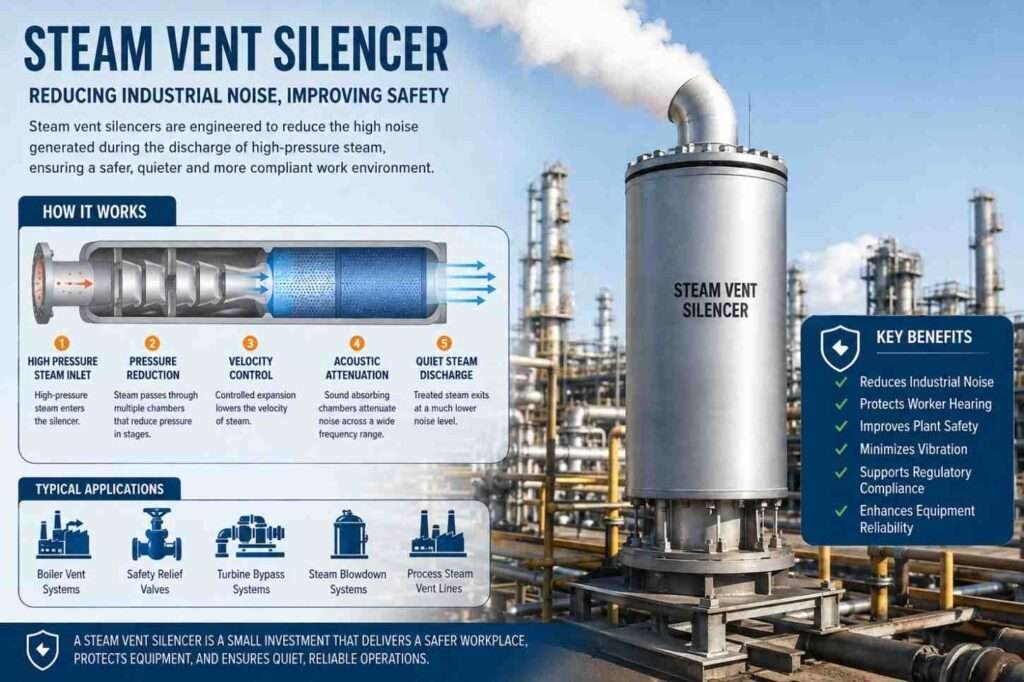
Industrial facilities such as power plants, refineries, petrochemical complexes, fertilizer plants, paper mills, and manufacturing units depend on high-pressure steam systems for daily operations. During equipment startup, boiler blowdown, pressure relief, emergency venting, or safety valve discharge, large volumes of steam are released at extremely high velocities. This sudden release generates intense noise that can easily exceed 120–160 dB, creating serious risks for personnel, nearby equipment, and the surrounding environment.
A steam vent silencer is specifically designed to control this excessive noise without restricting the safe release of steam. By reducing sound levels while maintaining efficient steam flow, it helps industries comply with workplace noise regulations, protect employees, and improve the overall reliability of steam systems.
As industrial plants continue to prioritize worker safety, environmental compliance, and operational efficiency, steam vent silencers have become an essential component in modern steam networks rather than an optional accessory.
In this guide, you’ll learn how a steam vent silencer works, why industrial steam vent noise is hazardous, and how installing the right silencer contributes to safer and more efficient plant operations.
What Is a Steam Vent Silencer?
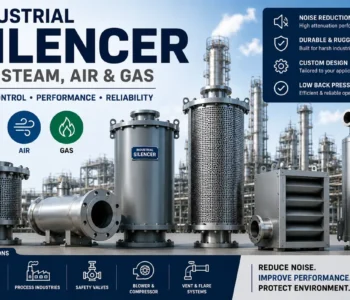
A steam vent silencer is a specialized industrial noise control device installed on steam vent lines to reduce the sound generated when high-pressure steam is discharged into the atmosphere.
Unlike conventional exhaust silencers, steam vent silencers are engineered to withstand:
- High-pressure steam
- High temperatures
- Rapid pressure fluctuations
- Continuous industrial operation
- Harsh operating environments
They are commonly installed on:
- Boiler vent systems
- Steam vent stacks
- Safety relief valves
- Pressure relief valves (PRVs)
- Boiler startup vents
- Turbine bypass systems
- Steam blow-off systems
- Process steam vent lines
The primary objective is simple: allow steam to vent safely while significantly reducing the noise produced during discharge.
Modern steam vent silencers are designed using advanced acoustic engineering principles that minimize noise without creating excessive back pressure. This ensures the steam system continues to operate safely and efficiently while protecting nearby personnel from harmful noise exposure.
Why Is Steam Vent Noise So Loud?
To understand the importance of a steam vent silencer, it helps to know why venting steam creates such intense noise.
When steam exits a high-pressure pipeline, it expands rapidly into atmospheric pressure. During this expansion:
- Steam velocity increases dramatically.
- Turbulence develops inside the vent.
- Pressure energy converts into acoustic energy.
- Shock waves form when steam approaches sonic velocity.
- High-frequency sound waves are generated.
The result is an extremely loud jet of steam that can travel long distances.
In many industrial applications, vent noise can exceed:
| Steam Operation | Typical Noise Level |
|---|---|
| Boiler startup | 120–140 dB |
| Safety valve discharge | 130–155 dB |
| Steam blowdown | 140–160 dB |
| Turbine bypass venting | Up to 160 dB |
For comparison:
- Normal conversation: 60 dB
- Busy traffic: 85 dB
- Jet engine nearby: 140 dB
Even brief exposure to steam vent noise without hearing protection can pose a significant risk to workers.
Why Excessive Industrial Noise Is a Serious Safety Concern
Industrial noise is more than an inconvenience, it is a critical occupational health and safety issue.
Continuous or sudden exposure to high noise levels can affect employees, equipment, communication, and overall plant performance.
1. Hearing Damage
One of the most immediate dangers is permanent hearing loss.
Exposure to high-decibel steam discharge can damage the sensitive structures inside the inner ear. Repeated exposure may lead to:
- Noise-induced hearing loss (NIHL)
- Tinnitus (ringing in the ears)
- Reduced speech recognition
- Permanent hearing impairment
Even when workers wear hearing protection, reducing noise at its source provides a much safer working environment.
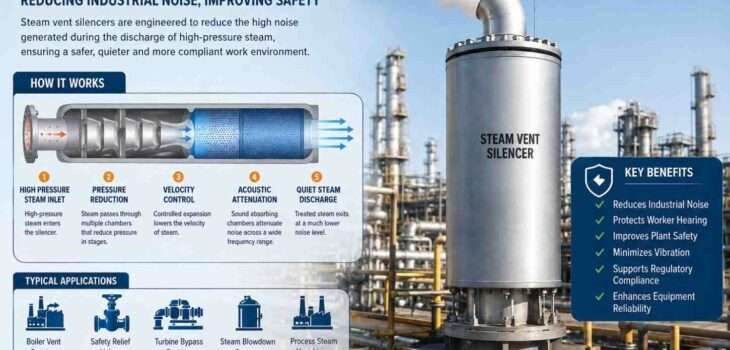
How Does a Steam Vent Silencer Work?
Although designs vary depending on pressure, temperature, and flow rate, most steam vent silencers operate using a combination of pressure reduction and acoustic attenuation.
Step 1: Steam Enters the Silencer
High-pressure steam flows from the vent line into the silencer body.
The inlet section is engineered to withstand extreme temperatures and pressures while distributing the incoming steam evenly.
Step 2: Pressure Reduction
Inside the silencer, steam passes through specially designed diffusers or multi-stage pressure reduction components.
Instead of releasing all pressure at once, the silencer gradually lowers the pressure in controlled stages.
This controlled expansion significantly reduces the energy responsible for generating noise.
Step 3: Velocity Control
The steam is directed through multiple flow paths that decrease its exit velocity.
Lower steam velocity means:
- Less turbulence
- Reduced shock wave formation
- Lower aerodynamic noise
Step 4: Acoustic Absorption
Many steam vent silencers include sound-absorbing chambers that further attenuate noise across a wide frequency range.
These chambers are designed to:
- Break up sound waves
- Dissipate acoustic energy
- Reduce high-frequency noise
- Minimize low-frequency rumble
Step 5: Safe Steam Discharge
Finally, the treated steam exits through the outlet at a substantially lower noise level while maintaining unrestricted flow.
A properly engineered steam vent silencer can reduce noise by 25–45 dB, depending on operating conditions and system design.
This level of reduction transforms an extremely hazardous noise source into a much safer operating condition for personnel and nearby communities.
Key Components of a Steam Vent Silencer
A high-performance steam vent silencer typically consists of several engineered components that work together to achieve effective noise reduction and reliable operation:
- Pressure-reducing diffuser: Distributes steam evenly and lowers pressure in stages.
- Acoustic chambers: Attenuate sound waves across multiple frequencies.
- Perforated liners: Help control turbulence while supporting sound reduction.
- Absorptive or reactive elements: Reduce both high- and low-frequency noise depending on the silencer design.
- Heavy-duty outer shell: Withstands high temperatures, pressure cycles, and outdoor industrial environments.
- Drain connections: Prevent condensate accumulation, reducing the risk of corrosion and ensuring consistent performance.
- Support structures: Provide mechanical stability for vertical or horizontal installations.
The materials used—such as carbon steel, stainless steel, or alloy steel—are selected based on steam pressure, operating temperature, corrosion resistance, and applicable industry standards.
Major Benefits of Using a Steam Vent Silencer
Installing a steam vent silencer offers far more than just noise reduction. It contributes to safer workplaces, better equipment reliability, improved regulatory compliance, and more efficient plant operations. Here are the key benefits industries can expect.
1. Significant Noise Reduction
The most obvious advantage of a steam vent silencer is its ability to reduce the extreme noise generated during steam discharge.
Depending on the operating pressure, flow rate, and silencer design, noise levels can typically be reduced by 25 to 45 dB. While this may seem like a modest numerical reduction, the perceived difference is substantial because the decibel scale is logarithmic.
Lower noise levels create a more comfortable working environment and make routine operations less disruptive.
2. Improved Worker Safety
Protecting employees is a top priority in every industrial facility. Excessive steam vent noise can lead to long-term hearing damage and increase the likelihood of accidents caused by communication failures.
By lowering noise at the source, a steam vent silencer helps:
- Reduce the risk of occupational hearing loss
- Improve verbal communication between workers
- Ensure emergency alarms remain audible
- Enhance overall workplace safety
- Support safer maintenance activities
A quieter plant allows operators to focus on critical tasks without unnecessary distractions.
3. Compliance with Safety and Environmental Standards
Industrial plants are expected to operate within occupational health and environmental noise limits. Installing properly designed steam vent silencers can help organizations demonstrate their commitment to regulatory compliance.
Benefits include:
- Meeting workplace noise exposure requirements
- Supporting environmental noise control initiatives
- Reducing complaints from neighboring communities
- Improving overall environmental performance
- Assisting with corporate sustainability goals
Noise control is increasingly viewed as an important aspect of responsible industrial operations.
4. Enhanced Equipment Reliability
High-velocity steam discharge creates intense turbulence and vibration, which can gradually affect connected piping, supports, and nearby equipment.
A properly engineered steam vent silencer helps minimize these effects by controlling steam expansion and discharge characteristics. This can contribute to:
- Reduced pipe vibration
- Lower mechanical stress
- Improved equipment stability
- Longer service life for piping systems
- Reduced maintenance costs
Although silencers are primarily acoustic devices, they also support the long-term reliability of steam systems.
5. Better Plant Productivity
High noise environments often make inspections, troubleshooting, and routine maintenance more difficult.
Reducing unnecessary noise improves working conditions, allowing maintenance teams to identify abnormal equipment sounds more easily and communicate effectively during operations.
A quieter plant also creates a better environment for operator training and routine inspections.
Common Industrial Applications of Steam Vent Silencers
Steam vent silencers are used across numerous industries where high-pressure steam must be discharged safely.
Power Generation Plants
Power stations rely heavily on steam turbines and high-pressure boilers.
Steam vent silencers are commonly installed on:
- Boiler startup vents
- Turbine bypass systems
- Safety relief valves
- Steam dump systems
- Boiler blowdown lines
These systems experience some of the highest steam pressures found in industrial applications, making effective noise control essential.
Oil and Gas Facilities
Refineries and upstream processing facilities operate complex steam systems for heating, processing, and utility services.
Typical applications include:
- Utility steam systems
- Process steam vents
- Emergency relief systems
- Pressure safety valves
- Steam distribution networks
Reliable steam vent silencers help maintain safe operations while minimizing environmental noise.
Petrochemical Plants
Petrochemical facilities process large volumes of hydrocarbons under demanding operating conditions.
Steam vent silencers are used to control noise generated during:
- Plant startups
- Emergency shutdowns
- Pressure relief events
- Utility steam venting
- Process unit maintenance
Chemical Manufacturing
Chemical plants frequently use steam for heating, sterilization, and process control.
Steam vent silencers improve operational safety by reducing noise during steam discharge from reactors, boilers, and auxiliary systems.
Paper and Pulp Mills
Steam is widely used for drying, heating, and process applications in paper manufacturing.
Silencers are commonly installed on:
- Boiler systems
- Steam headers
- Relief valves
- Vent stacks
Reducing noise improves working conditions across production areas.
Food and Beverage Processing
Many food processing facilities depend on clean steam for sterilization and heating.
Steam vent silencers help maintain safer working environments while supporting hygienic and efficient operations.
How to Choose the Right Steam Vent Silencer
Selecting the correct steam vent silencer requires more than simply matching pipe sizes. Each application has unique operating conditions that influence silencer performance.
Steam Pressure
Operating pressure is one of the most important design parameters.
Higher pressures produce greater noise levels and require more advanced pressure reduction stages within the silencer.
Engineers typically evaluate:
- Maximum operating pressure
- Normal operating pressure
- Relief pressure
- Pressure fluctuations
Steam Temperature
High-temperature steam requires materials capable of maintaining structural integrity over long operating periods.
Common material choices include:
- Carbon steel
- Stainless steel
- Low-alloy steel
- High-temperature alloy steels
Material selection depends on operating temperature, corrosion potential, and project specifications.
Steam Flow Rate
The amount of steam discharged directly affects silencer size and internal design.
Undersized silencers may create excessive back pressure, while oversized units can increase project costs unnecessarily.
Accurate flow calculations are essential for proper sizing.
Allowable Back Pressure
One of the most critical design considerations is ensuring that the silencer does not interfere with pressure relief performance.
The selected silencer must maintain back pressure within acceptable limits established by system design and applicable engineering standards.
Required Noise Reduction
Different facilities have different noise targets.
Some plants may require only moderate noise reduction, while others located near residential areas may require significantly lower discharge noise.
The required sound level determines the internal acoustic design of the silencer.
Installation Location
The physical installation environment also influences silencer selection.
Considerations include:
- Available installation space
- Vertical or horizontal mounting
- Wind loading
- Structural support
- Maintenance accessibility
- Weather exposure
Proper planning simplifies installation and future inspections.
Best Practices for Steam Vent Silencer Installation
Correct installation is just as important as selecting the right silencer. Even a well-designed unit may not perform as expected if installed incorrectly.
Follow these best practices:
Install the Silencer According to Design Specifications
Always follow the manufacturer’s installation guidelines, including orientation, support requirements, and connection details.
Provide Adequate Structural Support
Steam vent silencers can be large and heavy, particularly in high-capacity applications. Proper structural supports prevent excessive loads on piping systems.
Ensure Correct Alignment
Misalignment during installation may introduce unwanted mechanical stress, increasing the risk of leakage or premature equipment wear.
Allow for Thermal Expansion
Steam systems experience significant temperature changes during operation. Expansion joints or flexible supports should be considered where appropriate to accommodate thermal movement.
Include Drainage Provisions
Condensate can accumulate inside the silencer if drainage is inadequate. Proper drain connections help prevent internal corrosion and maintain consistent acoustic performance.
Perform Commissioning Checks
Before placing the system into regular service, verify:
- Mechanical integrity
- Leak-free connections
- Proper support alignment
- Acceptable vibration levels
- Expected noise reduction performance
A thorough commissioning process helps identify issues before full-scale operation.
Maintenance Tips for Long-Term Performance
Although steam vent silencers generally require minimal maintenance, regular inspections help ensure reliable operation throughout their service life.
Recommended maintenance practices include:
- Conduct routine visual inspections for corrosion or external damage.
- Check welded joints and mounting supports for signs of fatigue.
- Inspect drain connections to ensure they remain unobstructed.
- Monitor vibration levels during operation.
- Listen for unusual changes in discharge noise that may indicate internal wear.
- Verify that insulation, if installed, remains intact.
- Schedule periodic inspections during planned plant shutdowns.
Preventive maintenance helps maximize equipment life while maintaining consistent noise reduction performance.
Common Mistakes to Avoid
To achieve the best results, avoid these common errors when selecting or operating a steam vent silencer:
- Choosing a silencer based only on pipe diameter instead of actual operating conditions.
- Ignoring maximum steam pressure and temperature during design.
- Overlooking allowable back pressure limits.
- Installing inadequate structural supports.
- Neglecting condensate drainage provisions.
- Skipping routine inspections and maintenance.
- Selecting materials that are not suitable for the operating environment.
Avoiding these issues improves both safety and long-term reliability.
Frequently Asked Questions (FAQs)
1. What is a steam vent silencer used for?
A steam vent silencer is designed to reduce the high noise levels generated when pressurized steam is released into the atmosphere. It is commonly installed on boiler vents, turbine bypass systems, pressure relief valves, and steam blowdown lines to improve workplace safety, protect hearing, and help facilities comply with industrial noise regulations.
2. How much noise can a steam vent silencer reduce?
The exact noise reduction depends on the steam pressure, flow rate, operating conditions, and silencer design. In many industrial applications, a properly engineered steam vent silencer can reduce noise by approximately 25–45 dB, making steam discharge significantly safer for personnel.
3. Where are steam vent silencers installed?
Steam vent silencers are widely used in industries that operate high-pressure steam systems, including:
- Power plants
- Oil and gas facilities
- Petrochemical plants
- Chemical processing industries
- Paper and pulp mills
- Food processing plants
- Pharmaceutical manufacturing
- Steel and cement industries
They are typically installed on boiler vent lines, safety valves, startup vents, turbine bypass systems, and steam dump systems.
4. Does a steam vent silencer affect steam flow?
A properly designed steam vent silencer is engineered to minimize noise while maintaining safe steam discharge. It is selected based on the required flow rate and allowable back pressure to ensure that the venting system performs as intended without restricting steam flow.
5. How do I choose the right steam vent silencer?
Selecting the correct steam vent silencer involves evaluating several factors, including:
- Steam pressure
- Steam temperature
- Flow rate
- Required noise reduction
- Allowable back pressure
- Installation location
- Material compatibility
- Applicable design codes and standards
Working with an experienced manufacturer helps ensure the silencer is correctly sized for your specific application.
6. How often should a steam vent silencer be inspected?
Although steam vent silencers require relatively low maintenance, they should be inspected during scheduled plant maintenance. Regular checks for corrosion, structural integrity, vibration, and condensate drainage help maintain long-term performance and reliability.
Final Thoughts
Industrial noise is more than an operational challenge, it is a workplace safety concern that can affect employee health, equipment reliability, regulatory compliance, and overall plant efficiency. As industries continue to adopt higher safety standards and modern engineering practices, controlling steam discharge noise has become an essential part of plant design.
A well-designed steam vent silencer provides an effective solution by reducing excessive noise while allowing steam to vent safely and efficiently. Whether installed on a boiler startup vent, pressure relief valve, turbine bypass system, or steam blowdown line, the right silencer enhances safety, improves working conditions, and supports long-term operational reliability.
Beyond protecting personnel, steam vent silencers contribute to quieter facilities, reduced equipment stress, and better compliance with environmental and occupational noise requirements. Investing in a high-quality silencer is not only a safety measure but also a practical decision that supports efficient and sustainable plant operations.
If you are planning a new industrial project or upgrading an existing steam system, choosing a professionally engineered steam vent silencer tailored to your operating conditions will help ensure dependable performance for years to come.
Why Choose Anpam Engineering for Steam Vent Silencers?
When selecting a steam vent silencer, engineering expertise and manufacturing quality are just as important as the product itself. Anpam Engineering designs and manufactures high-performance industrial silencers for demanding applications across power generation, oil & gas, petrochemical, chemical, fertilizer, and process industries.
Our capabilities include:
- ASME-compliant engineering and manufacturing
- Custom-designed steam vent silencers for specific operating conditions
- High-pressure and high-temperature solutions
- Robust carbon steel, stainless steel, and alloy steel construction
- Low back-pressure designs for safe system operation
- Precision fabrication with stringent quality control
- Reliable solutions for both domestic and international projects
Whether your requirement involves a boiler startup vent, turbine bypass system, steam blowdown line, or safety relief valve, our engineering team can provide a solution tailored to your plant’s operating parameters.
Key Takeaways
- A steam vent silencer significantly reduces noise generated during high-pressure steam discharge.
- Lower noise levels improve worker safety and reduce the risk of hearing damage.
- Proper noise control enhances communication and emergency response within industrial facilities.
- Steam vent silencers help minimize vibration and protect connected equipment.
- Correct selection depends on pressure, temperature, flow rate, allowable back pressure, and required noise reduction.
- Regular inspection and maintenance ensure long-term performance and reliability.
- Investing in a high-quality steam vent silencer supports safer, quieter, and more efficient industrial operations.